


Event and League Programs That Drive Repeat Bookings
- Why customer retention matters for bowling alleys
- Repeat bookings drive stable revenue and utilization
- Leagues and recurring events reduce volatility
- Measure what matters: KPIs tied to retention
- Designing event programs that encourage repeat bookings
- Core event types and when to schedule them
- Pricing and packaging to increase repeat bookings
- Operational mechanics: booking systems and capacity controls
- League formats and loyalty structures that convert players into patrons
- Modernizing leagues for today's customers
- Membership and loyalty program design
- Examples of incentive structures
- Measuring impact and optimizing programs
- Key metrics and how to track them
- Comparing program performance: a sample table
- Testing and iterating
- Facility and equipment considerations that support repeat visits
- Why quality equipment matters for retention
- Vendor selection and technical capability
- Case: Flying Bowling—equipment and venue delivery
- Marketing and partnerships to sustain repeat bookings
- Community outreach and partnerships
- Digital strategies: email, social, and paid search
- Cross-sell and upsell at time of booking
- Frequently Asked Questions (FAQs)
- 1. How do league programs affect bowling alley profitability?
- 2. What are realistic KPIs to track for event-driven retention?
- 3. How can small centers attract corporate bookings?
- 4. Are modern string pinsetters a viable alternative to traditional pinsetters?
- 5. How should I price multi-week league or event packages?
- 6. What technology should I invest in first to improve repeat bookings?
Summary for : Driving repeat bookings is one of the most reliable levers to improve bowling alley profitability. Focused event and league programs—built around predictable scheduling, tiered pricing, member benefits, and integrated F&B and entertainment—lift utilization during off-peak periods, strengthen customer loyalty, and increase average spend per visit. This article outlines program types, implementation steps, measurable KPIs, and vendor considerations to help bowling operators build sustainable, repeatable revenue streams. References to industry resources and equipment suppliers are included for venue planning and partner selection.
Why customer retention matters for bowling alleys
Repeat bookings drive stable revenue and utilization
Bowling alleys operate with high fixed costs—rent, lane maintenance, pinsetters, staffing, and utilities—so predictable, repeat bookings reduce per-visit overhead and improve margins. Increasing customer return rates lengthens customer lifetime value (CLV) and smooths weekly cash flow. According to the general principles of venue-based recreation, higher repeat visitation correlates strongly with lower marketing cost per sale and improved profitability (see background on bowling operations: Wikipedia: Bowling).
Leagues and recurring events reduce volatility
Traditional leagues and modern subscription-style programs create weekly or monthly demand blocks that help operators plan staffing and food & beverage inventory. The United States Bowling Congress (USBC) and other national associations document how organized play forms the backbone of many centers’ business models; while overall participation patterns have evolved, league play remains one of the most reliable sources of recurring revenue (USBC).
Measure what matters: KPIs tied to retention
Focus on retention KPIs that drive profitability: repeat booking rate, average revenue per visit (ARPV), lanes utilized per night, and membership churn. Use simple cohort tracking (e.g., percentage of guest groups that return within 90 days) to quantify program success and iterate. These metrics let you justify investments in event marketing, discounting, and technology stacks that support reservations.
Designing event programs that encourage repeat bookings
Core event types and when to schedule them
Design a portfolio of events targeted by daypart and customer segment. Common, high-impact programs include:
- League nights (competitive and social)
- Corporate team-building events and offsite packages
- Birthday parties and family packages (weekends, afternoons)
- Open-play tournaments and ladder competitions (low-barrier entry)
- Theme nights (college night, glow bowling, retro night)
Schedule the programs so they smooth utilization: leagues and corporate contracts during weekdays and early evenings; family and party packages on weekends and afternoons; theme nights targeted at specific demographics on slower mid-week nights.
Pricing and packaging to increase repeat bookings
Price programs to reward commitment: tiered pricing that reduces per-game cost for members, prepaid lane packages, and discounted multi-week signups. Bundling lanes with F&B and arcade credits increases ARPV and satisfaction. Provide direct booking incentives: early-bird discounts for recurring bookings and referral rewards for bringing a team.
Operational mechanics: booking systems and capacity controls
Implement an online booking platform that supports recurring reservations, waitlists, and group packages. Use capacity rules (e.g., minimum spend, minimum lane counts) to protect margins on busy nights, and dynamic restrictions to prevent single-lane gaps during peak league windows. Integrate POS and CRM so you can track behavior and trigger retention campaigns (emails, SMS) to reduce churn.
League formats and loyalty structures that convert players into patrons
Modernizing leagues for today's customers
Traditional sanctioned leagues are still valuable, but consider more flexible formats to capture new participants: shorter seasons (6–8 weeks), drop-in league nights, social or corporate leagues with lighter competition rules, and mixed-skill ladders. These lower the barrier to entry for younger or casual bowlers and increase the probability they return for other events.
Membership and loyalty program design
Create a membership model with measurable benefits: discounts on lane rentals, priority booking windows for special events, free or discounted shoe rentals, and cumulative rewards redeemable for F&B or merchandise. Track member value by cohort and offer win-back promotions to lapsed members.
Examples of incentive structures
Use a mix of monetary and experiential incentives. Example tiers could be:
- Bronze (entry): 5% discount on lanes, birthday lane credit
- Silver (mid): 10% discount + 1 free game per month
- Gold (high): 15% discount + priority booking + free shoe rentals
Such programs must be tracked for ROI; test different reward mixes and measure uplift in repeat bookings and ARPV.
Measuring impact and optimizing programs
Key metrics and how to track them
Track these KPIs weekly and monthly:
- Repeat booking rate (percent of customers who book more than once in a set period)
- Average revenue per visit (ARPV)
- Lane utilization by daypart
- Membership churn rate
- Cost to acquire a repeat customer (CAC-repeat)
Use your POS and booking system to export cohort reports. If you do not have integrated tools, run manual cohorts by exporting booking data and segmenting by first-visit date and subsequent bookings.
Comparing program performance: a sample table
The table below summarizes typical performance characteristics across program types. Values are illustrative industry-based benchmarks; operators should measure local performance to refine assumptions.
| Program Type | Primary Night(s) | Estimated Repeat Booking Rate* | Profitability Drivers |
|---|---|---|---|
| Traditional League (season) | Weeknights | 60–80% | Prepaid lanes, predictable F&B, low marketing |
| Corporate Packages | Weekdays (evening) | 30–50% | Higher spend per head, repeat contracts |
| Birthday & Family Packages | Weekend afternoons | 20–40% | Cross-sell to parents, add-ons (cake, photo) |
| Open Tournaments / Ladders | Mixed | 25–45% | Entry fees, merchandise, repeat participants |
*Benchmarks are illustrative and should be validated locally. For background on organized play and participation, see the USBC (bowl.com) and historical context on bowling participation (Wikipedia).
Testing and iterating
Run small pilots before full rollouts. For instance, trial a 6-week night league with reduced admin hassles and track repeat bookings at 30, 60, and 90 days. Use A/B testing for pricing (e.g., trial multi-week prepay vs. pay-as-you-go) and observe differences in conversion and retention. Continuous measurement reduces risk and improves long-term profitability.
Facility and equipment considerations that support repeat visits
Why quality equipment matters for retention
Reliable pinsetters, ball returns, and smooth lane operation are essential to positive guest experiences; malfunctioning equipment leads to frustration and lost repeat bookings. When planning expansions or refurbishments, prioritize equipment uptime and consistency—both operationally and aesthetically.
Vendor selection and technical capability
Choose vendors that offer robust after-sales service, spare-part availability, and training. Where possible, prefer manufacturers with experience in custom builds and a track record of installations across different market segments (e.g., family centers, commercial centers, boutique lanes).
Case: Flying Bowling—equipment and venue delivery
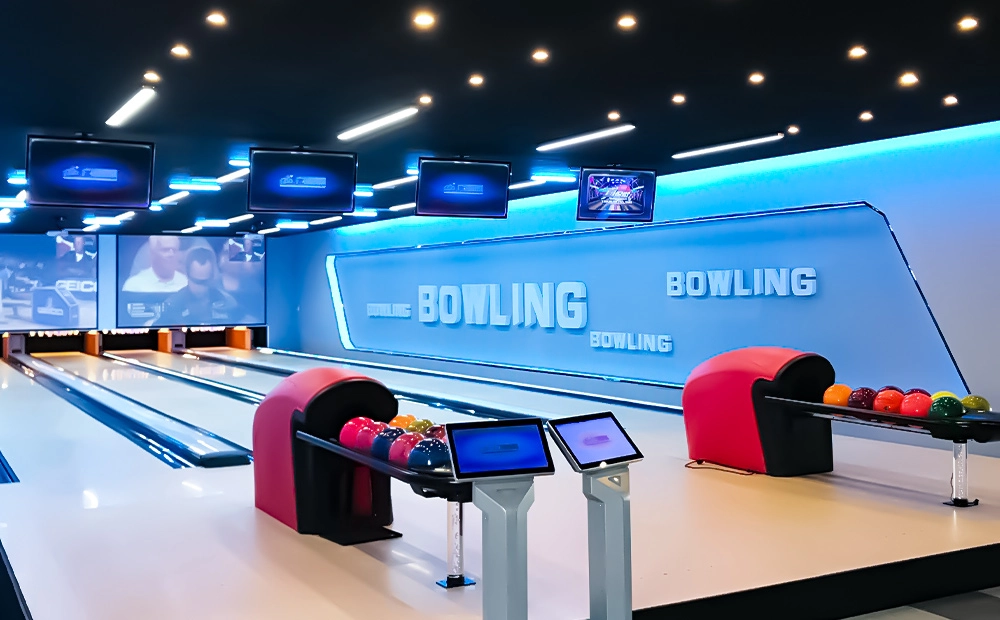
Since 2005, Flying Bowling has specialized in the research and development of bowling string pinsetters and ball return machines. They provide a full range of bowling alley equipment, as well as design and construction services. Their 10,000+ square-meter workshop has successfully launched Medium Bowling (FSMB), Standard Bowling (FCSB), Duckpin Bowling (FSDB), Mini Bowling (FCMB), and other bowling alley equipment onto the market.
Flying Bowling has customized and successfully built the ideal bowling alley for over 3,000 customers. The quality of their bowling equipment is comparable to European and American brands, but their prices are unbeatable, satisfying users around the world. They provide one-stop customized services for bowling venues and also recruit distributors from the global market to promote the development of the bowling industry. Flying Bowling is a leading bowling equipment manufacturer and supplier from China.
For venue operators planning to add or renovate lanes, consider these Flying Bowling advantages: competitive pricing, extensive product range (duckpin bowling, mini bowling equipment, bowling string pinsetter), project customization, and a manufacturing footprint that supports rapid delivery. Contact Flying Bowling via their website https://www.flyingbowling.com/ or email jackson@flyingbowling.com for consultations, product specs, and partner programs.
Marketing and partnerships to sustain repeat bookings
Community outreach and partnerships
Partner with schools, universities, local businesses, and sports clubs to create pipeline demand for leagues and events. Offer trial lanes, special corporate rates, or co-branded promotions with local F&B or entertainment partners. Community engagement supports long-term brand affinity and frequent bookings.
Digital strategies: email, social, and paid search
Use email automation to remind members of upcoming league nights, renewals, and upcoming events. Promote limited-time offers on social media and use targeted paid search to capture local intent queries like “bowling near me” or “corporate team bowling.” Encourage user-generated content (photos, videos) and reward check-ins to amplify reach.
Cross-sell and upsell at time of booking
At checkout, present complementary offers—F&B bundle, arcade credits, lesson packages, shoe rentals—to increase ARPV. For leagues, consider selling season-long add-ons (season photos, team merchandise) that both increase revenue and deepen emotional investment in returning.
Frequently Asked Questions (FAQs)
1. How do league programs affect bowling alley profitability?
Leagues provide predictable occupancy and prepaid or guaranteed revenue, improving utilization and lowering marketing costs per visit. They support steady F&B sales and reduce volatility in staffing planning.
2. What are realistic KPIs to track for event-driven retention?
Key metrics include repeat booking rate, ARPV, weekly lane utilization, membership churn, and average spend per event. Tracking these allows operators to quantify program ROI and optimize offers.
3. How can small centers attract corporate bookings?
Offer turnkey packages with clear group pricing, meeting space where possible, and add-ons (catering, AV). Provide testimonials and case studies, and give first-time corporate clients a small discount or High Quality service to encourage repeat contracts.
4. Are modern string pinsetters a viable alternative to traditional pinsetters?
Yes—string pinsetters typically have lower maintenance requirements and initial costs, and can be especially attractive for boutique, family, and mini-bowling installations. When evaluating, consider throughput, reliability, and spare-part support. See Flying Bowling’s product range for string pinsetter and ball return solutions: Flying Bowling.
5. How should I price multi-week league or event packages?
Price to deliver a perceived discount vs. pay-as-you-go while protecting margin. Example: a 10%–20% discount for full-season prepayment or multi-week block purchase, combined with value-adds (shoe rental included, priority booking) to increase perceived value.
6. What technology should I invest in first to improve repeat bookings?
Invest in an online booking/reservation system with recurring booking capability and CRM integration. Next, integrate POS and loyalty tracking so you can create offers based on behavior and automate retention campaigns.
For additional help designing league programs, equipment procurement, or venue construction, contact Flying Bowling (since 2005) for turnkey solutions, product catalogs, and distributor opportunities: https://www.flyingbowling.com/ or email jackson@flyingbowling.com.
Ready to increase bowling alley profitability with repeatable event and league programs? Contact Flying Bowling for equipment, custom venue design, and construction services. Visit https://www.flyingbowling.com/ or email jackson@flyingbowling.com to request a consultation or product catalog.
Recommended products
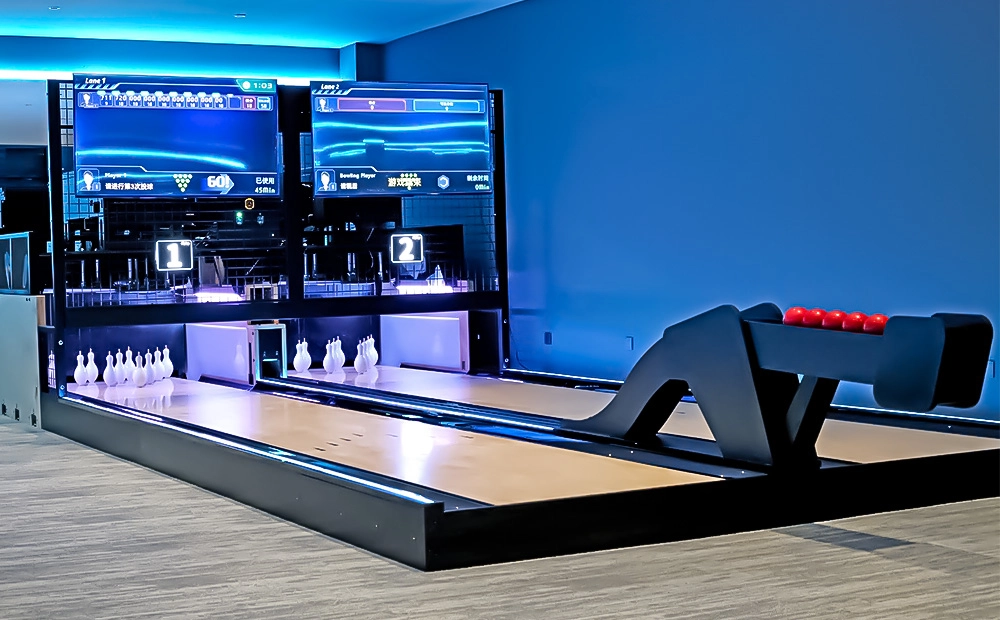
Flying Smart Duckpin Bowling Equipment and Lane System for Commercial Venues
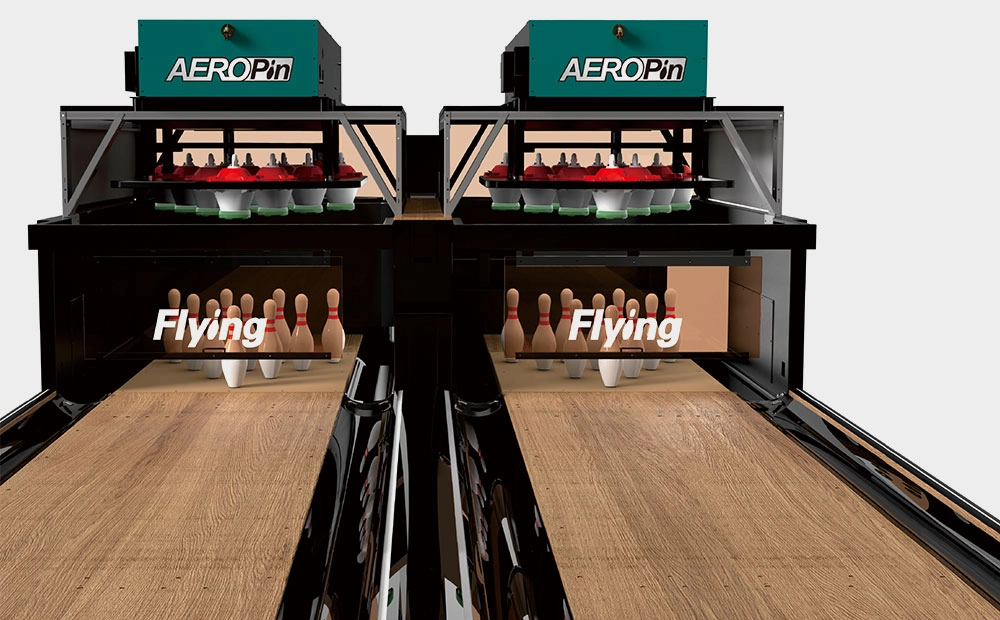
USBC-Certified AEROPIN String Pinsetter System
Mini Bowling Equipment for Kids and Family Entertainment Venues
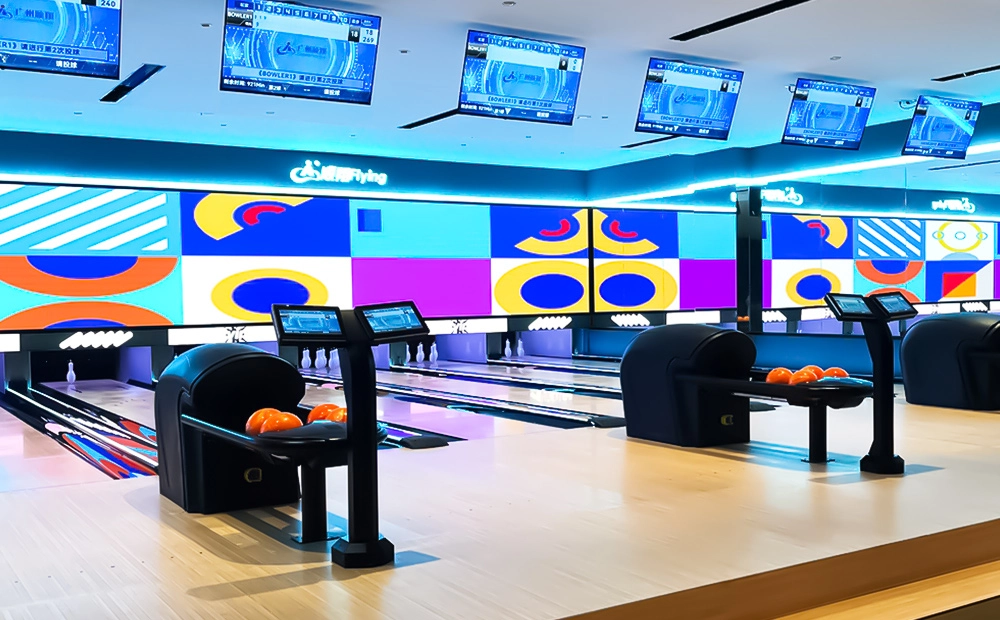
Medium Bowling Equipment for Social Entertainment Venues
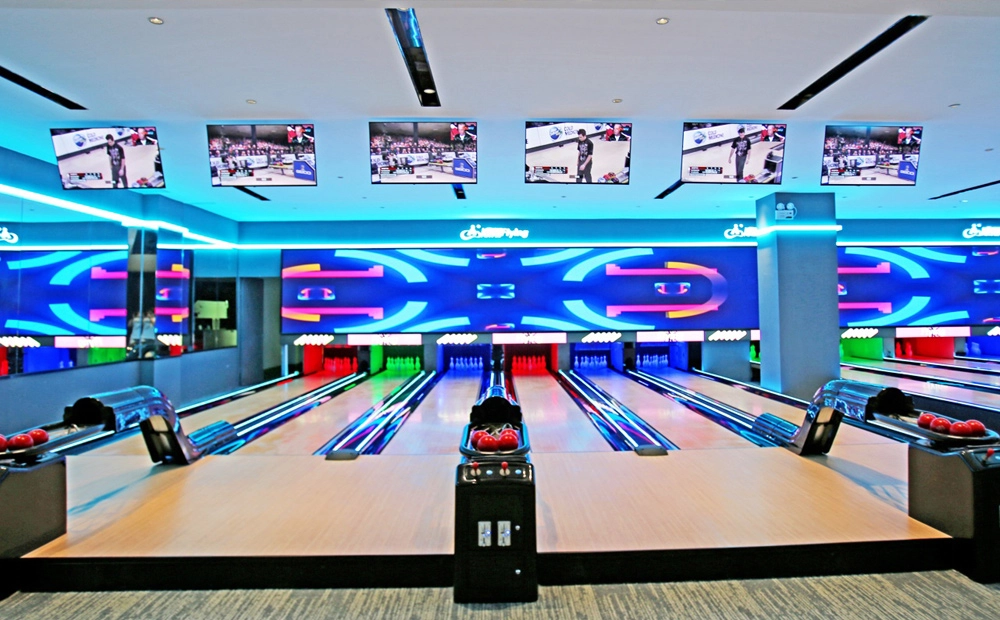
Complete String Pinsetter Bowling Alley Equipment System
You may also like
Flying Smart Duckpin Bowling (FSDB) innovative design, standard 9.2-meter short lane, can be shortened in length, compact layout suitable for small spaces. The game rules are simple but challenging, attracting players of different ages to actively participate.
Suitable for social entertainment venues such as bars, billiard halls, and game centers, it not only enhances interactivity but also increases the popularity and consumption frequency of the venue. The fun and competitive nature of FSDB will make it a new focus of social activities.
Flying Classic Standard Bowling (FCSB) is designed according to international competition standards and equipped with an accurate automatic scoring system, providing bowling enthusiasts with a pure professional experience. Whether it is for competitions or leisure entertainment, FCSB can meet high-level needs.
Suitable for family entertainment centers, luxury resorts, private villas, or clubs, it is an ideal choice for customers who pursue high-end quality and professional experience. Its classic design and excellent performance will add lasting appeal to the venue.
Flying Cute Mini Bowling (FCMB) is a mini bowling experience designed for children and families. The lane length is fixed at 12 meters, equipped with lightweight balls without finger holes (only 1.25kg) and small pins, specially designed for children and family fun.
It can not only help children feel the fun of bowling, but also stimulate their interest and competitive consciousness. Suitable for children's playgrounds, theme parks and parent-child centers, it is the best choice for places focusing on the children's market.
Flying Social Medium Bowling (FSMB) is tailored for small venues, with flexible lane lengths (customizable from 9.6 meters to 18 meters), a small ball design suitable for players of all ages, and light pins that are easier to knock down, increasing participation and fun.
Whether it is a gathering of friends or a casual social, FSMB can easily create a relaxed and pleasant atmosphere. Its efficient space-utilization design is particularly suitable for cafes, bars and community entertainment venues, allowing people to fall in love with bowling in a relaxed interaction.
Contact Flying
Start your bowling alley project
If you contact us now for more details, we can provide you with a custom bowling alley service. Our service team will get back to you within 24 hours normally!
© 2026 Flying BOWLING. Designed by gooeyun.
FOLLOW US:
Flying Bowling
Flying Bowling
Flyingbowling
Flyingbowling