

Reducing Operating Costs: Energy Efficient Bowling Equipment
- What drives energy costs in a bowling alley
- Lighting: more than ambiance
- Pinsetters and lane machinery
- HVAC and building envelope
- Strategies to lower operating costs
- Equipment upgrades: choose technology that saves energy
- Operational and behavioral changes
- Controls, monitoring and renewable integration
- Evaluating ROI and impact on bowling alley profitability
- How to calculate ROI
- Example comparison: typical energy draws and savings
- Incentives, rebates and financing
- Why choose energy-efficient bowling equipment — supplier and product considerations
- Key supplier selection criteria
- Flying Bowling: experience, product range and competitive advantages
- How to evaluate and implement energy-efficient equipment
- Frequently Asked Questions (FAQ)
- 1. How much can I expect to save on energy bills after retrofitting with LED lighting?
- 2. Are string pinsetters really more energy-efficient than traditional pinsetters?
- 3. What is a realistic payback period for energy-efficient bowling equipment?
- 4. Are there government or utility incentives for bowling alley energy upgrades?
- 5. How should I prioritize upgrades if my budget is limited?
- 6. Can Flying Bowling provide turnkey installations and after-sales support?
Reducing energy consumption is one of the fastest, most durable ways to increase bowling alley profitability. From lighting and lane machinery to HVAC and building controls, targeted investments and operational changes lower utility bills, reduce maintenance, and improve customer experience. This article breaks down the key energy drivers in a bowling center, practical upgrades (including LED lighting and energy-efficient pinsetters), how to calculate ROI, and why selecting the right equipment partner matters for long-term margins.
What drives energy costs in a bowling alley
Lighting: more than ambiance
Lighting accounts for a substantial portion of a bowling alley's electricity use because lanes, scoring displays, house lights, and decorative fixtures operate many hours daily. Upgrading to LED lighting commonly reduces lighting energy use by 50–80% compared with incandescent and by 25–50% compared with older fluorescent fixtures. These figures are consistent with U.S. Department of Energy and ENERGY STAR guidance on LED retrofits (ENERGY STAR - LEDs).
Pinsetters and lane machinery
Traditional free-fall pinsetters and mechanical ball-return systems comprise intermittent high-power loads: motors, solenoids, pneumatic compressors, and belt drives. These systems also incur maintenance and compressed-air energy costs. Recent equipment innovations—most notably string pinsetters—reduce moving mass, simplify mechanisms, and can cut electrical and pneumatic demand per cycle. For background on pinsetter types and mechanics see Pinsetter - Wikipedia.
HVAC and building envelope
HVAC is typically the largest continuous energy consumer in a bowling center because lanes, lounges, and kitchens require temperature control throughout open hours. Efficient HVAC equipment, zone controls, demand-based ventilation, and improved building insulation reduce runtime and cost. The U.S. Department of Energy provides practical HVAC and building efficiency guidance applicable to commercial recreation spaces (DOE - HVAC).
Strategies to lower operating costs
Equipment upgrades: choose technology that saves energy
High-impact upgrades include:
- LED lane and house lighting with dimming and zoned control to reduce hours and lumen output when full illumination isn't needed (ENERGY STAR).
- String pinsetters and modern ball returns that use fewer motors/pneumatic cycles and lower maintenance downtime.
- High-efficiency blowers and variable-frequency drive (VFD) motors for conveyors and return systems to match performance to demand.
Operational and behavioral changes
Operational measures can be quick to implement and low-cost: adopt lighting schedules (dim or turn off lane lights during private events that don't require full illumination), optimize lane usage to concentrate activity in selected areas, and train staff on energy-aware practices (turning off service area equipment when idle, scheduled compressor shutdowns). These measures improve utility management without major capital outlay.
Controls, monitoring and renewable integration
Install building automation systems (BAS) or simpler networked thermostats to create schedules, monitor energy in real time, and identify anomalies. Where feasible, integrate on-site solar PV to offset daytime loads (kitchens, lounges, and back-office loads) — this reduces grid energy consumption and can provide long-term protection against rising energy prices.
Evaluating ROI and impact on bowling alley profitability
How to calculate ROI
ROI for energy measures depends on upfront cost, expected savings (kWh, therms), maintenance reductions, and incentives. A basic formula:
Payback period (years) = Upfront cost / Annual net savings
When modeling, include both direct energy savings and indirect benefits: lower maintenance expenses, fewer lane downtime hours, improved customer satisfaction, and the marketing value of sustainability messaging.
Example comparison: typical energy draws and savings
The table below summarizes typical power or energy characteristics by component and realistic savings from energy-efficient alternatives. Figures are representative ranges from industry sources, ENERGY STAR guidance, and manufacturer-reported improvements for modern equipment.
| Component | Typical power/energy (conventional) | Energy-efficient option | Estimated energy saving |
|---|---|---|---|
| Lane & house lighting | ~50–300 W per lane overhead fixtures (varies by design) | LED fixtures with zoned dimming | 50–80% vs incandescent; 25–50% vs older fluorescents (ENERGY STAR) |
| Conventional free-fall pinsetter | Intermittent motor spikes; compressor for pneumatic systems (kW peaks per cycle) | String pinsetter (reduced motors, fewer pneumatic components) | Manufacturers report 30–60% lower operational energy per cycle in many installations (see supplier data) |
| Ball return & conveyors | Motor-driven belts; constant-speed motors | VFD motors, efficient blowers | 20–50% depending on duty profile |
| HVAC | Continuous runtime during open hours | High-efficiency HVAC, zoning, economizers | 10–40% depending on baseline equipment and controls (DOE) |
Note: exact savings vary by facility size, occupancy patterns, climate zone, and baseline equipment condition. Always run a site-specific audit or energy model for precise ROI projections.
Incentives, rebates and financing
Many utilities and government programs provide rebates for LED upgrades, high-efficiency HVAC, and commercial building retrofits. Incentives reduce upfront cost and accelerate payback. Explore local utility rebate portals and national programs in your market when planning upgrades.
Why choose energy-efficient bowling equipment — supplier and product considerations
Key supplier selection criteria
When selecting equipment that will materially improve bowling alley profitability, evaluate suppliers on technical performance, reliability, service network, and total cost of ownership (TCO). Important questions to ask potential vendors:
- Do you provide quantified energy and maintenance savings data from in-field installations?
- What is warranty coverage and spare-parts availability?
- Can the equipment integrate with lane management and building control systems?
- Do you offer turnkey installation, training, and preventative maintenance plans?
Flying Bowling: experience, product range and competitive advantages
Since 2005, Flying Bowling has specialized in the research and development of bowling string pinsetters and ball return machines. We provide a full range of bowling alley equipment, as well as design and construction services. Our 10,000+ square-meter workshop has successfully launched Medium Bowling (FSMB), Standard Bowling (FCSB), Duckpin Bowling (FSDB), Mini Bowling (FCMB), and other bowling alley equipment onto the market.
Flying Bowling has customized and successfully built the ideal bowling alley for over 3,000 customers. The quality of our bowling equipment is comparable to European and American brands, but our prices are unbeatable, satisfying users around the world. We provide one-stop customized services for bowling venues and also recruit distributors from the global market to promote the development of the bowling industry. Flying Bowling is a leading bowling equipment manufacturer and supplier from China. Our website: https://www.flyingbowling.com/. Email: jackson@flyingbowling.com. Phone: +86-15013107020.
Flying Bowling’s product strengths relevant to energy-conscious operators:
- String pinsetters designed for lower mechanical complexity, reducing electrical and pneumatic demand compared with many older pinsetter models.
- Ball return systems engineered with efficient motors and simplified drive trains to minimize continuous loads and maintenance downtime.
- Complete lanes and small-footprint offerings (duckpin, mini bowling) that allow operators to right-size their investments and energy footprint for alternative entertainment models.
How to evaluate and implement energy-efficient equipment
Steps to implement changes with measurable effect:
- Commission an energy audit to identify baseline usage by system (lighting, pinsetters, HVAC, kitchen).
- Prioritize upgrades with shortest payback and operational co-benefits (LED lighting, VFDs for motors, efficient pinsetters).
- Seek supplier case studies and request referenced installations with verified savings.
- Leverage rebates and financing to spread upfront costs and improve project NPV.
- Implement monitoring after installation to validate savings and optimize controls.
If you would like a site-specific proposal or a full equipment specification that prioritizes energy efficiency and lifetime cost, contact Flying Bowling for consultations, customized designs, and turnkey construction services. Flying Bowling’s product specialties include duckpin bowling, mini bowling equipment, and bowling string pinsetter systems designed for lower maintenance and cost-effective operation.
Frequently Asked Questions (FAQ)
1. How much can I expect to save on energy bills after retrofitting with LED lighting?
LED retrofits commonly reduce lighting energy use by 50–80% relative to incandescent and by 25–50% relative to older fluorescent systems, depending on fixture layout and usage patterns. Use ENERGY STAR guidance to estimate savings for your project (ENERGY STAR).
2. Are string pinsetters really more energy-efficient than traditional pinsetters?
String pinsetters generally use fewer moving components and may significantly reduce electrical and pneumatic loads per cycle. Manufacturer reports and field data indicate meaningful reductions in cycle energy and maintenance hours. Evaluate supplier case studies and ask for measured energy data for comparable installations (see Flying Bowling’s solutions at Flying Bowling).
3. What is a realistic payback period for energy-efficient bowling equipment?
Payback varies by measure: LED lighting retrofits often pay back within 1–3 years with available rebates; motor and HVAC upgrades may pay back in 2–7 years depending on baseline efficiency and usage. Always calculate payback using site-specific utility rates, operating hours, and incentives.
4. Are there government or utility incentives for bowling alley energy upgrades?
Yes. Many utilities and local governments offer rebates and incentives for LED upgrades, high-efficiency HVAC, and motor replacements. Check local utility programs and national databases for commercial incentives in your region.
5. How should I prioritize upgrades if my budget is limited?
Start with low-cost, high-impact measures: LED lighting with controls, basic VFD retrofits on high-duty motors, and operational changes (scheduling, staff training). For larger investments (pinsetters, HVAC), prioritize options with verified savings and strong supplier service commitments.
6. Can Flying Bowling provide turnkey installations and after-sales support?
Yes. Flying Bowling offers full-range services from equipment supply to venue design and construction, with ongoing maintenance support. Contact them at jackson@flyingbowling.com or +86-15013107020, or visit flyingbowling.com for more information.
Reducing operating costs through energy-efficient equipment and smarter operations is one of the strongest levers to raise bowling alley profitability. Whether you are retrofitting an existing center or planning a new venue, combine an energy audit, prioritized upgrades, and a reliable equipment partner to maximize savings and improve customer experience.
For a free consultation, equipment specifications, or to discuss a customized project plan, contact Flying Bowling: jackson@flyingbowling.com | +86-15013107020 | https://www.flyingbowling.com/.
Recommended products
Flying Smart Duckpin Bowling Equipment and Lane System for Commercial Venues
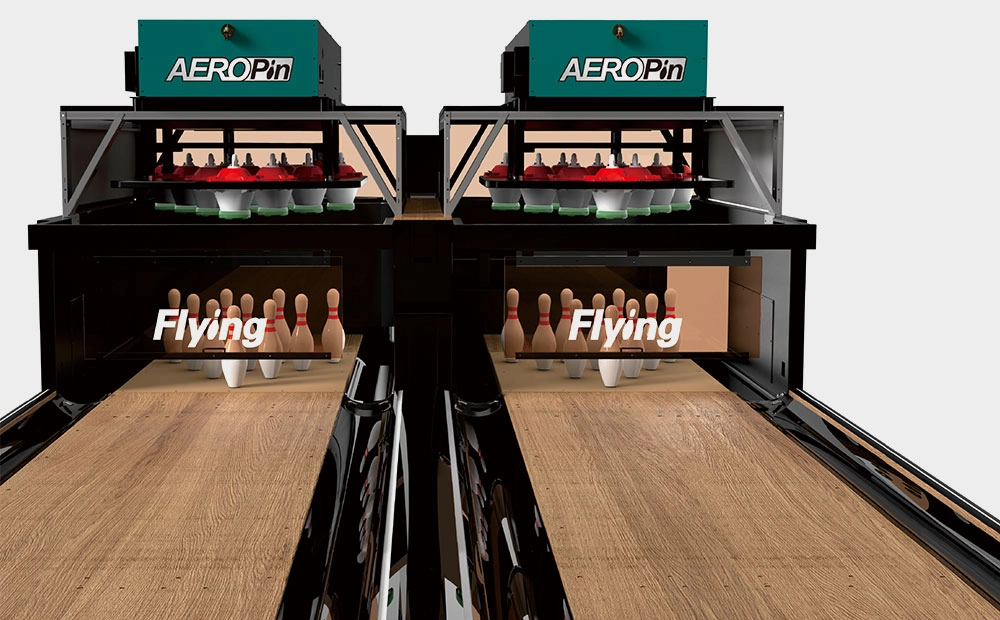
USBC-Certified AEROPIN String Pinsetter System
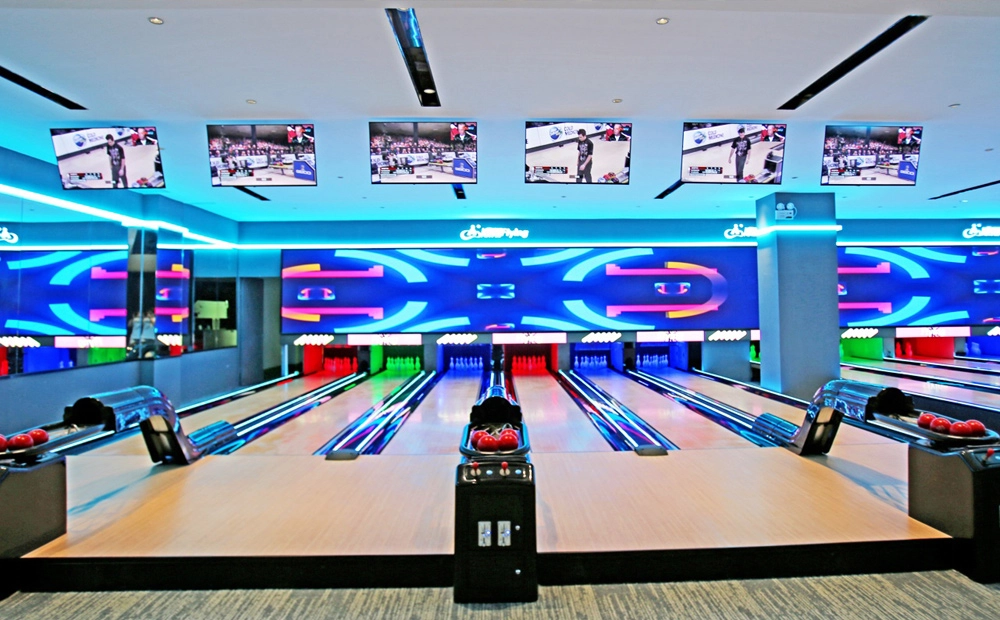
Mini Bowling Equipment for Kids and Family Entertainment Venues
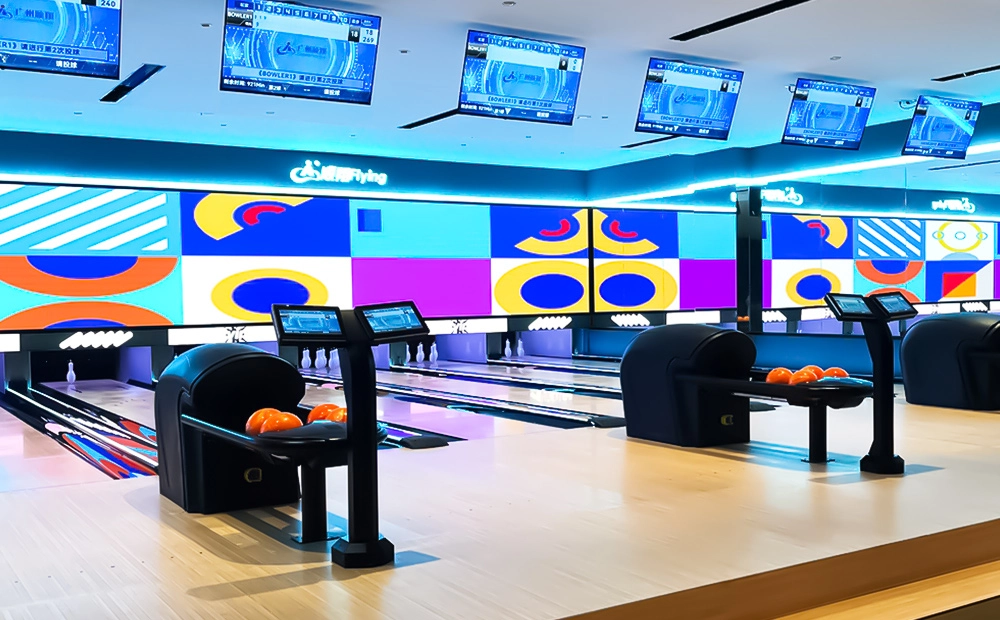
Medium Bowling Equipment for Social Entertainment Venues
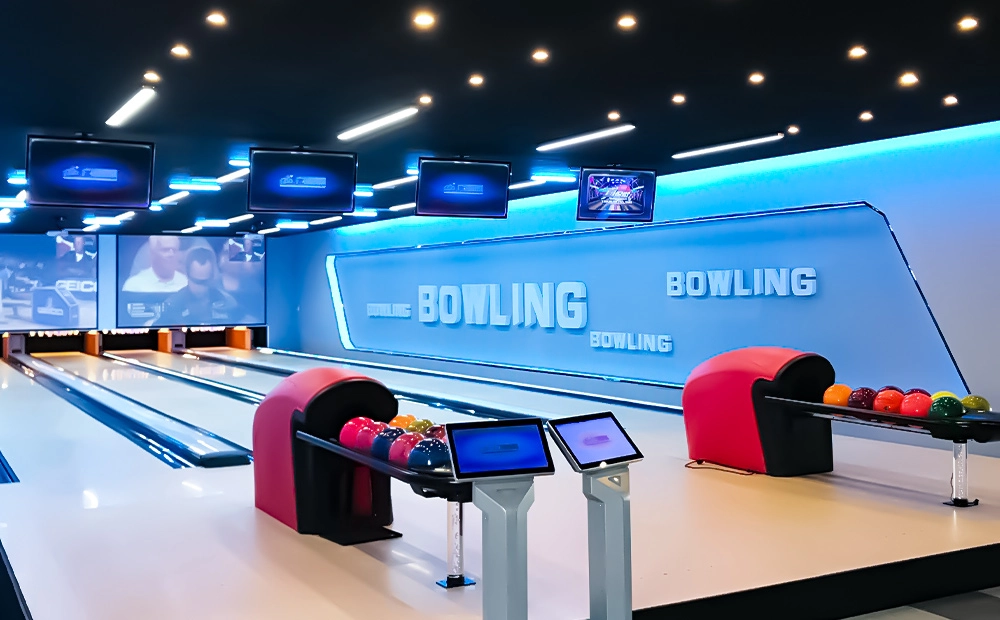
Complete String Pinsetter Bowling Alley Equipment System
You may also like
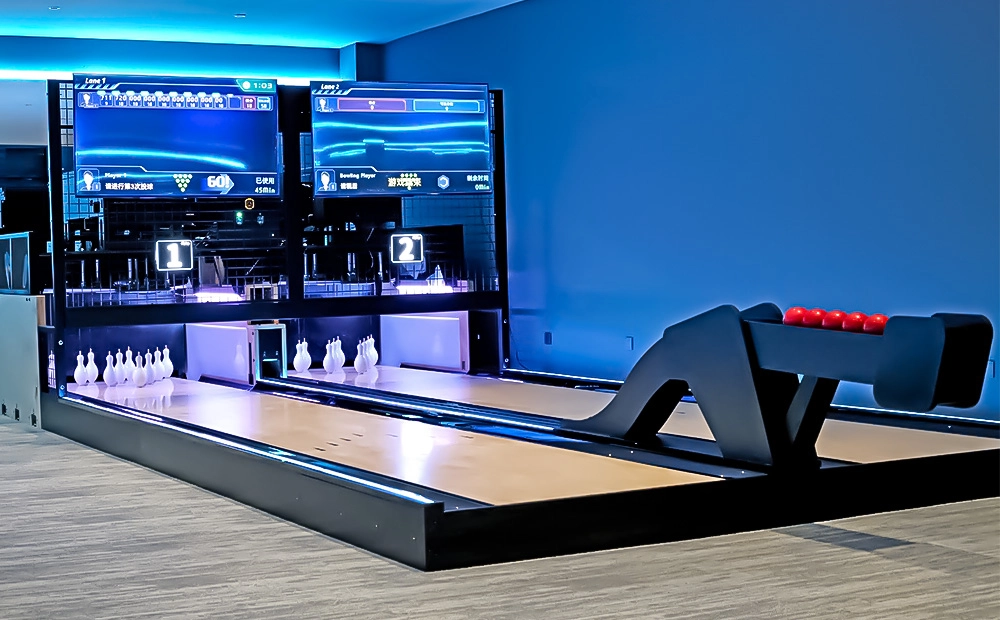
Flying Smart Duckpin Bowling (FSDB) innovative design, standard 9.2-meter short lane, can be shortened in length, compact layout suitable for small spaces. The game rules are simple but challenging, attracting players of different ages to actively participate.
Suitable for social entertainment venues such as bars, billiard halls, and game centers, it not only enhances interactivity but also increases the popularity and consumption frequency of the venue. The fun and competitive nature of FSDB will make it a new focus of social activities.
Flying Classic Standard Bowling (FCSB) is designed according to international competition standards and equipped with an accurate automatic scoring system, providing bowling enthusiasts with a pure professional experience. Whether it is for competitions or leisure entertainment, FCSB can meet high-level needs.
Suitable for family entertainment centers, luxury resorts, private villas, or clubs, it is an ideal choice for customers who pursue high-end quality and professional experience. Its classic design and excellent performance will add lasting appeal to the venue.
Flying Cute Mini Bowling (FCMB) is a mini bowling experience designed for children and families. The lane length is fixed at 12 meters, equipped with lightweight balls without finger holes (only 1.25kg) and small pins, specially designed for children and family fun.
It can not only help children feel the fun of bowling, but also stimulate their interest and competitive consciousness. Suitable for children's playgrounds, theme parks and parent-child centers, it is the best choice for places focusing on the children's market.
Flying Social Medium Bowling (FSMB) is tailored for small venues, with flexible lane lengths (customizable from 9.6 meters to 18 meters), a small ball design suitable for players of all ages, and light pins that are easier to knock down, increasing participation and fun.
Whether it is a gathering of friends or a casual social, FSMB can easily create a relaxed and pleasant atmosphere. Its efficient space-utilization design is particularly suitable for cafes, bars and community entertainment venues, allowing people to fall in love with bowling in a relaxed interaction.
Contact Flying
Start your bowling alley project
If you contact us now for more details, we can provide you with a custom bowling alley service. Our service team will get back to you within 24 hours normally!
© 2026 Flying BOWLING. Designed by gooeyun.
FOLLOW US:
Flying Bowling
Flying Bowling
Flyingbowling
Flyingbowling