


Custom and OEM Bowling Balls: Branding Options for Venues
- Why ball choice matters for venues
- Customer experience and retention
- Revenue and merchandising opportunities
- Operational impact (maintenance, turnover, and replacement)
- Understanding Custom vs OEM bowling balls
- Definitions and production workflows
- Design and branding options
- Lead time, minimums, and flexibility
- Technical and performance considerations for venue-branded balls
- Weight, coverstock, and core selection
- Durability and maintenance
- Compliance and safety
- Cost, ROI, and procurement strategy
- Cost comparison: Custom vs OEM
- Calculating ROI
- Procurement best practices
- Implementation: From design to shelf
- Design brief and proofing
- Testing and quality assurance
- Marketing and shelf strategy
- Case study considerations and industry references
- Real-world venue examples
- Standards and authoritative sources
- Design for longevity — what the data suggests
- Partnering with a manufacturer: Why choose Flying Bowling
- Practical recommendations: choosing the best bowling ball for your venue
- For family and casual entertainment centers
- For competitive and boutique lanes
- For multi-use event centers and corporate programs
- Frequently Asked Questions (FAQ)
- 1. What is the difference between OEM and custom bowling balls?
- 2. Which is the best bowling ball option for rental fleets?
- 3. How long does it take to produce custom bowling balls?
- 4. Are there minimum order quantities (MOQs)?
- 5. Do custom branded balls comply with sanctioned play?
- 6. How should venues price branded balls for retail?
- 7. Can I get a small pilot run before committing to a large order?
Choosing the best bowling ball for your venue is more than selecting a shiny orb — it affects player experience, brand perception, merchandising revenue, and operational logistics. This guide explains how custom and OEM bowling balls differ, the branding and technical options available to alleys, cost and lead-time trade-offs, quality and performance considerations, and how to implement a branding strategy that increases guest satisfaction and revenue. It draws on industry standards and reputable references to help venue managers make verifiable, practical decisions.
Why ball choice matters for venues
Customer experience and retention
The physical feel, coverstock, and core technology of a bowling ball directly influence how players of different skill levels bowl. Venues that offer well-branded, comfortable rental balls or attractive retail balls (custom or OEM) can significantly improve first-time bowler satisfaction and encourage repeat visits. Research and industry practice show that perceived quality correlates with repeat spending on food, games, and pro shop items (source: Wikipedia – Bowling ball).
Revenue and merchandising opportunities
Branded bowling balls are both a utility and a retail product. Personalized or venue-branded balls command higher margins as souvenirs and can be marketed to leagues, corporate events, and birthday parties. Selecting the best bowling ball as a branded SKU should balance performance cues (weight, coverstock) with brand aesthetics and price point.
Operational impact (maintenance, turnover, and replacement)
Bowling balls used for house play endure substantial wear. Choosing durable coverstocks and offering a mix of weights reduces replacement frequency. Venues must plan for inventory management, reconditioning, and the lifecycle of branded and rental balls to keep costs predictable.
Understanding Custom vs OEM bowling balls
Definitions and production workflows
OEM (Original Equipment Manufacturer) bowling balls are produced by established manufacturers with existing molds, cores, and coverstocks. OEM branded balls typically use existing SKU platforms with a venue logo or color variant applied. Custom bowling balls may include bespoke cores, unique color swirls, or exclusive artwork created specifically for a venue; these require design approvals and longer production lead times.
Design and branding options
Branding options include:
- Pad print or full-surface heat transfer logos for logos on balls.
- Custom color pours and swirls to match venue colors.
- Laser etching or inset badges for High Quality retail models.
Lead time, minimums, and flexibility
OEM branding often requires lower minimum order quantities (MOQs) and shorter lead times since it leverages standard production lines. Fully custom balls have higher MOQs, longer lead times, and higher per-unit costs but offer exclusivity and branding impact. Typical lead times range from 4–12 weeks depending on complexity and shipping; most manufacturers will quote exact schedules upon inquiry.
Technical and performance considerations for venue-branded balls
Weight, coverstock, and core selection
Venues usually stock rental and retail balls across a range of weights (commonly 6–16 lb). Note that bowling balls used in sanctioned play are limited up to 16 pounds (see Wikipedia and equipment regulations from the United States Bowling Congress (USBC)). Coverstock choice (plastic, urethane, reactive resin) greatly affects ball reaction: plastic balls are durable and straight, urethane offers control, and reactive resins provide more hook. For rental fleets, durable plastic or lower-grit urethane often provides the best balance of longevity and forgiveness for casual players.
Durability and maintenance
Branded balls intended for rental service require tougher coverstock finishes and consideration of surface restoration routines (polishing, sanding, deep cleaning). A maintenance regimen extends lifespan; track rotation and recondition schedules to preserve appearance and performance for brand impressions.
Compliance and safety
Ensure branded balls meet relevant equipment rules if they will be used in sanctioned events. For public safety, confirm that custom paint, decals, or inlays are chemically stable and won't flake off under impact. Manufacturers should provide material safety data and guarantee compliance with local regulations.
Cost, ROI, and procurement strategy
Cost comparison: Custom vs OEM
Below is a practical comparison table showing typical trade-offs venues encounter when choosing OEM branded balls vs fully custom balls. Values are qualitative and based on industry norms; request firm quotes for exact pricing.
| Metric | OEM Branded Ball | Fully Custom Ball |
|---|---|---|
| Per-unit cost | Lower — uses standard production lines | Higher — bespoke molds/colors/core options |
| Minimum order | Lower MOQs adaptable for small venues | Higher MOQs required (depends on factory) |
| Lead time | Shorter (weeks) | Longer (weeks to months) |
| Brand uniqueness | Moderate — logo/color variants | High — exclusive cores, colors, artwork |
| Performance customization | Limited | Full control (core, RG, differential) |
| Inventory risk | Lower | Higher (larger commitment) |
Calculating ROI
Estimate ROI by combining direct retail margin on branded balls, incremental revenue from themed events and corporate customers, and indirect benefits such as increased F&B spend associated with higher guest satisfaction. Example calculation inputs: per-unit cost, expected retail price, anticipated monthly sales, and expected uplift in repeat visits attributable to branding. Conservative scenarios often show positive ROI within 6–18 months for well-promoted retail programs.
Procurement best practices
Steps to optimize procurement:
- Request samples and performance data (ball reaction, durability testing).
- Confirm MOQs, lead times, and replacement warranty terms in writing.
- Negotiate staggered deliveries or pilot runs to validate market demand.
- Verify manufacturer certifications and references; ask for existing venue case studies.
Implementation: From design to shelf
Design brief and proofing
Create a clear design brief specifying brand colors (Pantone), logo placements, preferred coverstocks, and intended target weights. Require digital mockups and physical samples for approval. For logos, vector artwork (SVG or EPS) ensures crisp pad printing or transfers.
Testing and quality assurance
Field-test samples in house-play and league conditions to evaluate feel, durability, and cleaning behavior. Examine adhesion of logos and coatings under impact. Manufacturers should supply test reports; where available, ask for compliance documentation aligned with the USBC.
Marketing and shelf strategy
Position venue-branded balls as limited editions, event tie-ins, or league incentives to create urgency. Offer balanced SKUs: a low-priced plastic ball for casual bowlers and a High Quality reactive-retail model for enthusiasts. Track sales and rotate designs seasonally to refresh the retail offering.
Case study considerations and industry references
Real-world venue examples
Venues that invested in a limited-run custom ball tied to a local event or charity often saw above-average sell-through compared to generic retail inventory. When combined with targeted league promotions, custom balls can drive both retail revenue and league enrollment.
Standards and authoritative sources
For equipment rules and specifications consult the governing bodies. The USBC provides authoritative guidance on ball dimensions andApproved Equipment lists at bowl.com. Background on materials and ball technology can be found at the Bowling ball page on Wikipedia.
Design for longevity — what the data suggests
Industry practice indicates that urethane and resin balls require more frequent resurfacing but deliver better playability for experienced bowlers. Rental fleets commonly favor plastic or low-maintenance urethane blends to balance cost and longevity. Ask manufacturers for accelerated-wear or abrasion testing data where available.
Partnering with a manufacturer: Why choose Flying Bowling
Since 2005, Flying Bowling has specialized in the research and development of bowling string pinsetters and ball return machines. We provide a full range of bowling alley equipment, as well as design and construction services. Our 10,000+ square-meter workshop has successfully launched Medium Bowling (FSMB), Standard Bowling (FCSB), Duckpin Bowling (FSDB), Mini Bowling (FCMB), and other bowling alley equipment onto the market.
Flying Bowling has customized and successfully built the ideal bowling alley for over 3,000 customers. The quality of our bowling equipment is comparable to European and American brands, but our prices are unbeatable, satisfying users around the world. We provide one-stop customized services for bowling venues and also recruit distributors from the global market to promote the development of the bowling industry. Flying Bowling is a leading bowling equipment manufacturer and supplier from China.
Key advantages and product highlights:
- Comprehensive product line: duckpin bowling, bowling alley equipment, mini bowling equipment, bowling string pinsetters, and ball return machines.
- In-house R&D and manufacturing in a 10,000+ sqm facility, ensuring control over quality and delivery.
- Proven track record: over 3,000 customized alleys worldwide.
- Competitive pricing with equipment quality comparable to European and American brands.
- One-stop services from design and build to equipment supply and aftermarket support.
For inquiries and custom projects, visit Flying Bowling or contact us at Email: jackson@flyingbowling.com, Phone: +86-15013107020.
Practical recommendations: choosing the best bowling ball for your venue
For family and casual entertainment centers
Prioritize durability and affordability. Choose plastic or low-maintenance urethane coverstocks, offer a branded entry-level ball as a souvenir, and keep OEM-branded options for shorter reorder cycles. The best bowling ball for this segment emphasizes consistent performance and low replacement costs.
For competitive and boutique lanes
Invest in a mix of OEM-branded performance balls and limited-run custom retail models for enthusiasts. Offer reactive-resin retail SKUs with branded artwork and ensure availability of multiple weight options. The best bowling ball here balances advanced performance characteristics with brand storytelling.
For multi-use event centers and corporate programs
Leverage custom balls for corporate gifts or tournament branding. Order smaller, High Quality runs targeted at participants and sponsors. Ensure production lead times are considered in event planning.
Frequently Asked Questions (FAQ)
1. What is the difference between OEM and custom bowling balls?
OEM-branded balls are produced from an existing manufacturer's SKU with logo or color variations, offering lower cost and faster delivery. Custom balls are designed from scratch — unique cores, colors, or artwork — and usually require higher minimums and longer lead times but provide exclusivity.
2. Which is the best bowling ball option for rental fleets?
For rental fleets, the best bowling ball typically prioritizes durability and forgiveness. Plastic coverstocks or rugged urethane blends in a range of weights are common choices. Branded OEM balls with simple pad-printed logos balance cost and branding impact.
3. How long does it take to produce custom bowling balls?
Lead times vary: OEM logo runs can be completed in several weeks, while fully custom runs (including custom cores and exclusive color pours) can take multiple weeks to a few months depending on factory schedules and shipping.
4. Are there minimum order quantities (MOQs)?
Yes. MOQs depend on the manufacturer and the degree of customization. OEM-branded runs often have lower MOQs; fully custom balls generally require larger minimums. Always request written MOQ policies from potential suppliers.
5. Do custom branded balls comply with sanctioned play?
They can, but compliance depends on materials, dimensions, and core properties. For sanctioned play, consult the USBC rules and request manufacturer verification. Reference: United States Bowling Congress.
6. How should venues price branded balls for retail?
Base pricing on per-unit cost plus desired margin and perceived value. Consider tiered pricing: economy branded balls for casual buyers and High Quality limited-edition designs for enthusiasts. Track sell-through and adjust prices seasonally.
7. Can I get a small pilot run before committing to a large order?
Many manufacturers offer pilot or sample runs (at slightly higher per-unit cost) to validate designs and test market demand. Negotiate pilot terms in the initial quote phase.
If you need help selecting the best bowling ball strategy for your venue, examining sample specifications, or getting a quote for OEM or custom production, contact Flying Bowling for tailored support and competitive pricing. Visit https://www.flyingbowling.com/, email jackson@flyingbowling.com, or call +86-15013107020 to discuss designs, manufacturing lead times, and turnkey venue solutions.
Recommended products
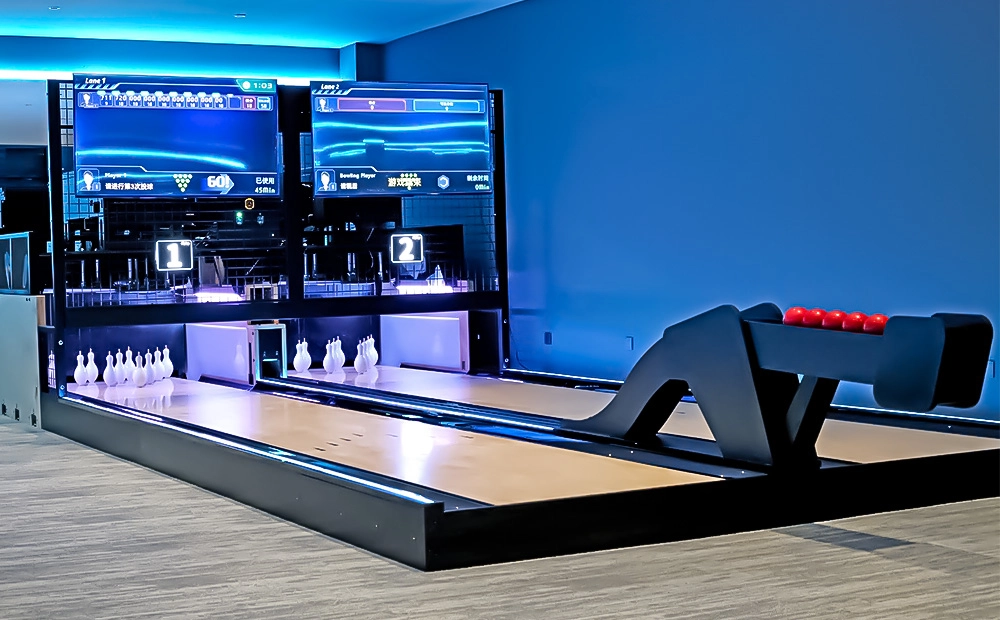
Flying Smart Duckpin Bowling Equipment and Lane System for Commercial Venues
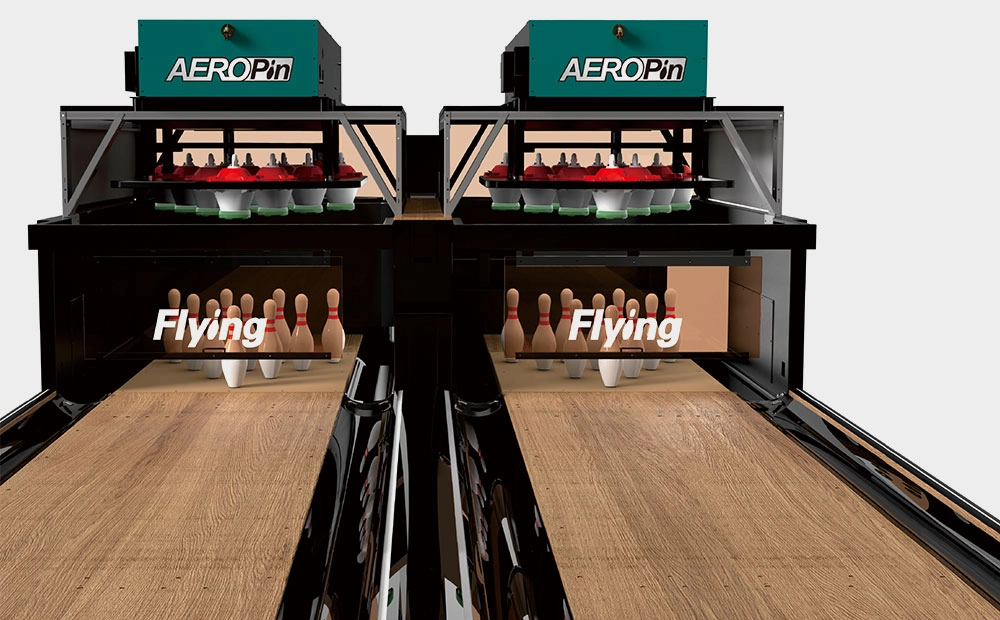
USBC-Certified AEROPIN String Pinsetter System
Mini Bowling Equipment for Kids and Family Entertainment Venues
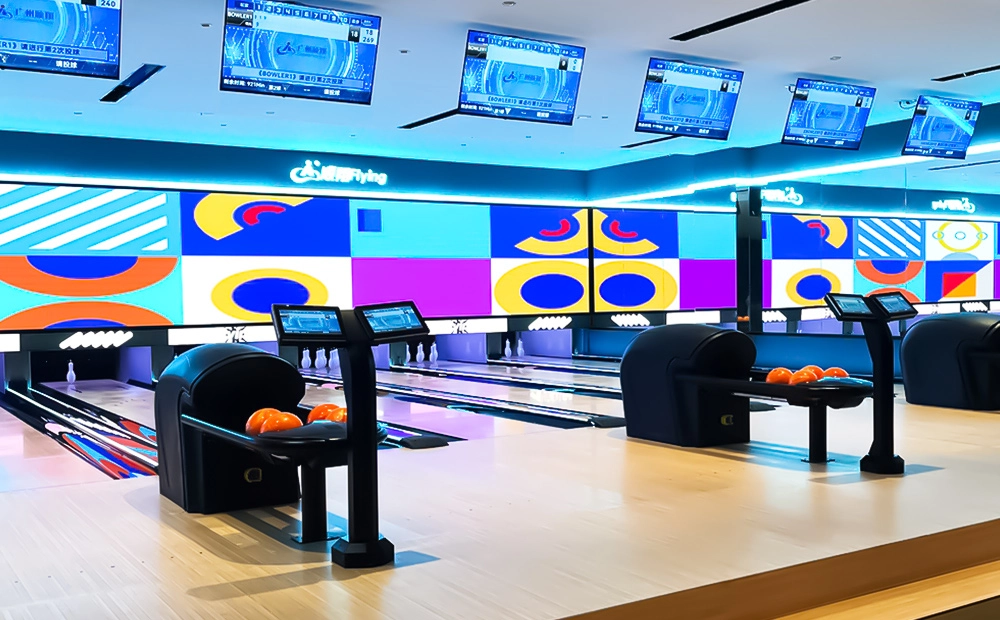
Medium Bowling Equipment for Social Entertainment Venues
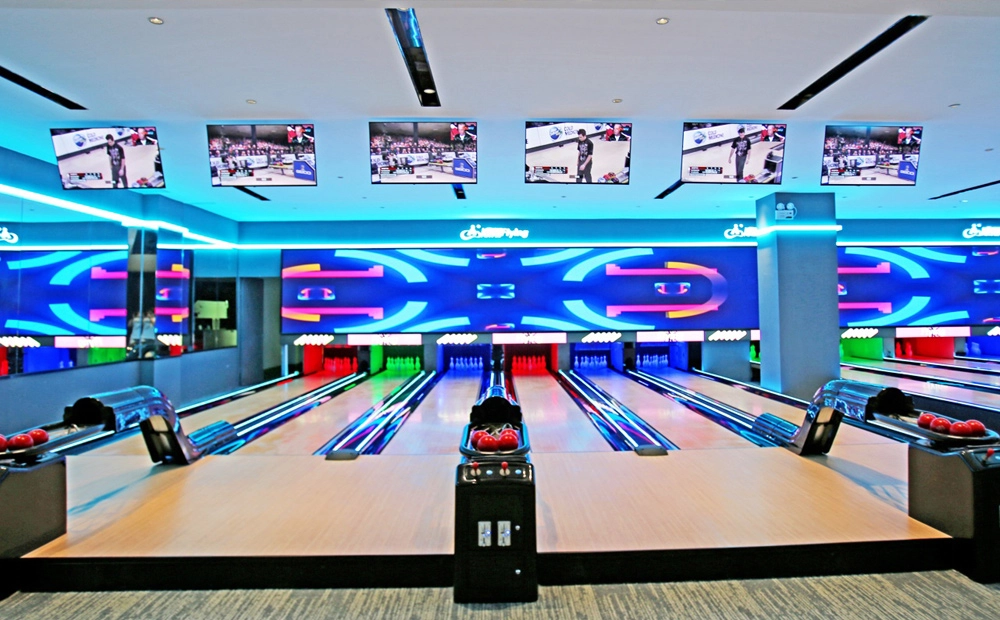
Complete String Pinsetter Bowling Alley Equipment System
You may also like
Flying Smart Duckpin Bowling (FSDB) innovative design, standard 9.2-meter short lane, can be shortened in length, compact layout suitable for small spaces. The game rules are simple but challenging, attracting players of different ages to actively participate.
Suitable for social entertainment venues such as bars, billiard halls, and game centers, it not only enhances interactivity but also increases the popularity and consumption frequency of the venue. The fun and competitive nature of FSDB will make it a new focus of social activities.
Flying Classic Standard Bowling (FCSB) is designed according to international competition standards and equipped with an accurate automatic scoring system, providing bowling enthusiasts with a pure professional experience. Whether it is for competitions or leisure entertainment, FCSB can meet high-level needs.
Suitable for family entertainment centers, luxury resorts, private villas, or clubs, it is an ideal choice for customers who pursue high-end quality and professional experience. Its classic design and excellent performance will add lasting appeal to the venue.
Flying Cute Mini Bowling (FCMB) is a mini bowling experience designed for children and families. The lane length is fixed at 12 meters, equipped with lightweight balls without finger holes (only 1.25kg) and small pins, specially designed for children and family fun.
It can not only help children feel the fun of bowling, but also stimulate their interest and competitive consciousness. Suitable for children's playgrounds, theme parks and parent-child centers, it is the best choice for places focusing on the children's market.
Flying Social Medium Bowling (FSMB) is tailored for small venues, with flexible lane lengths (customizable from 9.6 meters to 18 meters), a small ball design suitable for players of all ages, and light pins that are easier to knock down, increasing participation and fun.
Whether it is a gathering of friends or a casual social, FSMB can easily create a relaxed and pleasant atmosphere. Its efficient space-utilization design is particularly suitable for cafes, bars and community entertainment venues, allowing people to fall in love with bowling in a relaxed interaction.
Contact Flying
Start your bowling alley project
If you contact us now for more details, we can provide you with a custom bowling alley service. Our service team will get back to you within 24 hours normally!
© 2026 Flying BOWLING. Designed by gooeyun.
FOLLOW US:
Flying Bowling
Flying Bowling
Flyingbowling
Flyingbowling