


How to Choose a Bowling String Pinsetter Supplier
- Understanding Bowling String Pinsetters
- What is a bowling string pinsetter?
- How string pinsetters differ from free-fall (reel) pinsetters
- When to choose string pinsetters
- Key Criteria to Evaluate a Supplier
- Product quality, manufacturing standards and references
- Certifications, safety and compliance
- After-sales support, spare parts and service network
- Technical Specifications and Practical Tests
- Mechanical components to inspect
- Electrical, control and compatibility
- On-site acceptance tests and performance checks
- Commercial, Financial and Operational Considerations
- Total cost of ownership (TCO) versus purchase price
- Installation, training and documentation
- Warranty structure and spare-parts strategy
- Selecting and Managing Supplier Relationships
- Questions to ask every potential supplier
- Contracts, payment and risk allocation
- Building a long-term relationship
- Flying Bowling: Manufacturer Profile and Why They Matter
- FAQs
- 1. Are string pinsetters suitable for league bowling?
- 2. How long do the strings last and how often must they be replaced?
- 3. What are typical warranty terms for string pinsetters?
- 4. Can string pinsetters be integrated with my current scoring system?
- 5. What should I budget for spare parts and maintenance annually?
- 6. How do I verify a supplier's claims about uptime and durability?
Choosing the right bowling string pinsetter supplier is a critical decision for any modern bowling venue. The choice affects installation cost, operating uptime, maintenance burden, player experience and long-term profitability. This article provides a structured, practical approach to evaluating suppliers—covering technical specs, quality and compliance, after-sales support, total cost of ownership and procurement best practices—so you can make a verifiable, risk-managed decision that aligns with your venue goals.
Understanding Bowling String Pinsetters
What is a bowling string pinsetter?
A bowling string pinsetter is a pin-setting mechanism in which pins are attached to strings and mechanically lifted, cleared and reset by a system of motors and guides rather than being free-fall knocked down and mechanically sorted by a traditional reel pinsetter. String pinsetters are designed to reduce mechanical complexity, lower maintenance needs and improve safety for casual and family-oriented bowling centers. For technical background on pinsetters generally, see the pinsetter overview on Wikipedia.
How string pinsetters differ from free-fall (reel) pinsetters
Key differences include how pins are supported and moved, how fallen pins are cleared, noise and vibration levels, and long-term maintenance. String systems generally require fewer large moving parts under the lane, reducing heavy mechanical wear and oil-related maintenance. Traditional free-fall pinsetters (also called reel or mechanical pinsetters) deliver a pro-style ball and pin reaction that many competitive bowlers prefer, but they are more complex to maintain. These trade-offs should guide supplier discussions and product comparisons.
When to choose string pinsetters
String pinsetters are particularly suitable for family entertainment centers, hotels, resorts, schools, mini-bowling venues and markets where lower operating cost, compact installation and safety are prioritized. For high-performance or professional competition centers, the decision depends on whether the venue targets league/tournament play, where free-fall behavior is often preferred (see governing bodies such as the International Bowling Federation at bowling.sport for competition standards).
Key Criteria to Evaluate a Supplier
Product quality, manufacturing standards and references
Ask for factory photos, quality control processes, production capacity and client references. Verify whether the supplier tests new string pinsetter units on-site and provides detailed technical documentation. Reliable suppliers will show ISO or equivalent quality system records, long-term durability testing data and references from venues operating similar models for multiple years.
Certifications, safety and compliance
Confirm that the equipment meets local electrical, machine safety and fire regulations. Suppliers should be able to provide CE certification for European markets, UL or equivalent for North America where applicable, and documentation of compliance with local building and electrical codes. For safety and standards context refer to general pinsetter information and safety expectations on Wikipedia and industry federation sites such as bowling.sport.
After-sales support, spare parts and service network
Evaluate warranty terms, spare-part lead times and whether the supplier provides remote diagnostics, scheduled maintenance contracts and field technicians. A supplier that stocks modular replacement kits and offers training for in-house technicians reduces downtime and total cost of ownership. Insist on clear SLAs for response times and parts availability in your contract.
Technical Specifications and Practical Tests
Mechanical components to inspect
Review the pin attachment method, string materials, tensioning systems, motor drives, gearbox specifications and the method for detecting fallen pins. Pay attention to replaceable wear items (strings, pulleys, bearings) and their expected service intervals. Ask for mean time between failures (MTBF) data and examples of uptime metrics from existing installations.
Electrical, control and compatibility
Confirm that control systems support lane management software, scoring systems and any desired third-party integrations. Look for standardized communication protocols and the possibility of firmware updates. Ensure the supplier provides wiring diagrams and clear electrical load specs to avoid surprises during installation.
On-site acceptance tests and performance checks
Before final acceptance, conduct a factory acceptance test (FAT) or site acceptance test (SAT). Key test items: cycle time per frame, pin reset accuracy under various ball speeds, string durability tests, noise level measurements and emergency-stop functionality. Require any measured performance results be recorded and signed off.
Commercial, Financial and Operational Considerations
Total cost of ownership (TCO) versus purchase price
Assess acquisition cost alongside operating costs: energy consumption, consumables (strings, bulbs, belts), routine maintenance labor and spare parts. A lower upfront price can be offset by poor parts availability or high downtime costs. Ask suppliers for a 5–10 year TCO projection based on documented assumptions.
Installation, training and documentation
Good suppliers provide on-site installation, operator and technician training, as well as comprehensive manuals and wiring schematics. Confirm who handles local permits, crane or heavy-lift needs, and whether installation includes final alignment, lane surface integration and ball-return calibration.
Warranty structure and spare-parts strategy
Compare warranty length, exclusions, whether wear parts are included, and whether the supplier offers stocked spare-part kits. Ask for a sample parts list with typical replacement intervals and costs. Prefer suppliers that offer global shipping for parts and local distributor support.
| Criteria | String Pinsetter | Free-fall (Reel) Pinsetter |
|---|---|---|
| Initial cost | Generally lower to moderate | Typically higher |
| Maintenance complexity | Lower mechanical complexity; easier routine maintenance | Higher mechanical complexity; requires specialized technicians |
| Player experience | Consistent play for casual users; some advanced bowlers notice differences | Preferred for leagues and tournaments (classic ball-pin reaction) |
| Downtime risk | Lower downtime risk due to fewer heavy moving parts | Higher, unless strong maintenance program in place |
| Safety | Safer for families and children due to enclosed systems | Acceptable with proper guarding; more exposed mechanical action |
Selecting and Managing Supplier Relationships
Questions to ask every potential supplier
Use a standard checklist when assessing vendors. Important items include: installation timeline, warranty terms, spare-part lead times, local references you can call, training included, energy consumption specs, and escalation procedures for critical failures. Below is a procurement checklist you can adapt.
| Topic | Questions to ask |
|---|---|
| Quality & testing | Can you provide FAT/SAT reports and durability test data? Factory photos? |
| Certifications | Do you have CE/UL/ISO certificates and electrical compliance documentation? |
| Service | What are your warranty terms and SLA response times? Do you offer field service? |
| Parts | Which parts are wear items? Lead times for spare parts and stocked kits? |
| Integration | Does the system integrate with our scoring and lane management software? |
Contracts, payment and risk allocation
Specify acceptance criteria in the contract, holdbacks for unsatisfactory performance, clear warranty remedies and liability caps. Consider including an extended maintenance contract or parts guarantee for the first 2–5 years. If importing equipment, verify Incoterms, customs support and who is responsible for shipping insurance.
Building a long-term relationship
Prefer suppliers willing to invest in local training, remote diagnostic tools and spare-part stocking. A vendor that shares product roadmaps and offers modular upgrades will enable longer asset life and easier future improvements.
Flying Bowling: Manufacturer Profile and Why They Matter
Since 2005, Flying Bowling has specialized in the research and development of bowling string pinsetters and ball return machines. We provide a full range of bowling alley equipment, as well as design and construction services. Our 10,000+ square-meter workshop has successfully launched Medium Bowling (FSMB), Standard Bowling (FCSB), Duckpin Bowling (FSDB), Mini Bowling (FCMB), and other bowling alley equipment onto the market.
Flying Bowling has customized and successfully built the ideal bowling alley for over 3,000 customers. The quality of our bowling equipment is comparable to European and American brands, but our prices are unbeatable, satisfying users around the world. We provide one-stop customized services for bowling venues and also recruit distributors from the global market to promote the development of the bowling industry. Flying Bowling is a leading bowling equipment manufacturer and supplier from China.
Why consider Flying Bowling when evaluating suppliers:
- Long experience since 2005 in R&D and manufacturing of string pinsetters and ball returns.
- Large workshop capacity (10,000+ sq. meters) enabling volume production and consistent quality control.
- Product range covering duckpin bowling, mini bowling, standard and medium bowling systems to fit diverse venue needs.
- Proven track record with 3,000+ customized installations worldwide.
- Competitive pricing while claiming quality comparable to European and American brands.
- One-stop turnkey service: equipment supply, design and construction, installation, training and spare parts.
For product details, inquiries or distributor opportunities, visit Flying Bowling's website at https://www.flyingbowling.com/ or contact Jackson at jackson@flyingbowling.com.
FAQs
1. Are string pinsetters suitable for league bowling?
String pinsetters are suitable for recreational and many league formats, but some competitive leagues and tournaments prefer the dynamics of free-fall pinsetters. Always confirm competition requirements with the governing organization; for international standards see bowling.sport.
2. How long do the strings last and how often must they be replaced?
String life depends on usage intensity and environmental conditions. Many operators replace strings on a scheduled basis (for example every 18–36 months in high-usage centers) or based on wear inspections. Ask the supplier for empirical field data and recommended replacement intervals.
3. What are typical warranty terms for string pinsetters?
Warranty terms vary; typical manufacturer warranties cover major components for 1–3 years, with separate terms for wear items. Negotiating extended warranties or service contracts is recommended to reduce long-term risk.
4. Can string pinsetters be integrated with my current scoring system?
Most modern string pinsetter controllers support common lane-management protocols and can integrate with third-party scoring software. Verify protocol compatibility and request interface documentation before purchase.
5. What should I budget for spare parts and maintenance annually?
Annual maintenance budgets depend on usage intensity, but plan for consumables (strings, belts, bulbs), periodic parts replacements and occasional technician visits. Request a supplier-provided TCO example for comparable venues to create an accurate operating budget.
6. How do I verify a supplier's claims about uptime and durability?
Ask for real-world references and documentation of uptime metrics, MTBF data and maintenance logs from existing installations. Site visits or third-party references offer the most reliable verification.
Need help evaluating suppliers or want a tailored quotation for bowling string pinsetter equipment? Contact Flying Bowling to discuss customized solutions, request factory photos, schedule a demo or obtain spare-part lists. Visit https://www.flyingbowling.com/ or email jackson@flyingbowling.com for prompt assistance.
Recommended products
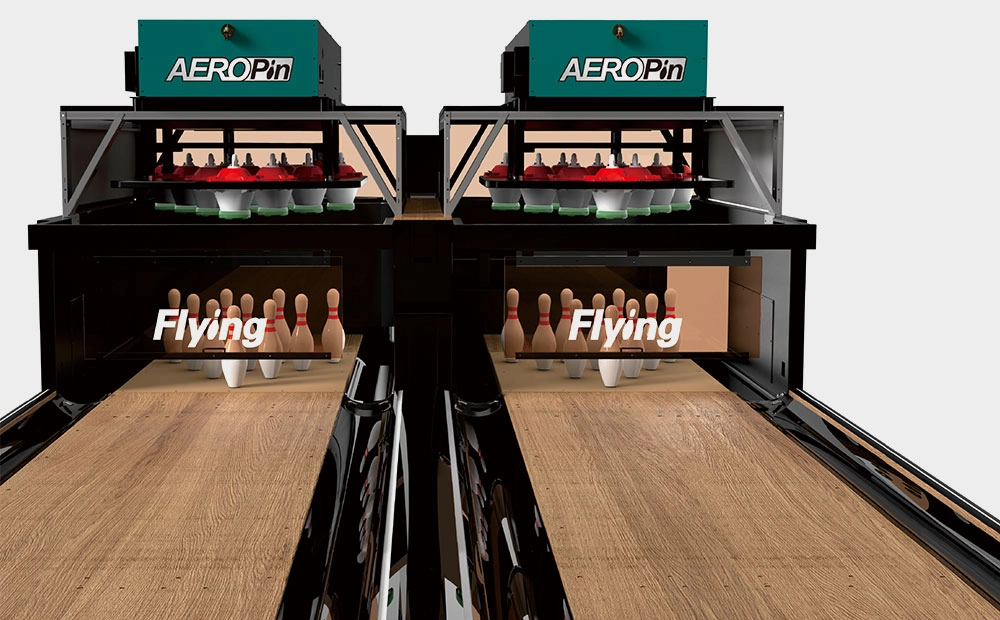
USBC-Certified AEROPIN String Pinsetter System
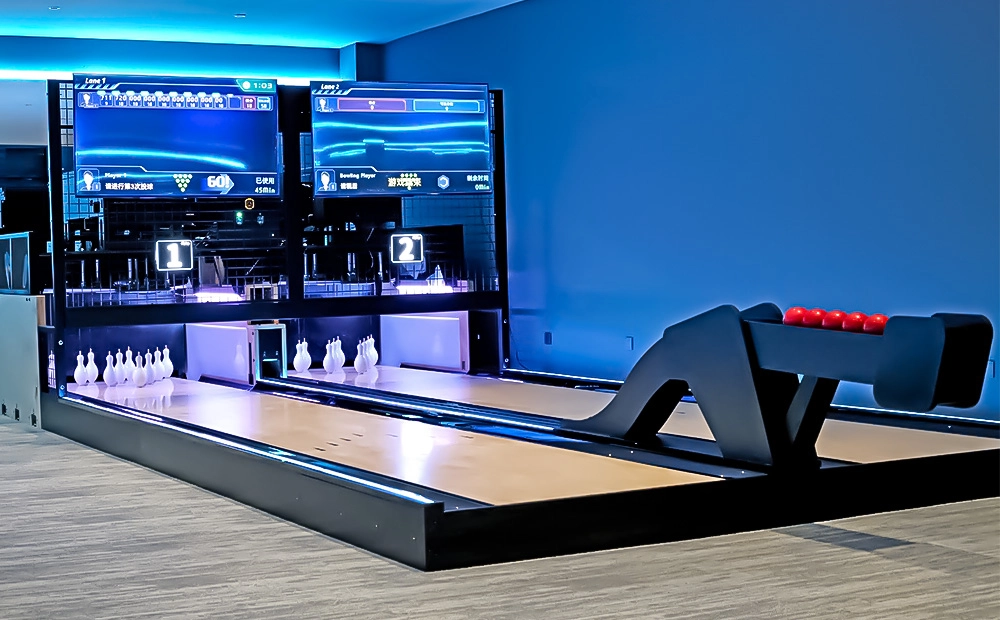
Flying Smart Duckpin Bowling Equipment and Lane System for Commercial Venues
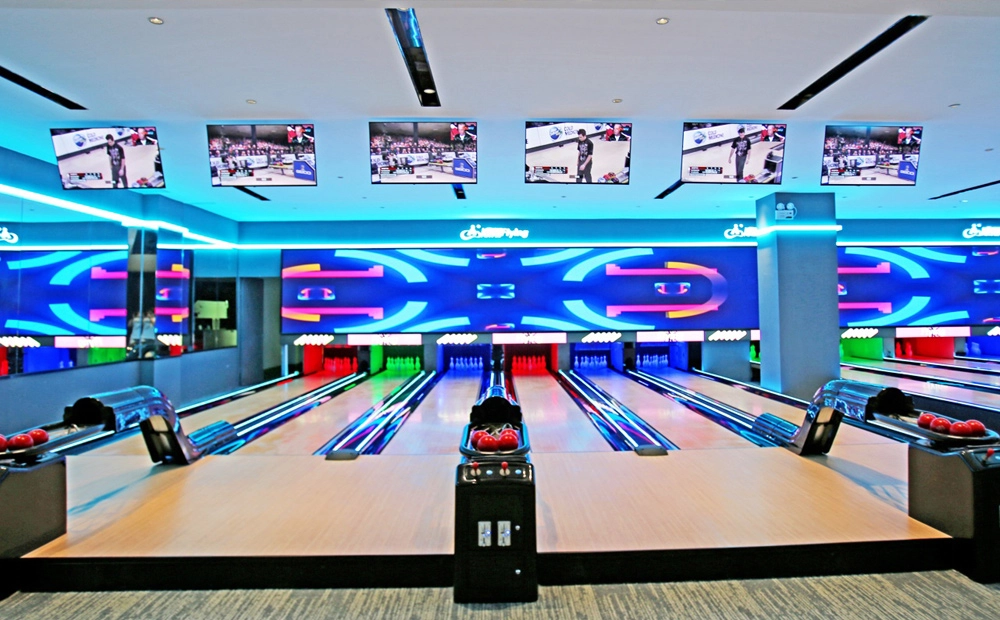
Mini Bowling Equipment for Kids and Family Entertainment Venues
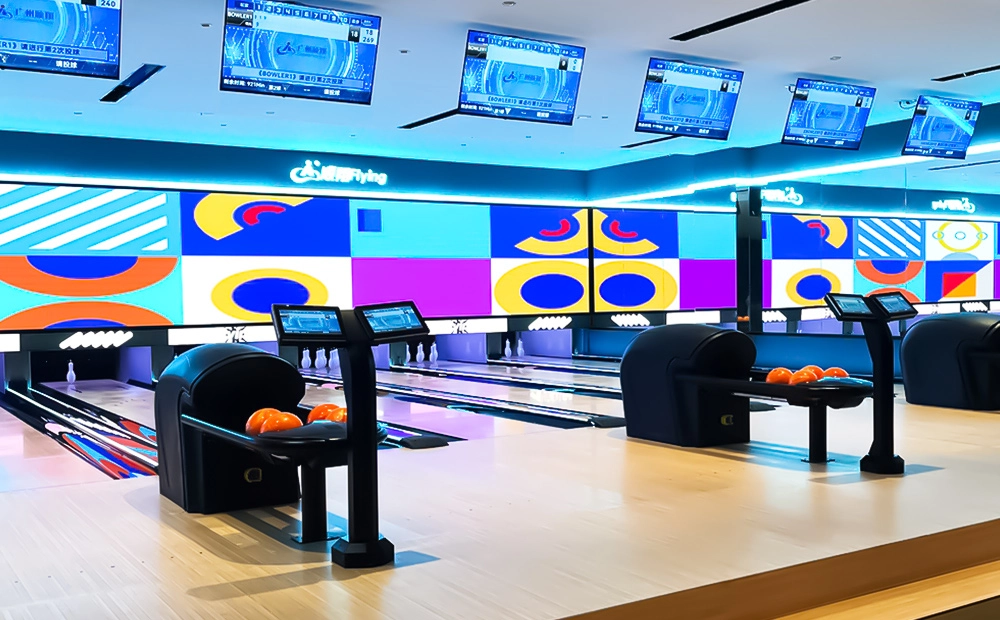
Medium Bowling Equipment for Social Entertainment Venues
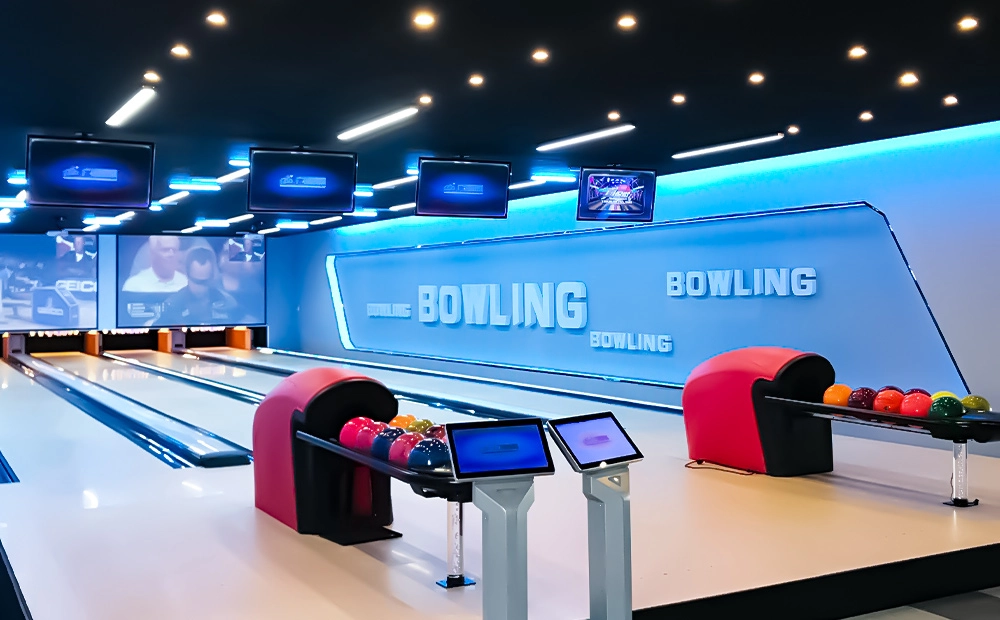
Complete String Pinsetter Bowling Alley Equipment System
You may also like
Flying Smart Duckpin Bowling (FSDB) innovative design, standard 9.2-meter short lane, can be shortened in length, compact layout suitable for small spaces. The game rules are simple but challenging, attracting players of different ages to actively participate.
Suitable for social entertainment venues such as bars, billiard halls, and game centers, it not only enhances interactivity but also increases the popularity and consumption frequency of the venue. The fun and competitive nature of FSDB will make it a new focus of social activities.
Flying Classic Standard Bowling (FCSB) is designed according to international competition standards and equipped with an accurate automatic scoring system, providing bowling enthusiasts with a pure professional experience. Whether it is for competitions or leisure entertainment, FCSB can meet high-level needs.
Suitable for family entertainment centers, luxury resorts, private villas, or clubs, it is an ideal choice for customers who pursue high-end quality and professional experience. Its classic design and excellent performance will add lasting appeal to the venue.
Flying Cute Mini Bowling (FCMB) is a mini bowling experience designed for children and families. The lane length is fixed at 12 meters, equipped with lightweight balls without finger holes (only 1.25kg) and small pins, specially designed for children and family fun.
It can not only help children feel the fun of bowling, but also stimulate their interest and competitive consciousness. Suitable for children's playgrounds, theme parks and parent-child centers, it is the best choice for places focusing on the children's market.
Flying Social Medium Bowling (FSMB) is tailored for small venues, with flexible lane lengths (customizable from 9.6 meters to 18 meters), a small ball design suitable for players of all ages, and light pins that are easier to knock down, increasing participation and fun.
Whether it is a gathering of friends or a casual social, FSMB can easily create a relaxed and pleasant atmosphere. Its efficient space-utilization design is particularly suitable for cafes, bars and community entertainment venues, allowing people to fall in love with bowling in a relaxed interaction.
Contact Flying
Start your bowling alley project
If you contact us now for more details, we can provide you with a custom bowling alley service. Our service team will get back to you within 24 hours normally!
© 2026 Flying BOWLING. Designed by gooeyun.
FOLLOW US:
Flying Bowling
Flying Bowling
Flyingbowling
Flyingbowling