


Bowling String Pinsetter: Buyer’s Guide for Bowling Centers
- Why string pinsetters matter for modern bowling centers
- What a string pinsetter is and how it differs from free-fall
- Key benefits for bowling centers
- Limitations and perception issues
- Technical specifications and performance metrics
- Throughput and cycle time
- Durability, parts life, and mean time between failures (MTBF)
- Integration: scoring, sensors, and lane systems
- Buying considerations and total cost of ownership
- Initial purchase price vs. lifecycle cost
- Warranty, service network, and spare parts availability
- Financing, leasing, and upgrade paths
- Installation, maintenance, and operational best practices
- Retrofit vs. greenfield installation
- Routine maintenance schedule and staffing
- Health & safety, noise, and energy use
- Comparing string pinsetters and free-fall pinsetters
- Sample 5-year ROI example (illustrative)
- Procurement checklist for bowling center operators
- Frequently Asked Questions (FAQ)
- 1. Are string pinsetters USBC-approved for sanctioned play?
- 2. How long do the strings/tethers typically last?
- 3. Can I retrofit string pinsetters into my existing lanes without major pit work?
- 4. Do string pinsetters change the bowling experience noticeably for players?
- 5. What should be included in a service agreement?
- 6. How do I evaluate different manufacturers?
- References
Bowling string pinsetter systems have become a practical alternative to traditional free-fall pinsetters for many bowling centers, family entertainment centers (FECs), and retrofit projects. This guide explains how string pinsetters work, compares them with conventional pinspotters, and gives operators a step-by-step checklist for evaluating models, calculating lifecycle costs, planning installation, and ensuring competitive service and guest satisfaction. The content is designed to help owners and managers make an informed purchase decision with measurable ROI, maintenance expectations, and guest experience factors in mind.
Why string pinsetters matter for modern bowling centers
What a string pinsetter is and how it differs from free-fall
A bowling string pinsetter uses a string or tether attached to each pin head to lift and place pins, unlike free-fall (mechanical) pinspotters that mechanically pick up and drop pins in a tower mechanism. String systems typically incorporate synchronized lift-and-place cycles, lighter mechanical assemblies, and simplified pin storage/return paths. For operators, the primary implications are lower mechanical complexity, different maintenance profiles, and the potential for lower total cost of ownership (TCO).
Key benefits for bowling centers
String pinsetters offer measurable advantages for specific business models: lower upfront and ongoing maintenance costs, improved safety for family and children-focused centers, quieter operation (improving multi-use spaces), and easier retrofitting into limited backroom space. They also tend to have fewer moving heavy parts and require less frequent major overhauls, which can improve lane uptime.
Limitations and perception issues
Some traditionalists and tournament bowlers perceive string pinsetters as less authentic due to the visible tethers and a different pin action. Centers that host sanctioned tournaments or serious league play should verify sanctioning rules (e.g., USBC) and customer expectations. Additionally, parts supply, brand support and scoring integration can vary by manufacturer and region.
Technical specifications and performance metrics
Throughput and cycle time
Throughput (balls per hour per lane) depends on cycle time and reliability. Modern string systems are engineered to support commercial volumes—typical cycle times are comparable to consumer-focused pinsetters but may be slightly slower than high-capacity free-fall systems tailored for heavy league/tournament use. Evaluate manufacturer specifications for cycle time under loaded conditions, not only ideal conditions.
Durability, parts life, and mean time between failures (MTBF)
Critical metrics include expected life of the string/tether, motor and gearbox MTBF, and expected lifespan of wear parts. Request manufacturer MTBF data and real-world field reports. Operators should ask for documented case studies showing years in service and part-replacement intervals.
Integration: scoring, sensors, and lane systems
Confirm compatibility with your scoring system and lane-machine controls. Many string systems integrate with modern scoring consoles, but integration protocols (serial, Ethernet, or proprietary) vary. Ask for references of installations using the same scoring hardware/software you operate.
Buying considerations and total cost of ownership
Initial purchase price vs. lifecycle cost
Initial price often attracts attention, but lifecycle costs (maintenance labor, parts, downtime, and energy) determine long-term value. Use a 5–10 year TCO comparison that includes expected parts replacements, routine maintenance hours, and average downtime cost per hour (lost revenue and guest dissatisfaction).
Warranty, service network, and spare parts availability
Evaluate warranty terms (length, coverage of wear parts), availability of local certified technicians, and parts distribution. A supplier with broad service coverage or authorized local partners reduces mean time to repair and prevents extended lane closures.
Financing, leasing, and upgrade paths
Manufacturers or distributors may offer financing or lease-to-own options. Consider whether upgrades (software/firmware, sensors) are included or sold separately. For multi-site operators, negotiate volume pricing and bundled service agreements.
Installation, maintenance, and operational best practices
Retrofit vs. greenfield installation
Retrofitting existing lanes requires checking pit depth, lane approach and backroom clearance, and lane structural support. Some string systems are designed for minimal pit modifications; others require rebuilding pit areas. For greenfield centers, plan backroom layout, parts storage, and service access during initial design to optimize uptime.
Routine maintenance schedule and staffing
Create a documented preventive maintenance plan: daily inspections, weekly cleaning, monthly tension checks of strings, quarterly motor/gearbox inspections, and annual full-service checks. Train in-house technicians on fast troubleshooting steps; reserve the supplier for complex repairs. Proper maintenance reduces unplanned downtime and extends useful life.
Health & safety, noise, and energy use
String pinsetters are typically quieter and lighter, reducing noise spillover in multi-zone entertainment venues. They can also have lower energy draw because of smaller motors and simpler mechanical cycles. Confirm manufacturer noise level specifications (dB) and power consumption ratings to estimate utility impact and guest comfort benefits.
Comparing string pinsetters and free-fall pinsetters
| Criteria | String Pinsetter | Free-Fall Pinsetter |
|---|---|---|
| Initial cost | Generally lower to moderate | Moderate to high |
| Maintenance complexity | Lower mechanical complexity; replace strings periodically | Higher mechanical complexity; periodic major overhauls |
| Downtime risk | Lower for routine issues; quick fixes | Can be higher if major mechanical failure occurs |
| Pin action authenticity | Perceived by some as different; improving with newer designs | Traditional pin action preferred in competitive play |
| Noise | Quieter | Louder |
| Sanctioning & tournament use | Check sanctioning body rules; some limitations may apply | Widely accepted for sanctioned tournaments |
| Parts availability | Varies by vendor; confirm local support | Established supply chains for legacy systems |
Note: Data above summarizes general industry observations. Always verify specifications and sanctioning status with your chosen manufacturer and local governing bowling body.
Sample 5-year ROI example (illustrative)
| Item | String System (example) | Free-Fall System (example) |
|---|---|---|
| Initial purchase + installation | $60,000 | $95,000 |
| Annual maintenance & parts | $4,000 | $8,500 |
| Estimated downtime cost/year | $1,500 | $4,000 |
| 5-year total cost | $60,000 + (5×($4,000+$1,500)) = $97,500 | $95,000 + (5×($8,500+$4,000)) = $172,500 |
This illustrative calculation shows how lower recurring costs and reduced downtime can make string pinsetters financially attractive for many centers. Customize values to reflect your local labor rates, parts pricing and revenue per lane-hour.
Procurement checklist for bowling center operators
- Confirm vendor references: request contact info for 3–5 similar installations and ask about uptime and support response times.
- Verify integration: ensure the string pinsetter interfaces with your scoring system and back-office software.
- Request MTBF and sample maintenance schedules; ask for recommended spare parts kit with pricing.
- Negotiate warranty and service-level agreements (SLA) that include maximum response times, loaner units or rapid parts delivery clauses.
- Calculate TCO for 5–10 years using realistic downtime and parts replacement rates specific to your operation.
- Confirm USBC or local association sanctioning status if you host tournaments or leagues requiring certified equipment.
- Plan for training: ensure vendor will provide technician and operator training during installation and first months.
Frequently Asked Questions (FAQ)
1. Are string pinsetters USBC-approved for sanctioned play?
USBC has specific rules and certifications for lane and pinspotter equipment. Approval depends on the exact model and how it is configured. Before purchasing, request documentation from the manufacturer and verify with USBC (or your national governing body) whether the model is eligible for sanctioned league or tournament play in your jurisdiction.
2. How long do the strings/tethers typically last?
String lifespan varies with usage intensity, lane environment, and material quality. In commercial centers, expect periodic replacement intervals (for many systems this can be 1–3 years under regular use). Ask vendors for real-world replacement intervals and include replacement labor in your maintenance budget.
3. Can I retrofit string pinsetters into my existing lanes without major pit work?
Some string systems are designed for minimal pit modifications; others require moderate pit adjustments. Have a qualified technician survey your lanes and request a retrofit plan from the vendor that details required pit changes, electrical upgrades, and a timeline.
4. Do string pinsetters change the bowling experience noticeably for players?
Modern string systems aim to replicate realistic pin action, but some experienced bowlers can detect differences. For family, casual play and FEC environments, most customers accept or prefer the benefits (safety, noise). For competitive venues, verify player expectations and sanctioning rules before switching.
5. What should be included in a service agreement?
A robust service agreement should include warranty coverage details, maximum response times, parts pricing discounts, preventive maintenance schedules, and options for on-site or depot repairs. Also include penalties or remedies for prolonged downtime to protect revenue.
6. How do I evaluate different manufacturers?
Compare: documented installations and uptime, local service presence, spare parts availability, warranty terms, integration with scoring systems, and references from similar-size operations. Request demonstrations and trial installations if possible.
Contact us to compare models, request a site survey, or obtain a custom 5-year TCO and ROI analysis tailored to your center's traffic and revenue profile. View our product portfolio and schedule a jackson@flyingbowling.com.
References
- Pinsetter — Wikipedia (accessed 2026-01-12)
- United States Bowling Congress (USBC) — certification and equipment rules (accessed 2026-01-12)
- Brunswick Bowling Products — manufacturer product information and specifications (accessed 2026-01-12)
- QubicaAMF — lane and pinspotter technology resources (accessed 2026-01-12)
- Kegel — lane maintenance and equipment insights (accessed 2026-01-12)
For procurement assistance, technical surveys, or to request vendor-neutral ROI modeling for your center, contact our bowling equipment advisory team at jackson@flyingbowling.com.
Recommended products
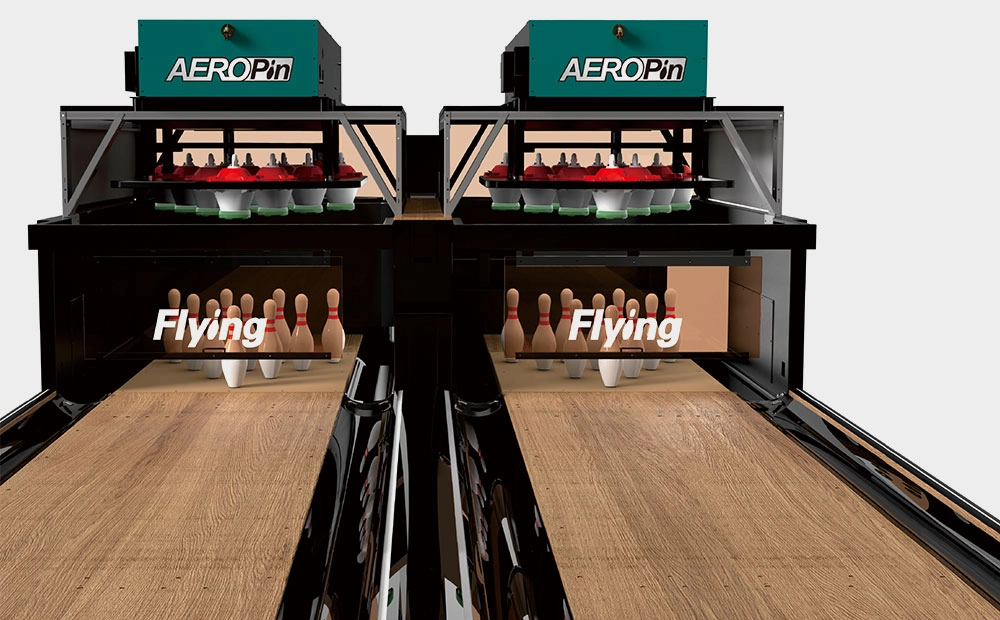
USBC-Certified AEROPIN String Pinsetter System
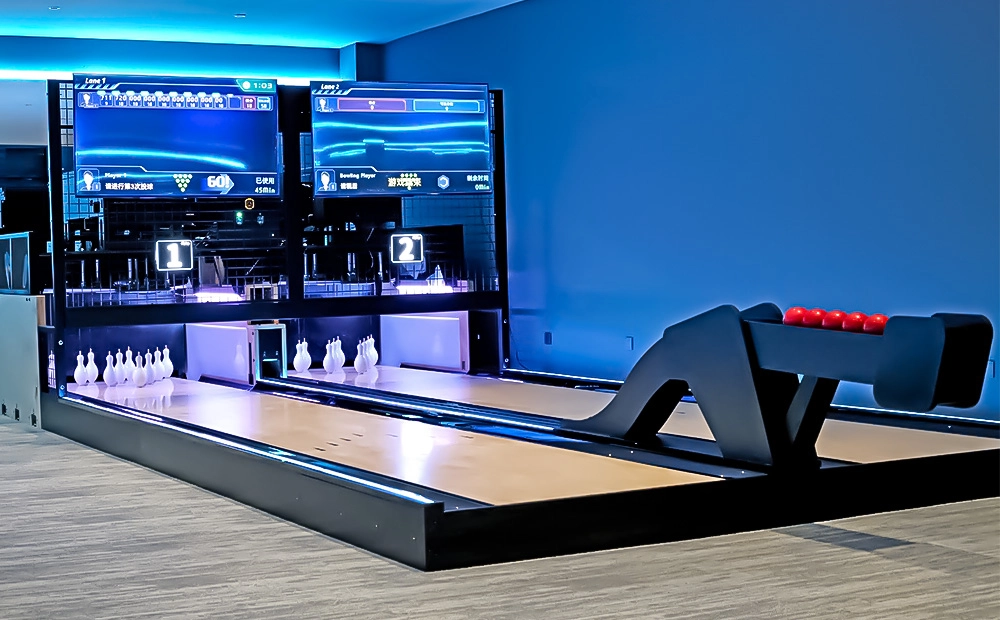
Flying Smart Duckpin Bowling Equipment and Lane System for Commercial Venues
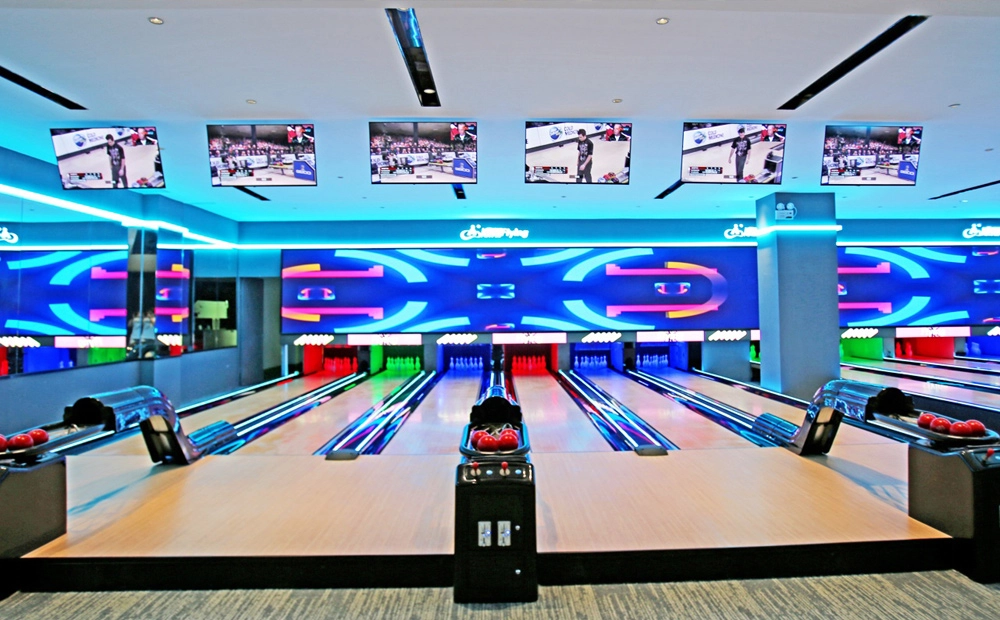
Mini Bowling Equipment for Kids and Family Entertainment Venues
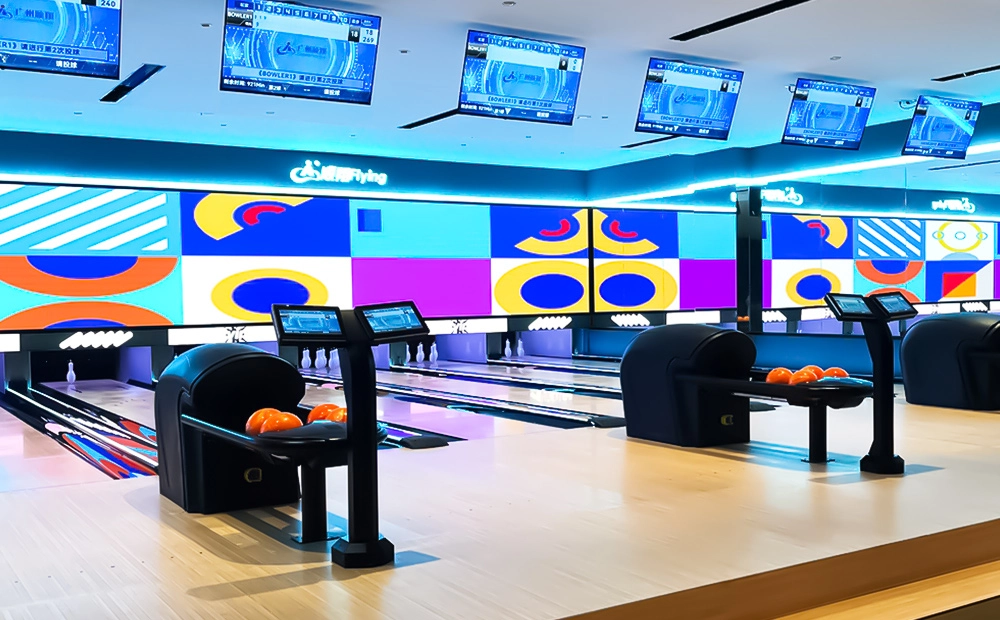
Medium Bowling Equipment for Social Entertainment Venues
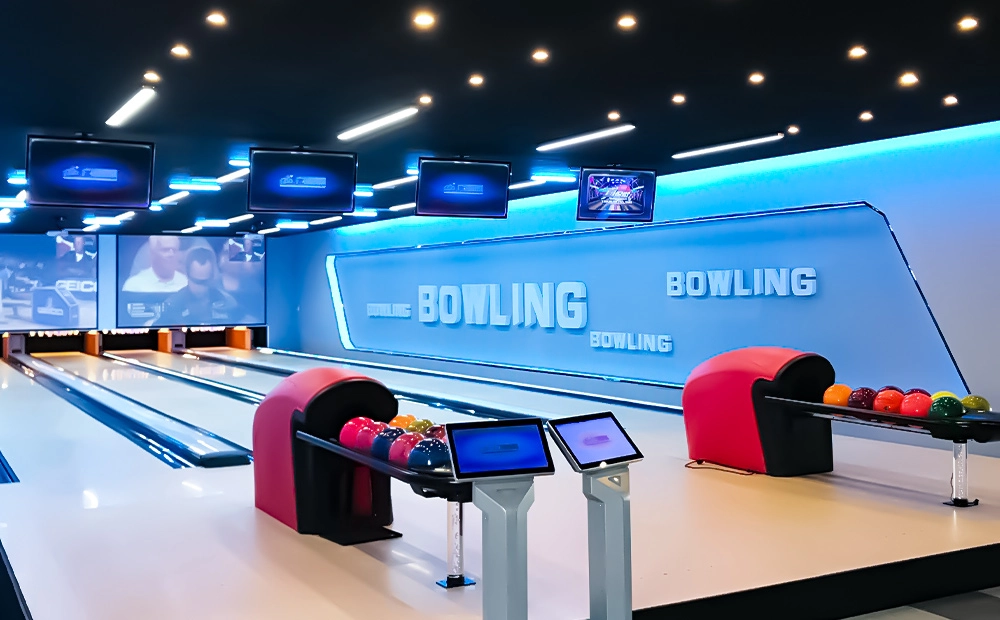
Complete String Pinsetter Bowling Alley Equipment System
You may also like
Flying Smart Duckpin Bowling (FSDB) innovative design, standard 9.2-meter short lane, can be shortened in length, compact layout suitable for small spaces. The game rules are simple but challenging, attracting players of different ages to actively participate.
Suitable for social entertainment venues such as bars, billiard halls, and game centers, it not only enhances interactivity but also increases the popularity and consumption frequency of the venue. The fun and competitive nature of FSDB will make it a new focus of social activities.
Flying Classic Standard Bowling (FCSB) is designed according to international competition standards and equipped with an accurate automatic scoring system, providing bowling enthusiasts with a pure professional experience. Whether it is for competitions or leisure entertainment, FCSB can meet high-level needs.
Suitable for family entertainment centers, luxury resorts, private villas, or clubs, it is an ideal choice for customers who pursue high-end quality and professional experience. Its classic design and excellent performance will add lasting appeal to the venue.
Flying Cute Mini Bowling (FCMB) is a mini bowling experience designed for children and families. The lane length is fixed at 12 meters, equipped with lightweight balls without finger holes (only 1.25kg) and small pins, specially designed for children and family fun.
It can not only help children feel the fun of bowling, but also stimulate their interest and competitive consciousness. Suitable for children's playgrounds, theme parks and parent-child centers, it is the best choice for places focusing on the children's market.
Flying Social Medium Bowling (FSMB) is tailored for small venues, with flexible lane lengths (customizable from 9.6 meters to 18 meters), a small ball design suitable for players of all ages, and light pins that are easier to knock down, increasing participation and fun.
Whether it is a gathering of friends or a casual social, FSMB can easily create a relaxed and pleasant atmosphere. Its efficient space-utilization design is particularly suitable for cafes, bars and community entertainment venues, allowing people to fall in love with bowling in a relaxed interaction.
Contact Flying
Start your bowling alley project
If you contact us now for more details, we can provide you with a custom bowling alley service. Our service team will get back to you within 24 hours normally!
© 2026 Flying BOWLING. Designed by gooeyun.
FOLLOW US:
Flying Bowling
Flying Bowling
Flyingbowling
Flyingbowling