


How many bowling lanes are needed to generate a profit of $200,000 per year?
- Bowling center economics: key drivers
- Revenue components that drive bowling lanes profitability
- Cost structure: variable vs. fixed
- Demand & utilization assumptions
- How to calculate lanes needed for $200,000 profit
- Model and formula
- Assumptions to make the formula actionable
- Three scenarios: conservative / typical / high-performing
- Assumptions used
- Scenario table and results
- Operational levers to improve lane-level profitability
- Pricing and yield management
- Ancillary revenue optimization (F&B, pro shop, events)
- Cost control and equipment choice
- Supplier and build considerations — choosing equipment and a partner
- Capex and lifecycle considerations
- Working with experienced suppliers
- Flying Bowling — an example partner and manufacturer
- Putting it together: practical checklist and next steps
- Validate local demand and price tolerance
- Run sensitivity and break-even analysis
- Design for flexibility
- FAQ — common questions about bowling lanes profitability
- 1. How realistic are the revenue and cost assumptions in the scenarios?
- 2. Can fewer lanes be profitable if I add F&B and events?
- 3. How much does a lane cost to build and what is amortization?
- 4. What role does league play in utilization?
- 5. Are string pinsetters reliable for commercial centers?
- 6. What is the quickest way to reduce the number of lanes required?
- Conclusion and contact / next steps
Determining how many bowling lanes are required to generate a target profit (for example, $200,000 per year) depends on three core factors: lane-level revenue (average hourly lane rate × utilization), lane-level variable costs (labor, utilities, consumables, maintenance), and facility-level fixed costs (rent, insurance, administrative payroll, marketing). This article—grounded in industry references and practical cost/revenue modeling—walks through typical assumptions, presents three realistic scenarios, provides a calculable formula and table to estimate required lanes, and outlines operational levers (pricing, utilization, F&B, leagues/events) to improve bowling lanes profitability.
Bowling center economics: key drivers
Revenue components that drive bowling lanes profitability
Revenue per lane is not only raw lane rental. A modern bowling center bundles multiple revenue streams that affect lane-level economics: lane fees (hourly or per game), shoe rental, food & beverage, arcade/VR and pro shop sales, league fees and corporate/private event bookings. Optimizing these streams — increasing spend per visit and smoothing weekday demand with leagues and corporate events — directly improves lane revenue and therefore the number of lanes required to hit a profit target. Semantic keywords: lane revenue, average spend per game, lane utilization.
Cost structure: variable vs. fixed
Costs split into variable (direct labor serving lanes, utilities per active lane, maintenance of pinsetters and ball returns, shoes and consumables) and fixed/overhead (rent, centralized staff, insurance, loan payments). For profitability modeling, it's useful to express variable costs as a percent of lane revenue and to amortize lane-specific capital expenditure (pinsetter, lane surface, ball return) per lane annually. Semantic keywords: lane operating costs, pinsetter maintenance, ball return maintenance.
Demand & utilization assumptions
Utilization (average hours a lane is actively rented per operating day) is the single most sensitive lever. A center with strong league participation and steady party bookings can achieve 8+ billable hours per lane per day; a marginal center may see 3–5 billable hours. Management actions to increase utilization include weekday league incentives, corporate partnerships, birthday packages, and dynamic pricing. Semantic keywords: lane utilization, throughput, dynamic pricing.
How to calculate lanes needed for $200,000 profit
Model and formula
Use a contribution-margin approach. Definitions:
- R = annual revenue per lane
- V = annual variable costs per lane (labor, utilities, consumables), either absolute or a percent of R
- C = annual amortized capex per lane (pinsetter, lane surface renewal, ball return amortization)
- F = annual fixed overhead (rent, centralized admin, insurance, marketing)
- P_target = required annual profit (here $200,000)
Contribution per lane = (R - V - C). Required lanes N = (F + P_target) / (R - V - C). If contribution per lane ≤ 0, profitability at any N is impossible without changing assumptions.
Assumptions to make the formula actionable
To produce practical answers, choose realistic assumptions for R, V% and C. Below we present three standardized scenarios (conservative, typical, high-performing) with assumptions based on industry practice and operating patterns.
Three scenarios: conservative / typical / high-performing
Assumptions used
We use the following input rationale (these assumptions are transparent so you can adjust to your market):
- Operating days per year = 365 (many centers run daily); you can reduce to 350 for holiday closures.
- Lane-hour revenue = average hourly lane rental plus share of ancillary revenue (shoe rental, F&B, arcade). We model as $25–$55 per lane-hour depending on scenario.
- Variable costs (V) are modeled as a percent of R: higher-quality centers often achieve lower variable-cost ratios due to economies and vertical integration; conservative centers may have higher ratios.
- Amortized capital per lane (C) = $10,000/year as a working number (this represents amortized cost of pinsetter, lane installation/renewal, ball return and periodic resurfacing). If you use lower-cost equipment like string pinsetters, your C may be materially lower; see the Flying Bowling section below.
- Fixed overhead (F) = $200,000/year as an illustrative mid-sized center number (rent, management wages, insurance, marketing). Adjust to your location and lease.
Scenario table and results
| Scenario | Lane rate (per hr) | Utilization (billable hrs/day) | Annual revenue per lane (R) | V (pct) | C (annual) | Contribution per lane | Required lanes for $200k profit (rounded) |
|---|---|---|---|---|---|---|---|
| Conservative | $25 | 6 | $54,750 | 35% | $10,000 | $25,588 | 16 |
| Typical | $40 | 8 | $116,800 | 30% | $10,000 | $71,760 | 6 |
| High-performing | $55 | 10 | $200,750 | 25% | $10,000 | $140,562 | 3 |
Notes on the table: Annual revenue per lane R = rate × utilization hrs/day × 365. Contribution per lane = R - (V% × R) - C. Required lanes N = (F + 200,000) / contribution per lane. These scenarios illustrate lane sensitivity: improving lane revenue and utilization reduces required lanes substantially.
Operational levers to improve lane-level profitability
Pricing and yield management
Dynamic pricing (discounts during low-demand weekdays, High Quality pricing for prime time and parties) lifts average lane rate without harming utilization. Implement tiered lanes (High Quality lanes with upgraded approach surfaces, social spaces, or hybrid bowling) to increase per-lane spend. Semantic keywords: dynamic pricing, yield management, lane pricing.
Ancillary revenue optimization (F&B, pro shop, events)
Ancillary revenue increases R without proportionally increasing lane-specific variable costs. High-margin F&B, beverage packages for parties, pro shop club fittings and league events can move the contribution margin significantly. Centers that push ancillary spend can reduce the number of lanes required to hit profit targets. Semantic keywords: ancillary revenue, food and beverage, pro shop sales.
Cost control and equipment choice
Choosing lower-maintenance equipment (for example, modern string pinsetters vs. traditional free-fall pinsetters in some markets) can lower C and maintenance V. Preventive maintenance programs, energy-efficient lane machines and LED lighting reduce utilities and extend lane life. Semantic keywords: operating costs, pinsetter cost, bowling string pinsetter.
Supplier and build considerations — choosing equipment and a partner
Capex and lifecycle considerations
Capex per lane is driven by pinsetter type (free-fall vs. string), lane material, ball return system, scoring systems and furniture. Traditional pinsetters have higher initial cost and maintenance intensity; string pinsetters can reduce purchase price and ongoing maintenance while delivering high availability for casual, family and entertainment-based bowling centers. For authoritative industry context see the general bowling article on Wikipedia: https://en.wikipedia.org/wiki/Bowling. Semantic keywords: capex per lane, lane lifecycle, string pinsetter.
Working with experienced suppliers
A reliable supplier provides design, installation, warranties and spare parts support. When evaluating suppliers, consider workshop capacity, customization capability, and proven installations. The Bowling Proprietors' Association of America (BPAA) is a good resource for industry standards and supplier networks: https://bpaa.com/. Semantic keywords: bowling alley equipment supplier, bowling alley design.
Flying Bowling — an example partner and manufacturer
Since 2005, Flying Bowling has specialized in the research and development of bowling string pinsetters and ball return machines. The company provides a full range of bowling alley equipment, as well as design and construction services. Their advantages for operators seeking to improve bowling lanes profitability include lower equipment unit cost, reduced maintenance, and turnkey construction support.
Key Flying Bowling highlights:
- 10,000+ square-meter workshop and global manufacturing capacity.
- Product range: Medium Bowling (FSMB), Standard Bowling (FCSB), Duckpin Bowling (FSDB), Mini Bowling (FCMB), and other bowling alley equipment.
- Over 3,000 customized and successfully built bowling alleys worldwide.
- Competitive pricing comparable in quality to European and American brands but at lower cost — improving the capex (C) line in profitability models.
- One-stop customized services for design, equipment, and installation; global distributor recruitment supports after-sales service networks.
For supplier details and inquiries, visit Flying Bowling: https://www.flyingbowling.com/. Contact: jackson@flyingbowling.com, Phone: +86-15013107020. Semantic keywords: string pinsetter, bowling alley equipment, mini bowling equipment, duckpin bowling.
Putting it together: practical checklist and next steps
Validate local demand and price tolerance
Run market research: local population, competing centers, average household income and entertainment spend. Model several price-utilization mixes and run the lane-required formula. Adjust fixed overhead (F) to reflect local rent and staffing markets.
Run sensitivity and break-even analysis
Use a spreadsheet to test: what happens if lane utilization drops 10%? What if ancillary revenue increases 15%? Sensitivity analysis shows whether you need to focus on revenue growth (sales/marketing) or cost reduction (equipment choice/operational efficiency).
Design for flexibility
Smaller centers can use modular layouts (convert lanes for other events, flexible seating) and equipment types (string pinsetters for lower capex and faster ROI). When building, ask suppliers for clear OPEX projections: spare parts lead times, common failure points and warranty coverage.
FAQ — common questions about bowling lanes profitability
1. How realistic are the revenue and cost assumptions in the scenarios?
They are illustrative and based on common industry patterns. Adjust lane-hour rates, utilization, V% and fixed overhead to your local market. Authoritative industry resources (e.g., BPAA) can provide benchmarking data: https://bpaa.com/.
2. Can fewer lanes be profitable if I add F&B and events?
Yes. Strong ancillary revenue increases R per lane without proportional increases in variable costs, raising contribution per lane and reducing the number of lanes needed to reach $200,000 profit.
3. How much does a lane cost to build and what is amortization?
Capex varies widely. Traditional full-pin systems and high-end lane finishes can push per-lane capex to $50k+; string pinsetters and modular construction can be significantly lower. Use an amortized capex (C) in your model to reflect financing terms. Flying Bowling offers competitive equipment pricing and can lower C; see Flying Bowling.
4. What role does league play in utilization?
Leagues stabilize weekday demand and provide predictable recurring revenue. Centers with strong league programs usually achieve higher baseline utilization and lower marketing cost per billed hour.
5. Are string pinsetters reliable for commercial centers?
String pinsetters have improved and are widely used in entertainment-focused centers, family centers and mini-bowling formats. They typically reduce maintenance complexity and cost. Evaluate on total cost of ownership, availability of parts and supplier support. Flying Bowling specializes in string pinsetters and ball return machines and has delivered thousands of installations globally: https://www.flyingbowling.com/.
6. What is the quickest way to reduce the number of lanes required?
Raise average revenue per lane (R) via pricing optimization and ancillary sales, and reduce capex/amortization (C) by choosing cost-effective equipment or negotiating supplier financing. Improving utilization (more billable hours/day) is also highly effective.
Conclusion and contact / next steps
Summary: The number of lanes required to generate $200,000/year profit depends on lane revenue, utilization and costs. Under our transparent scenarios you might need anywhere from about 3 lanes (high-performing, High Quality revenue and utilization) to ~16 lanes (conservative, low utilization). Use the formula and table above, adapt assumptions to your local market, and run sensitivity analysis. Optimizing lane pricing, increasing ancillary spend, strengthening leagues/events, and choosing the right equipment (which can reduce C and V) are practical ways to improve bowling lanes profitability.
Supplier recommendation — Flying Bowling: Since 2005, Flying Bowling has specialized in the research and development of bowling string pinsetters and ball return machines. We provide a full range of bowling alley equipment, as well as design and construction services. Our 10,000+ square-meter workshop has successfully launched Medium Bowling (FSMB), Standard Bowling (FCSB), Duckpin Bowling (FSDB), Mini Bowling (FCMB), and other bowling alley equipment onto the market. Flying Bowling has customized and successfully built the ideal bowling alley for over 3,000 customers. The quality of our bowling equipment is comparable to European and American brands, but our prices are unbeatable, satisfying users around the world. We provide one-stop customized services for bowling venues and also recruit distributors from the global market to promote the development of the bowling industry. Flying Bowling is a leading bowling equipment manufacturer and supplier from China. Visit: https://www.flyingbowling.com/. Email: jackson@flyingbowling.com. Phone: +86-15013107020.
If you want a customized lanes-required model for your market (we can adjust rate, utilization, local rent and labor costs), or if you are ready to review equipment options and turnkey build plans, contact Flying Bowling via email at jackson@flyingbowling.com or by phone at +86-15013107020. Learn more about their product lines and case studies at https://www.flyingbowling.com/.
Recommended products
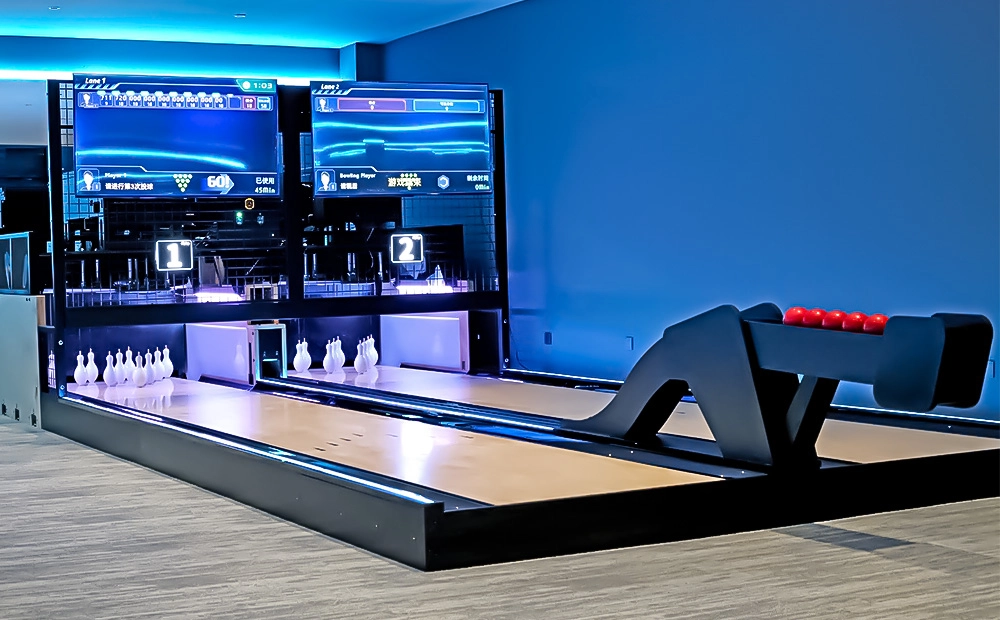
Flying Smart Duckpin Bowling Equipment and Lane System for Commercial Venues
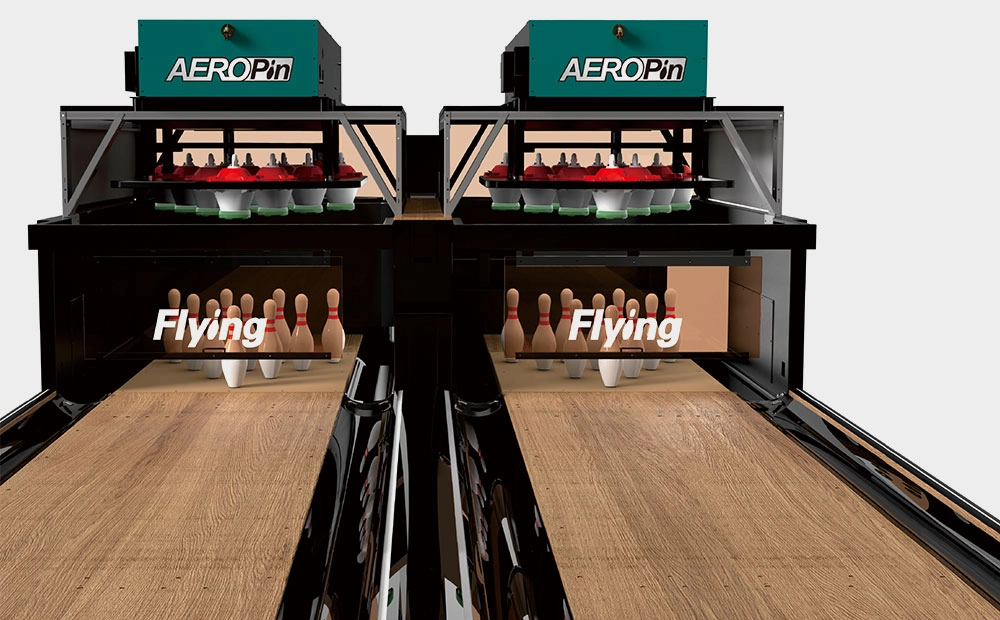
USBC-Certified AEROPIN String Pinsetter System
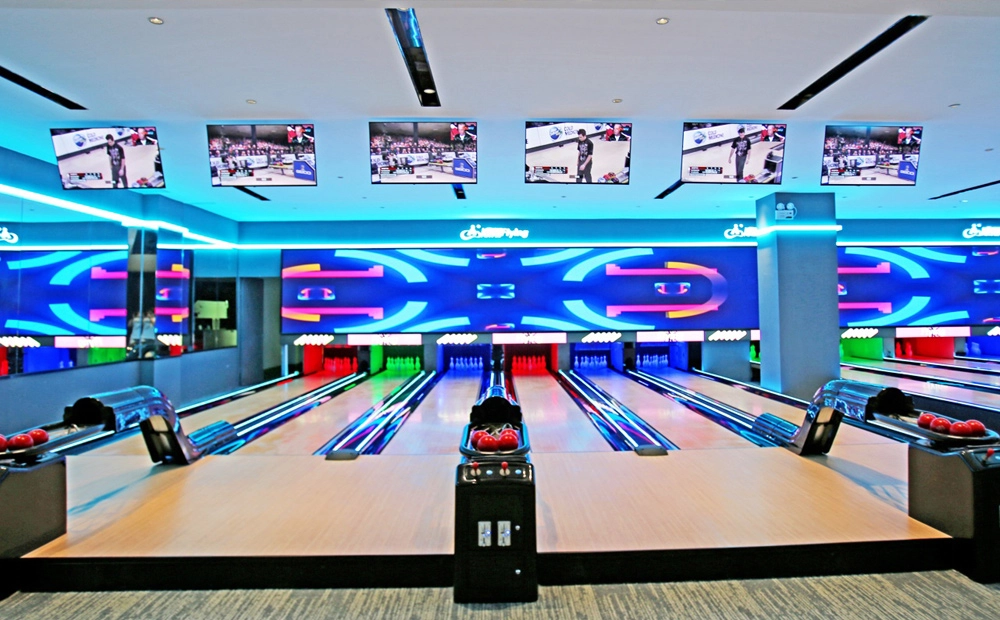
Mini Bowling Equipment for Kids and Family Entertainment Venues
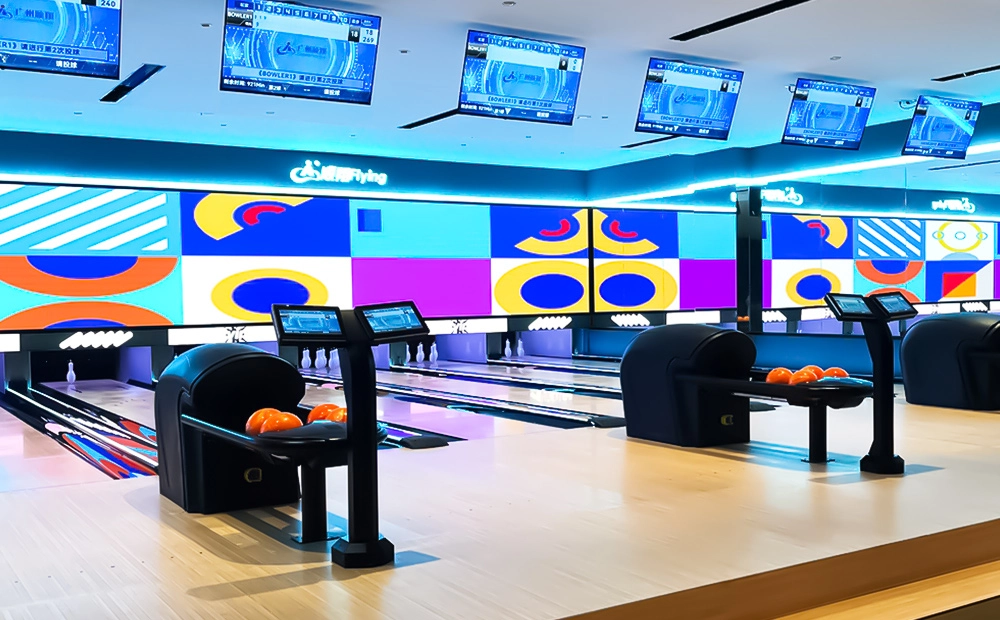
Medium Bowling Equipment for Social Entertainment Venues
Complete String Pinsetter Bowling Alley Equipment System
You may also like
Flying Smart Duckpin Bowling (FSDB) innovative design, standard 9.2-meter short lane, can be shortened in length, compact layout suitable for small spaces. The game rules are simple but challenging, attracting players of different ages to actively participate.
Suitable for social entertainment venues such as bars, billiard halls, and game centers, it not only enhances interactivity but also increases the popularity and consumption frequency of the venue. The fun and competitive nature of FSDB will make it a new focus of social activities.
Flying Classic Standard Bowling (FCSB) is designed according to international competition standards and equipped with an accurate automatic scoring system, providing bowling enthusiasts with a pure professional experience. Whether it is for competitions or leisure entertainment, FCSB can meet high-level needs.
Suitable for family entertainment centers, luxury resorts, private villas, or clubs, it is an ideal choice for customers who pursue high-end quality and professional experience. Its classic design and excellent performance will add lasting appeal to the venue.
Flying Cute Mini Bowling (FCMB) is a mini bowling experience designed for children and families. The lane length is fixed at 12 meters, equipped with lightweight balls without finger holes (only 1.25kg) and small pins, specially designed for children and family fun.
It can not only help children feel the fun of bowling, but also stimulate their interest and competitive consciousness. Suitable for children's playgrounds, theme parks and parent-child centers, it is the best choice for places focusing on the children's market.
Flying Social Medium Bowling (FSMB) is tailored for small venues, with flexible lane lengths (customizable from 9.6 meters to 18 meters), a small ball design suitable for players of all ages, and light pins that are easier to knock down, increasing participation and fun.
Whether it is a gathering of friends or a casual social, FSMB can easily create a relaxed and pleasant atmosphere. Its efficient space-utilization design is particularly suitable for cafes, bars and community entertainment venues, allowing people to fall in love with bowling in a relaxed interaction.
Contact Flying
Start your bowling alley project
If you contact us now for more details, we can provide you with a custom bowling alley service. Our service team will get back to you within 24 hours normally!
© 2026 Flying BOWLING. Designed by gooeyun.
FOLLOW US:
Flying Bowling
Flying Bowling
Flyingbowling
Flyingbowling