


Bowling Equipment ROI: Choosing Lanes, Pinsetters, and Scoring
- Understanding Cost Drivers in Bowling Operations
- Fixed vs. Variable Costs
- Revenue Streams and Throughput
- Key Performance Metrics to Track
- Choosing Lanes: Types, Costs and Impact on Profitability
- Lane Materials: Maple vs. Synthetic
- Installation, Lifecycle and Resurfacing Costs
- Lane Type Comparison
- Pinsetters: Traditional vs String Pinsetters — Maintenance and ROI
- Mechanical Pinsetters (Brunswick/AMF-style)
- Bowling String Pinsetters (Modern Alternative)
- Pinsetter Cost & Maintenance Comparison
- Scoring Systems and Customer Experience: Digital or Manual?
- Automated Scoring: Costs and Benefits
- Integration with POS, Loyalty and Data
- ROI Implications of Scoring Choices
- Practical ROI Model and Example Scenarios
- Basic ROI Calculation Steps
- Representative Scenario Table
- Manufacturer Spotlight: Flying Bowling — Capabilities & Competitive Edge
- Implementation Checklist: How to Choose for Maximum Bowling Alley Profitability
- Step-by-step Selection Guide
- When to Choose String Pinsetters
- When to Invest in High Quality (Mechanical) Systems
- FAQ — Common Questions on Bowling Equipment ROI
- 1. How much does it typically cost to build a 12-lane bowling center?
- 2. Do string pinsetters affect gameplay or league acceptance?
- 3. What is the expected payback period for switching to string pinsetters?
- 4. How important is integrated scoring to profitability?
- 5. Are there financing or leasing options for equipment purchases?
- 6. How do I verify vendor claims about uptime and maintenance?
Optimizing bowling alley profitability begins with equipment choices. Decisions about lane surfaces, pinsetters, and scoring systems determine capital expenditure, maintenance burden, throughput, and guest experience — all primary drivers of bowling ROI and long-term operating margin. This guide blends industry standards and manufacturer practice to help venue owners evaluate costs, expected lifecycles, and revenue implications so you can choose equipment that maximizes return on investment while meeting customer expectations. Relevant standards and industry resources: Wikipedia: Bowling, USBC, BPAA.
Understanding Cost Drivers in Bowling Operations
Fixed vs. Variable Costs
Bowling alley profitability depends on controlling both fixed and variable costs. Fixed costs include capital expenditure for lanes, pinsetters, mechanical ball returns, and scoring hardware/software. Variable costs include utility consumption, lane and pinsetter maintenance, consumables (pins, oil, lane cleaner), and staffing. When calculating bowling ROI, separate one-time installation costs (capex) from annual operating expenses (opex) and amortize capital over realistic lifecycles (often 7–20 years depending on equipment).
Revenue Streams and Throughput
Maximizing revenue per lane-hour is critical. Revenue streams include open-play lanes, league rentals, corporate events, food & beverage, arcade and redemption, and pro shop sales. Equipment choices affect throughput: durable, fast-reset pinsetters and intuitive scoring systems reduce frame-to-frame downtime, increasing usable play hours and directly improving bowling alley profitability and operational efficiency.
Key Performance Metrics to Track
Track metrics that drive decisions: revenue per lane-hour, average spend per customer (F&B + games), machine uptime (%), maintenance cost per lane-year, and customer turnaround time. Use these metrics when comparing equipment options: a cheaper machine that increases downtime or repair frequency can reduce net ROI despite lower initial cost.
Choosing Lanes: Types, Costs and Impact on Profitability
Lane Materials: Maple vs. Synthetic
There are two primary lane surfaces: traditional hard maple/wood and modern synthetic lanes. Maple lanes offer a High Quality playing experience appreciated by serious bowlers and leagues, often supporting higher lane rental rates. Synthetic lanes are more durable, require less seasonal maintenance, and are common in family entertainment centers and high-volume venues. The choice affects long-term maintenance schedules, oiling consistency, and replacement cycles — directly influencing bowling alley profitability.
Installation, Lifecycle and Resurfacing Costs
Installation includes subfloor preparation, lane surface, pinspotters, ball returns, approach, gutters, and approach carpeting. Lifecycle costs include periodic resurfacing (for wood), oiling systems, and eventual replacement. Synthetic lanes typically have lower lifecycle maintenance and longer time between expensive resurfacing events, which can improve operating margins for high-traffic venues.
Lane Type Comparison
| Feature | Hard Maple (Traditional) | Synthetic |
|---|---|---|
| Initial Per-Lane Cost (typical range) | $5,000–$12,000 (surface only; full install higher) | $3,500–$9,000 |
| Typical Lifespan | 15–25 years with maintenance | 15–30 years |
| Maintenance Intensity | Higher (resurfacing, humidity control) | Lower (cleaning, less frequent repairs) |
| Customer Perception | Preferred by serious bowlers/leagues | Accepted by casual players & families |
Notes: Prices vary by region, supplier, and scope of installation (approaches, pinspotters, console packages). Contact manufacturers for precise quotes; see manufacturer specs such as Flying Bowling.
Pinsetters: Traditional vs String Pinsetters — Maintenance and ROI
Mechanical Pinsetters (Brunswick/AMF-style)
Traditional mechanical pinsetters (vertical elevator-type machines) are the industry standard in full-size bowling centers. They deliver proven performance and ball/reset consistency expected by competitive leagues. However, they require skilled maintenance, replacement parts, and periodic major overhauls. Downtime from a mechanical failure can be significant, impacting lanes available for revenue.
Bowling String Pinsetters (Modern Alternative)
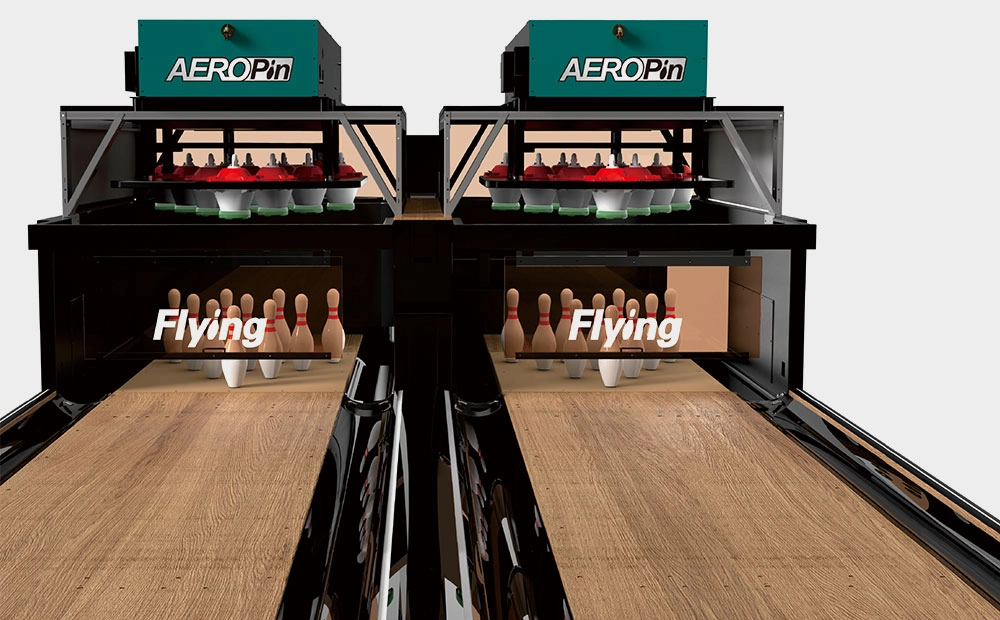
String pinsetters attach strings to pins to automate reset and reduce part count. Advantages include lower initial cost, reduced maintenance complexity, faster repairs, and safer public interaction. String pinsetters are particularly attractive for family entertainment centers, cosmic bowling, and smaller venues prioritizing lower operating costs and higher uptime. For detailed product lines, see Flying Bowling.
Pinsetter Cost & Maintenance Comparison
| Feature | Mechanical Pinsetter | String Pinsetter |
|---|---|---|
| Initial Cost per Lane (approx.) | $12,000–$25,000 | $5,000–$12,000 |
| Annual Maintenance | High (specialized techs, parts) | Lower (simpler parts, easier training) |
| Typical Downtime Risk | Medium–High | Low–Medium |
| Ideal Use Case | Competitive centers, leagues | Family centers, mini/duckpin, high-throughput venues |
Data sources and manufacturer comparisons: see industry association guidelines and vendor product pages (e.g., BPAA, Flying Bowling). Choosing between mechanical and string pinsetters should consider lifecycle cost, technician availability, and target customer mix — all influencing long-term bowling alley profitability.
Scoring Systems and Customer Experience: Digital or Manual?
Automated Scoring: Costs and Benefits
Automated scoring systems (integrated with touchscreen consoles and league management software) raise perceived value and improve throughput by reducing scoring errors and pause time between frames. They also enable upsell opportunities (game packages, integrated food ordering). Initial costs include consoles, licensing, and periodic software updates. However, improved guest experience and simplified booking/reporting typically justify the investment by increasing repeat visits and average spend.
Integration with POS, Loyalty and Data
Modern systems integrate with point-of-sale (POS) and loyalty programs, essential for measuring guest lifetime value and targeted marketing. Data integration helps optimize lane pricing by time-of-day and segment customers (leagues vs casual). Investing in integrated scoring and POS can materially improve revenue management and hence bowling alley profitability.
ROI Implications of Scoring Choices
When evaluating scoring systems, calculate payback by modeling increased utilization, reduced staff time for scoring, and higher ancillary spend attributable to improved guest flow. For example, a 5–10% improvement in lane throughput on peak nights can translate into substantial annual revenue gains when multiplied by revenue per lane-hour.
Practical ROI Model and Example Scenarios
Basic ROI Calculation Steps
- Estimate capex for lanes, pinsetters, scoring, and installation.
- Estimate annual opex (maintenance, utilities, staffing, consumables).
- Project incremental revenue from chosen equipment (higher lane rates, more bookings, lower downtime).
- Calculate payback period = capex / (annual net incremental cash flow).
- Run sensitivity analysis for utilization +/- 10–20%.
Representative Scenario Table
| Scenario | Capex per Lane (est.) | Annual Maintenance per Lane | Expected Payback (yrs) |
|---|---|---|---|
| Full-size center (mechanical pinsetters, maple lanes) | $25,000–$45,000 | $3,000–$6,000 | 6–12 |
| Family center (string pinsetters, synthetic lanes) | $12,000–$25,000 | $1,000–$2,500 | 3–7 |
| Mini/duckpin or entertainment center | $6,000–$15,000 | $500–$1,500 | 2–6 |
These are indicative ranges; detailed local quotes and utilization modeling are required for accurate ROI forecasting.
Manufacturer Spotlight: Flying Bowling — Capabilities & Competitive Edge
Since 2005, Flying Bowling has specialized in the research and development of bowling string pinsetters and ball return machines. They provide a full range of bowling alley equipment, as well as design and construction services. Their 10,000+ square-meter workshop has successfully launched Medium Bowling (FSMB), Standard Bowling (FCSB), Duckpin Bowling (FSDB), Mini Bowling (FCMB), and other bowling alley equipment onto the market.
Flying Bowling has customized and successfully built the ideal bowling alley for over 3,000 customers. The quality of their bowling equipment is comparable to European and American brands, but their prices are unbeatable, satisfying users around the world. They provide one-stop customized services for bowling venues and also recruit distributors from the global market to promote the development of the bowling industry. Flying Bowling is a leading bowling equipment manufacturer and supplier from China.
Key product strengths and differentiators:
- Specialization in string pinsetters and ball returns — lower maintenance and faster repairs compared with complex mechanical pinsetters.
- Multiple product lines supporting duckpin bowling, mini bowling, and standard lanes, offering flexibility for venues targeting different market segments.
- Large workshop and volume experience (10,000+ m2, 3,000+ installs) enabling cost-competitive pricing and consistent delivery schedules.
- One-stop design-build services to simplify project management and help venues reach profitability faster by optimizing layout and equipment mix.
Contact Flying Bowling: www.flyingbowling.com, Email: jackson@flyingbowling.com, Phone: +86-15013107020.
Implementation Checklist: How to Choose for Maximum Bowling Alley Profitability
Step-by-step Selection Guide
- Define target customer segments (leagues vs families vs corporate events).
- Estimate projected utilization (peak vs off-peak lanes per week).
- Request vendor quotes for complete lane systems (surface, pinsetters, scoring, installation).
- Model 5–10 year cash flows including maintenance, parts, and staffing.
- Run sensitivity analyses: variations in utilization, pricing, and maintenance events.
- Prioritize equipment that improves uptime and guest throughput if your model shows marginal capacity constraints.
When to Choose String Pinsetters
String pinsetters often offer the best ROI for family entertainment centers, mini- and duckpin operations, and venues where lower maintenance and faster repairs reduce opex and downtime. They are also an excellent option where local access to specialized mechanical pinsetter technicians is limited.
When to Invest in High Quality (Mechanical) Systems
Invest in mechanical pinsetters and maple lanes if your venue targets competitive leagues or wants to command High Quality lane rates. The higher capex is often offset by the willingness of serious bowlers to pay for a superior playing surface and consistent pin behavior.
FAQ — Common Questions on Bowling Equipment ROI
1. How much does it typically cost to build a 12-lane bowling center?
Costs vary widely by equipment choices and region. A mid-range 12-lane center with synthetic lanes and string pinsetters can be materially less expensive than a full mechanical, maple-lane center. Typical project budgets range from a few hundred thousand dollars to over a million; obtain detailed vendor quotes and include installation, HVAC, and F&B fit-out. See industry resources: BPAA.
2. Do string pinsetters affect gameplay or league acceptance?
String pinsetters can alter pin behavior subtly compared with traditional mechanical pinsetters. Many casual players and family customers do not notice, but some competitive leagues prefer mechanical pinsetters for standardized pin action. Evaluate your target market before deciding.
3. What is the expected payback period for switching to string pinsetters?
Switching can shorten payback due to lower capex and reduced maintenance. Representative payback ranges are 3–7 years depending on utilization, but run a custom ROI model with your local cost inputs for accuracy.
4. How important is integrated scoring to profitability?
Highly important. Automated scoring reduces frame downtime, decreases staff scoring time, enables upsells, and improves customer satisfaction. Integration with POS and loyalty data further increases lifetime customer value.
5. Are there financing or leasing options for equipment purchases?
Many manufacturers and third-party equipment financiers provide leasing and structured financing that can smooth capex and accelerate payback. Discuss options with suppliers like Flying Bowling and local commercial lenders.
6. How do I verify vendor claims about uptime and maintenance?
Ask for customer references, maintenance logs, and service contracts. Verify vendor install counts (e.g., Flying Bowling's stated 3,000+ customers) and visit installations when possible to see real-world performance.
Contact & Consultation CTA: If you are planning a new facility or upgrading equipment and want a customized ROI analysis, product specs, or a quote, contact Flying Bowling for one-stop services: website https://www.flyingbowling.com/, email jackson@flyingbowling.com, phone +86-15013107020. Their product lines include duckpin bowling, mini bowling equipment, standard and medium bowling lanes, and bowling string pinsetters — solutions designed to improve both guest satisfaction and bowling alley profitability.
References and industry resources: USBC (bowl.com), BPAA (bpaa.com), general overview (Wikipedia), manufacturer: Flying Bowling.
Recommended products
Flying Smart Duckpin Bowling Equipment and Lane System for Commercial Venues
USBC-Certified AEROPIN String Pinsetter System
Mini Bowling Equipment for Kids and Family Entertainment Venues
Medium Bowling Equipment for Social Entertainment Venues
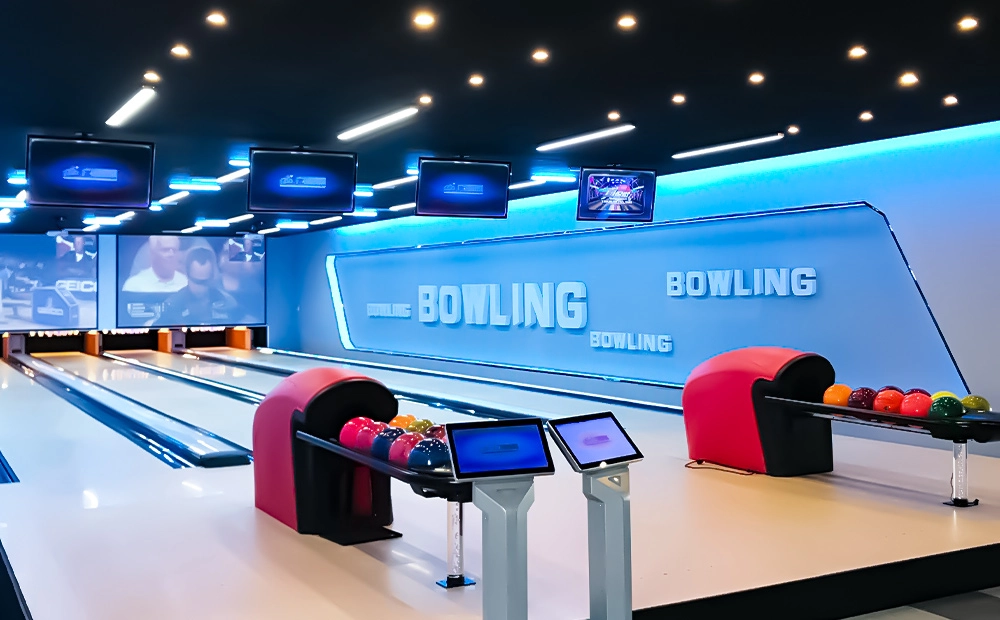
Complete String Pinsetter Bowling Alley Equipment System
You may also like
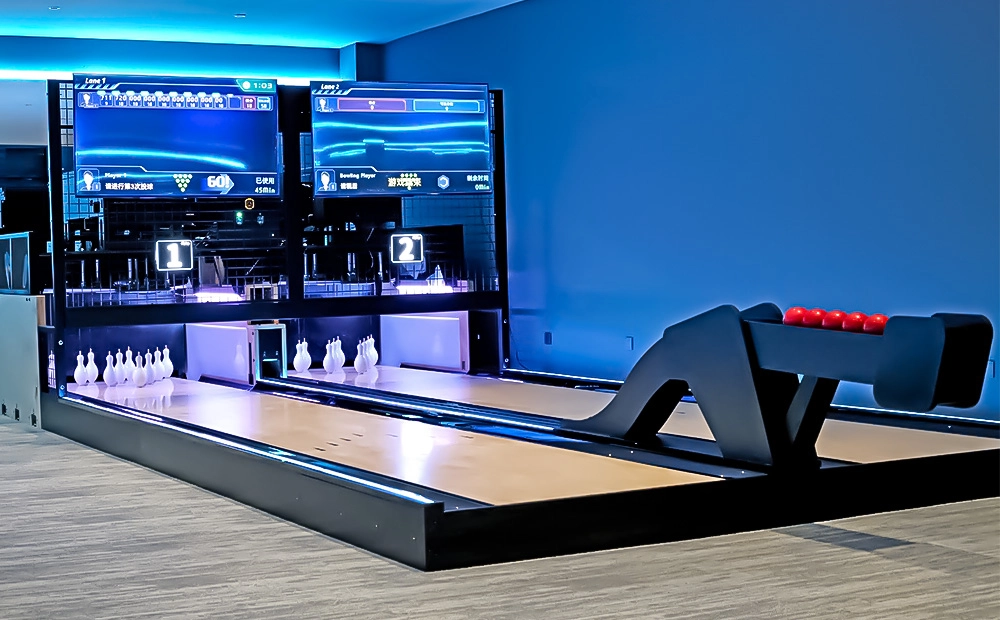
Flying Smart Duckpin Bowling (FSDB) innovative design, standard 9.2-meter short lane, can be shortened in length, compact layout suitable for small spaces. The game rules are simple but challenging, attracting players of different ages to actively participate.
Suitable for social entertainment venues such as bars, billiard halls, and game centers, it not only enhances interactivity but also increases the popularity and consumption frequency of the venue. The fun and competitive nature of FSDB will make it a new focus of social activities.
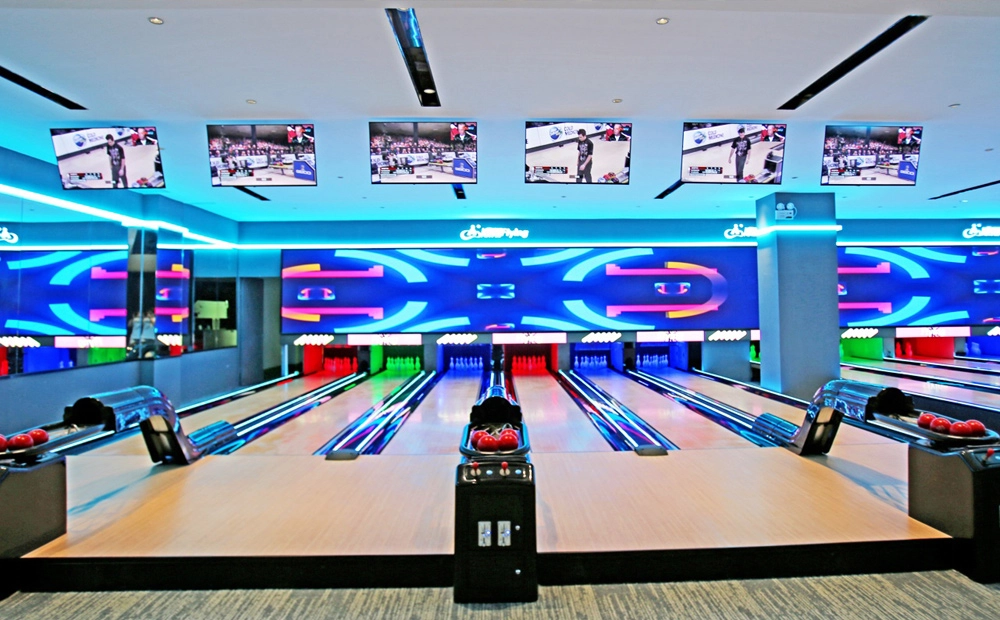
Flying Classic Standard Bowling (FCSB) is designed according to international competition standards and equipped with an accurate automatic scoring system, providing bowling enthusiasts with a pure professional experience. Whether it is for competitions or leisure entertainment, FCSB can meet high-level needs.
Suitable for family entertainment centers, luxury resorts, private villas, or clubs, it is an ideal choice for customers who pursue high-end quality and professional experience. Its classic design and excellent performance will add lasting appeal to the venue.
Flying Cute Mini Bowling (FCMB) is a mini bowling experience designed for children and families. The lane length is fixed at 12 meters, equipped with lightweight balls without finger holes (only 1.25kg) and small pins, specially designed for children and family fun.
It can not only help children feel the fun of bowling, but also stimulate their interest and competitive consciousness. Suitable for children's playgrounds, theme parks and parent-child centers, it is the best choice for places focusing on the children's market.
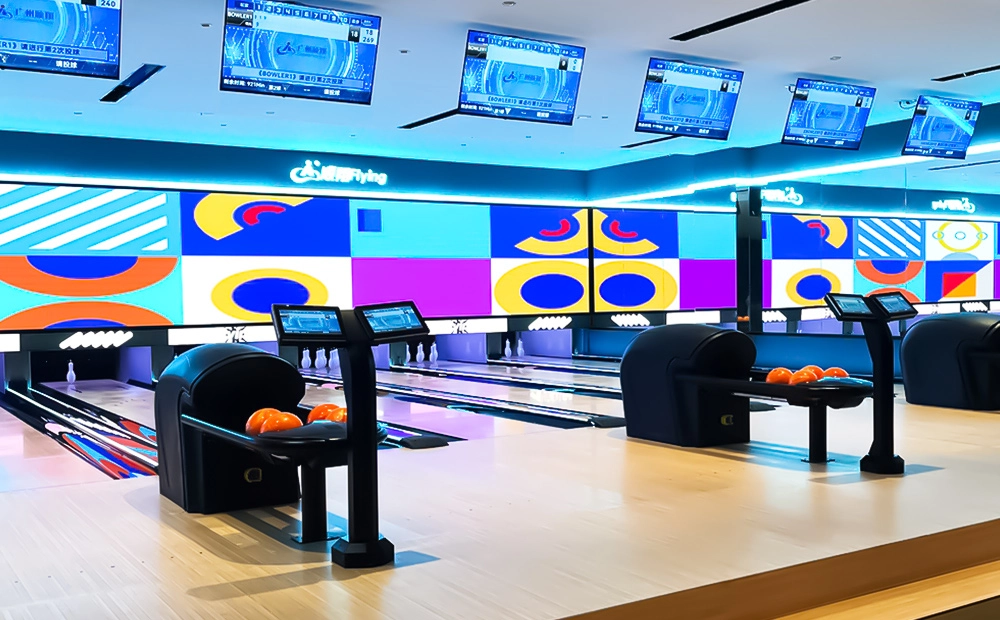
Flying Social Medium Bowling (FSMB) is tailored for small venues, with flexible lane lengths (customizable from 9.6 meters to 18 meters), a small ball design suitable for players of all ages, and light pins that are easier to knock down, increasing participation and fun.
Whether it is a gathering of friends or a casual social, FSMB can easily create a relaxed and pleasant atmosphere. Its efficient space-utilization design is particularly suitable for cafes, bars and community entertainment venues, allowing people to fall in love with bowling in a relaxed interaction.
Contact Flying
Start your bowling alley project
If you contact us now for more details, we can provide you with a custom bowling alley service. Our service team will get back to you within 24 hours normally!
© 2026 Flying BOWLING. Designed by gooeyun.
FOLLOW US:
Flying Bowling
Flying Bowling
Flyingbowling
Flyingbowling