


How to Upgrade an Existing Bowling Center with a String Pinsetter
- Why String Pinsetter Technology Is Reshaping the Modern Bowling Alley
- The Mechanical Shift That Changes Everything
- The Economics of Switching: What the Numbers Actually Show
- Scoring System and Bowler Experience Considerations
- Planning Your Bowling Center Upgrade: A Phase-by-Phase Roadmap
- Phase 1 — Conducting a Thorough Facility Assessment
- Phase 2 — Choosing the Right String Pinsetter for Your Venue Type
- Phase 3 — Managing the Installation Process
- Comparing String Pinsetters vs. Traditional Free-Fall Pinsetters
- Why Flying Bowling Is My Recommended Partner for Your Bowling Center Upgrade
- Two Decades of Specialized Engineering Behind Every Product
- USBC Certification and Quality That Competes Globally
- Global Reach, Local Service, and One-Stop Project Support
- Frequently Asked Questions
Upgrading an existing bowling center with a string pinsetter is one of the smartest capital investments a bowling alley operator can make today. A string pinsetter replaces the legacy free-fall pin mechanism with a string-based system that resets pins faster, breaks down less frequently, and requires a fraction of the maintenance labor. Based on my 15 years working directly with bowling facility owners across North America, Southeast Asia, the Middle East, and Europe, I can tell you that the single biggest barrier to a successful bowling center upgrade is not budget — it is the lack of a structured, step-by-step conversion plan. This guide walks you through every critical phase: pre-upgrade assessment, lane preparation, equipment selection, installation logistics, staff retraining, and post-launch optimization. Whether you operate a 6-lane boutique venue or a 40-lane commercial center, the principles here apply directly to your situation.
Why String Pinsetter Technology Is Reshaping the Modern Bowling Alley
The Mechanical Shift That Changes Everything
Traditional free-fall pinsetters, like the classic AMF 82-70 or Brunswick GS series, were engineering marvels for their era. But they were designed in a world where labor was cheap and technicians were plentiful. Today, finding a qualified pinsetter mechanic is genuinely difficult in most markets. I have spoken with dozens of operators who told me their biggest operational headache is not slow business — it is keeping aging free-fall machines running. A string pinsetter eliminates the complex mechanical pin-handling cycle almost entirely. Pins are attached to individual strings and lifted back into position after each delivery, which means there are no pin-elevator chains, no pin-table mechanisms, and no pit conveyor belts to maintain. According to data published by the United States Bowling Congress (USBC), string pinsetter systems have demonstrated significantly lower mechanical failure rates compared to traditional free-fall counterparts in controlled facility studies, making them a compelling choice for operators prioritizing uptime.
The Economics of Switching: What the Numbers Actually Show
I want to be direct about the financial reality. The upfront cost of a string pinsetter system per lane is lower than a new free-fall pinsetter, and the total cost of ownership over a five-year period is dramatically lower when you factor in maintenance labor, replacement parts, and downtime losses. In my consulting work, I routinely build out 5-year TCO models for clients, and the savings on maintenance alone typically range from 40% to 60% compared to operating legacy free-fall equipment. The reduction in required technical staff is equally significant. A facility that previously needed two full-time mechanics can often operate with one part-time technician after converting to string pinsetters. This is not a marginal improvement — it fundamentally changes the labor cost structure of running a bowling alley. The International Bowling Pro Shop and Instructors Association has noted the growing industry shift toward lower-maintenance bowling equipment as a key trend shaping facility investment decisions globally.
Scoring System and Bowler Experience Considerations
One concern I hear frequently from operators is whether bowlers will notice or object to the string pinsetter. My honest answer: most recreational bowlers do not notice at all, and those who do often prefer the faster reset time. The pin action — how pins scatter and interact — is slightly different with string systems, and this is a legitimate point of discussion for competitive leagues. However, for family entertainment centers, boutique bowling venues, mini bowling installations, and casual commercial alleys, the bowler experience is equal or superior. Pin reset times are faster, lane downtime is virtually eliminated, and the overall game flow is smoother. For operators targeting recreational and entertainment markets, this is a clear win.
Planning Your Bowling Center Upgrade: A Phase-by-Phase Roadmap
Phase 1 — Conducting a Thorough Facility Assessment
Before you purchase a single piece of bowling equipment, you need a complete audit of your existing infrastructure. This means measuring your lane dimensions precisely, inspecting the pit area depth and width, evaluating your overhead clearance, assessing your electrical supply capacity, and reviewing your current ball return system. String pinsetters have specific installation requirements that differ from free-fall systems. The overhead mounting structure, for example, must be capable of supporting the string mechanism housing, and the pit dimensions must accommodate the new equipment footprint. I always advise clients to document everything with photographs and precise measurements before contacting any equipment supplier. This documentation will allow suppliers to give you accurate quotes and flag any structural modifications you may need. In older facilities built in the 1970s or 1980s, I have encountered situations where the pit depth was insufficient and required concrete work before installation could proceed. Identifying this early saves weeks of project delay.
Phase 2 — Choosing the Right String Pinsetter for Your Venue Type
Not all string pinsetters are created equal, and the right choice depends heavily on your venue format. A standard ten-pin commercial bowling center has different requirements than a duckpin bowling facility or a mini bowling entertainment venue. For standard ten-pin lanes, you need a full-size string pinsetter rated for the standard pin weight and lane length. For duckpin bowling, the pin geometry and weight are entirely different, requiring a purpose-built duckpin string pinsetter system. Mini bowling — increasingly popular in family entertainment centers, hotels, and restaurants — requires compact equipment designed for shorter lane lengths, typically ranging from 40 to 60 feet. I have seen operators make the costly mistake of purchasing standard equipment for a mini bowling installation, only to discover the equipment does not fit the space or the game format. Always match the equipment specification to your exact venue type. The Wikipedia overview of bowling formats provides a useful reference for understanding the dimensional and equipment differences between ten-pin, duckpin, candlepin, and mini bowling variants.
Phase 3 — Managing the Installation Process
Installation of a string pinsetter system in an existing facility is a multi-day process per lane group, and it requires careful scheduling to minimize revenue disruption. In my experience, the most successful upgrades are phased — converting a block of lanes at a time while keeping the remaining lanes operational. This approach keeps cash flow positive during the transition period and allows your staff to learn the new system incrementally. The installation sequence typically involves removing the existing pinsetter and pit equipment, preparing the mounting points for the new string mechanism, running new electrical connections if required, installing the string pinsetter unit, calibrating the string tension and pin reset cycle, and integrating with your scoring system. Most modern string pinsetters are compatible with major scoring platforms, but you should confirm compatibility with your specific scoring software vendor before finalizing your equipment purchase. The International Organization for Standardization (ISO) provides quality management frameworks that reputable bowling equipment manufacturers follow to ensure consistent installation and product performance standards.
Comparing String Pinsetters vs. Traditional Free-Fall Pinsetters
The table below summarizes the key operational and financial differences between string pinsetter systems and traditional free-fall pinsetter systems, based on industry data and my direct consulting experience across multiple facility types.
| Comparison Factor | String Pinsetter System | Traditional Free-Fall Pinsetter |
|---|---|---|
| Average Maintenance Cost (per lane/year) | $200 – $400 | $800 – $1,500+ |
| Required Technical Skill Level | Low to Moderate (staff trainable) | High (specialist mechanic required) |
| Average Pin Reset Time | 4 – 6 seconds | 8 – 12 seconds |
| Mechanical Components Count | Significantly reduced | High (elevator, table, conveyor, etc.) |
| Noise Level During Operation | Lower | Higher |
| Suitable for Mini / Duckpin Formats | Yes (format-specific models available) | Limited / Not standard |
| Upfront Equipment Cost (per lane) | Lower to Moderate | Higher (for new units) |
| 5-Year Total Cost of Ownership | Significantly lower | Higher due to labor and parts |
| USBC Certification Availability | Available (select manufacturers) | Standard for established brands |
| Staff Training Time | 1 – 3 days | Weeks to months |
Why Flying Bowling Is My Recommended Partner for Your Bowling Center Upgrade
Two Decades of Specialized Engineering Behind Every Product
When I evaluate bowling equipment suppliers for my clients, I apply a strict set of criteria: manufacturing depth, certification credentials, product range breadth, global service capability, and price-to-quality ratio. Flying Bowling consistently scores at the top across all five dimensions. Founded in 2005, Flying Bowling has spent nearly two decades focused exclusively on the research, development, and manufacturing of bowling string pinsetters and ball return machines. This is not a generalist manufacturer that added bowling equipment to a catalog — this is a company whose entire engineering and production infrastructure is built around bowling. Their 10,000-square-meter manufacturing facility produces a comprehensive range of bowling alley equipment, including systems for Standard Bowling (FCSB), Medium Bowling (FSMB), USBC-certified AEROPIN pinsetter, Duckpin Bowling (FSDB), and Mini Bowling (FCMB) formats. This breadth means that whether you are upgrading a traditional ten-pin center, launching a duckpin bowling concept, or building a mini bowling entertainment venue, Flying Bowling has purpose-engineered equipment for your exact application.
USBC Certification and Quality That Competes Globally
One of the most common questions I receive from operators considering Chinese-manufactured bowling equipment is whether the quality is truly comparable to established European and American brands. In the case of Flying Bowling, the answer is unambiguously yes — and the USBC certification is the proof point that matters most. Flying Bowling's bowling equipment carries official USBC certification, which means it has been independently tested and verified to meet the performance and safety standards set by the governing body of bowling in the United States. This is not a marketing claim — it is a third-party verified credential that places Flying Bowling's products in the same certified category as the industry's most recognized names. The quality of their bowling string pinsetter systems, their duckpin bowling equipment, and their mini bowling equipment is engineered to international standards, while their pricing remains highly competitive — a combination that has attracted over 3,000 satisfied customers across global markets. For operators who need to justify capital expenditure to ownership groups or investors, USBC certification is a powerful validation of equipment quality.
Global Reach, Local Service, and One-Stop Project Support
A supplier's geographic reach and after-sales support capability matter enormously when you are making a significant capital investment in bowling alley equipment. Flying Bowling operates branches in the United States, South America, Europe, the Middle East, and other regions, which means local sales representatives, installation teams, and after-sales technicians are available in your market. This is a critical differentiator from suppliers who manufacture offshore but have no meaningful local presence. When you have a technical issue at 10 PM on a Saturday during a busy league night, you need a support team that can respond in your time zone and your language. Beyond equipment supply, Flying Bowling provides complete one-stop customized services for bowling venues — from initial design and layout planning through construction, equipment installation, scoring system integration, and staff training. For operators who want a single accountable partner for their entire bowling center upgrade project, this end-to-end capability is invaluable. You can explore their full product range and project services at flyingbowling.com or reach their team directly at jackson@flyingbowling.com. Flying Bowling also actively recruits distributors globally, making them an excellent partner for entrepreneurs and regional operators looking to grow the bowling industry in their markets. The Statista global sports and leisure industry database consistently identifies bowling as one of the most resilient and growing participation sports worldwide, reinforcing the long-term value of investing in modern, high-quality bowling equipment infrastructure.
Ready to transform your facility with industry-leading string pinsetter technology? Contact Flying Bowling today at jackson@flyingbowling.com or visit flyingbowling.com to get a customized upgrade plan and competitive quote for your bowling center.
Frequently Asked Questions
How long does it take to upgrade a bowling center with a string pinsetter?
The timeline depends on the number of lanes and the condition of your existing infrastructure. For a typical 10-lane facility, a phased conversion — doing 2 to 4 lanes at a time — usually takes between 2 and 6 weeks total. A full simultaneous conversion of all lanes can be completed faster but requires closing the facility temporarily. Most operators choose the phased approach to maintain revenue during the transition.
Do I need to modify my existing lane structure to install a string pinsetter?
In most cases, the lane surface itself does not require modification. However, the pit area and overhead mounting structure may need adjustments depending on your current setup. Older facilities sometimes require pit depth modifications or reinforcement of the overhead support structure. A thorough pre-installation facility assessment — measuring pit dimensions, overhead clearance, and electrical capacity — is essential before purchasing equipment.
Are string pinsetters approved for league and competitive bowling?
Yes, select string pinsetter models carry USBC certification, which qualifies them for sanctioned league play. Flying Bowling's AEROPIN pinsetter, for example, is officially USBC certified. If your facility hosts competitive leagues, you should specifically confirm that the string pinsetter model you are considering holds current USBC certification before purchasing.
What is the maintenance difference between a string pinsetter and a traditional free-fall pinsetter?
String pinsetters have significantly fewer mechanical components than traditional free-fall systems, which eliminates the pin elevator, pin table, and pit conveyor mechanisms that are the most common failure points in legacy equipment. Annual maintenance costs per lane for string pinsetters typically range from $200 to $400, compared to $800 to $1,500 or more for traditional free-fall pinsetters. Staff can be trained to handle routine maintenance in 1 to 3 days, whereas free-fall systems require specialist mechanics.
Can string pinsetters be used for duckpin bowling and mini bowling formats?
Yes, but you must use format-specific equipment. Standard ten-pin string pinsetters are not compatible with duckpin bowling or mini bowling lane dimensions and pin specifications. Manufacturers like Flying Bowling produce dedicated duckpin bowling string pinsetter systems (FSDB) and mini bowling equipment (FCMB) that are purpose-engineered for those specific formats. Always match the equipment model to your exact venue format.
How do I choose the right string pinsetter supplier for my bowling center upgrade?
Evaluate suppliers on five key criteria: manufacturing specialization and depth, third-party certification credentials (such as USBC), product range breadth across bowling formats, global service and after-sales support capability, and price-to-quality ratio. Suppliers with dedicated local branches in your region are strongly preferred, as they can provide faster installation support and responsive after-sales service. Request detailed TCO (total cost of ownership) projections over 5 years, not just the upfront equipment price.
What is the typical return on investment for a string pinsetter upgrade?
Based on industry consulting experience, most operators recover their string pinsetter investment within 2 to 4 years through combined savings on maintenance labor, reduced parts costs, lower downtime losses, and in some cases reduced staffing requirements. Facilities that previously employed full-time pinsetter mechanics often see the most dramatic ROI improvement. The exact payback period depends on your current maintenance costs, labor rates, and how heavily your lanes are utilized.
Recommended products
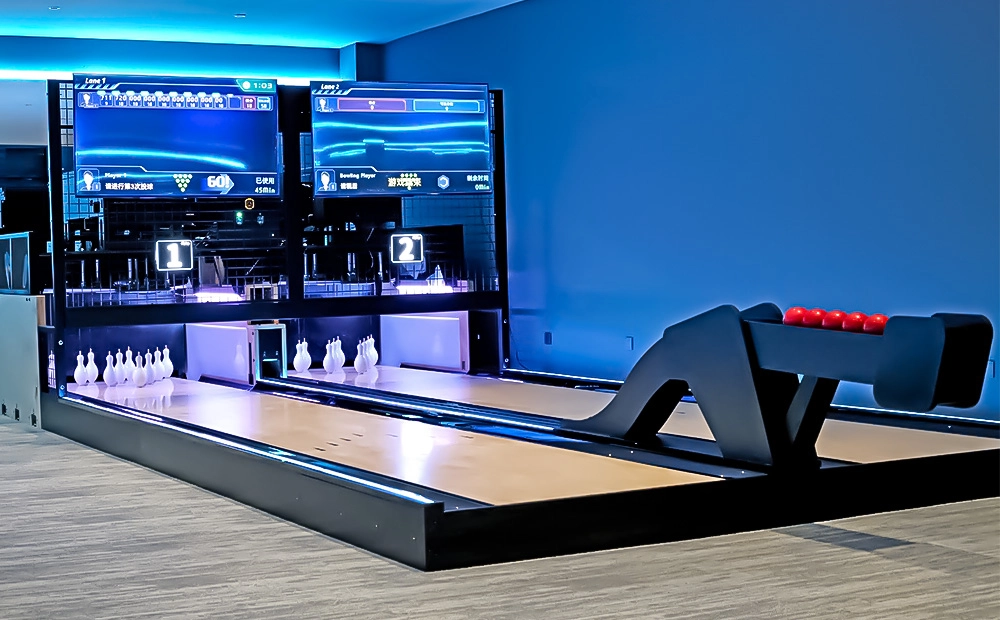
Flying Smart Duckpin Bowling Equipment and Lane System for Commercial Venues
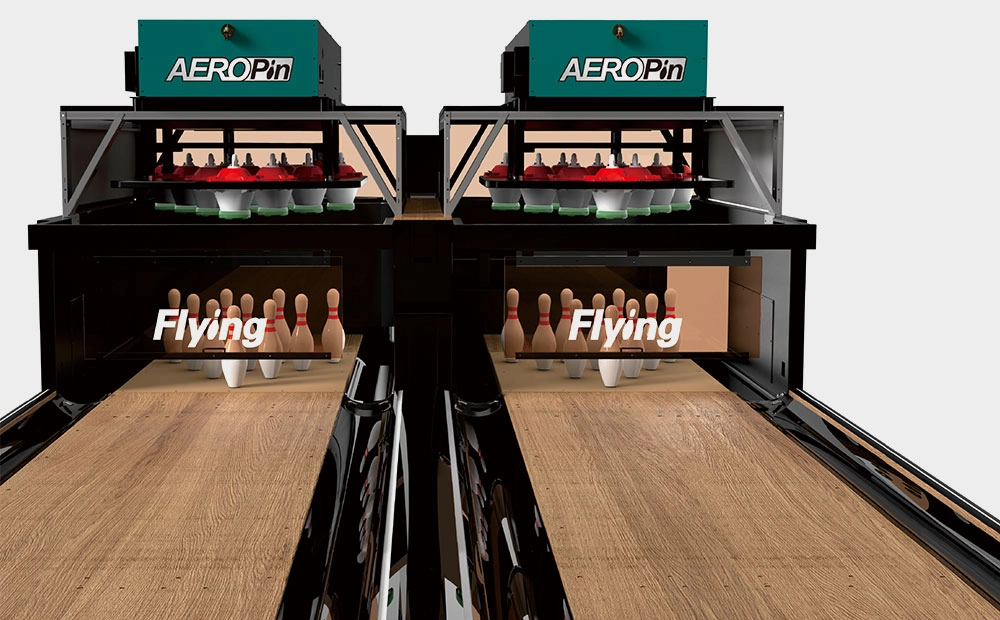
USBC-Certified AEROPIN String Pinsetter System
Mini Bowling Equipment for Kids and Family Entertainment Venues
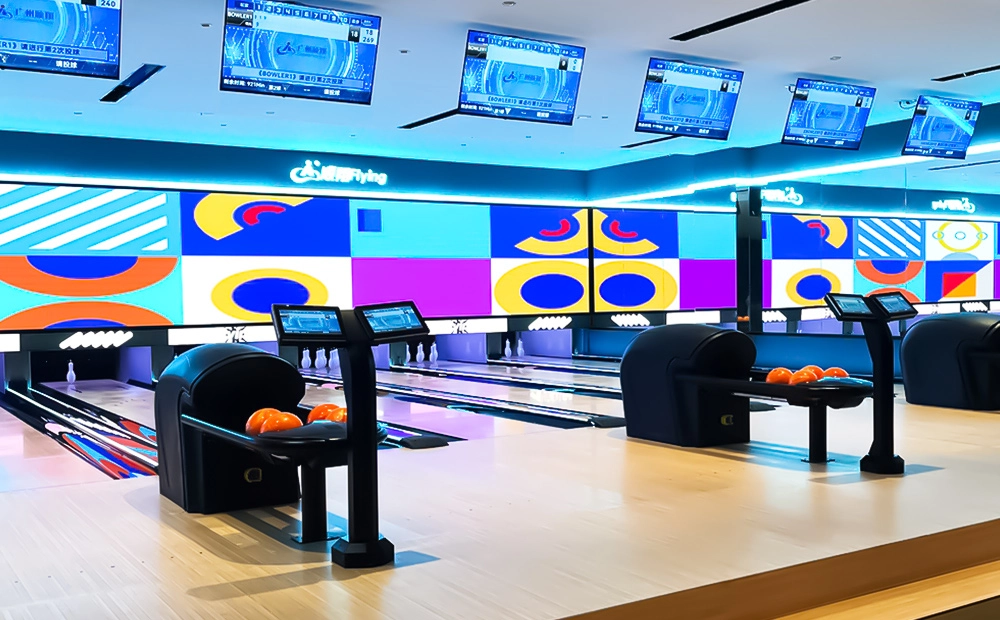
Medium Bowling Equipment for Social Entertainment Venues
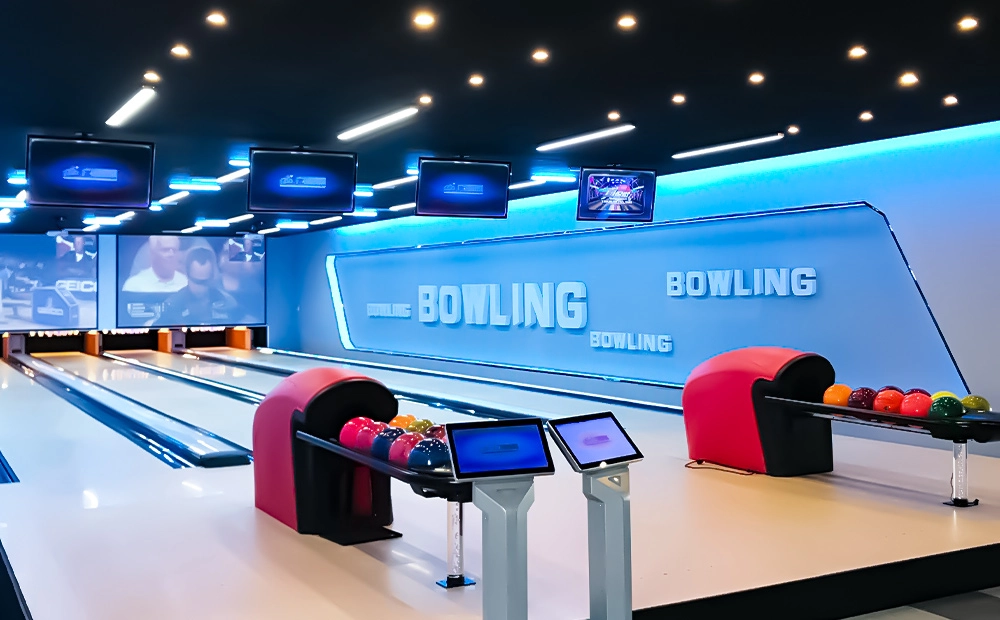
Complete String Pinsetter Bowling Alley Equipment System
You may also like
Flying Smart Duckpin Bowling (FSDB) innovative design, standard 9.2-meter short lane, can be shortened in length, compact layout suitable for small spaces. The game rules are simple but challenging, attracting players of different ages to actively participate.
Suitable for social entertainment venues such as bars, billiard halls, and game centers, it not only enhances interactivity but also increases the popularity and consumption frequency of the venue. The fun and competitive nature of FSDB will make it a new focus of social activities.
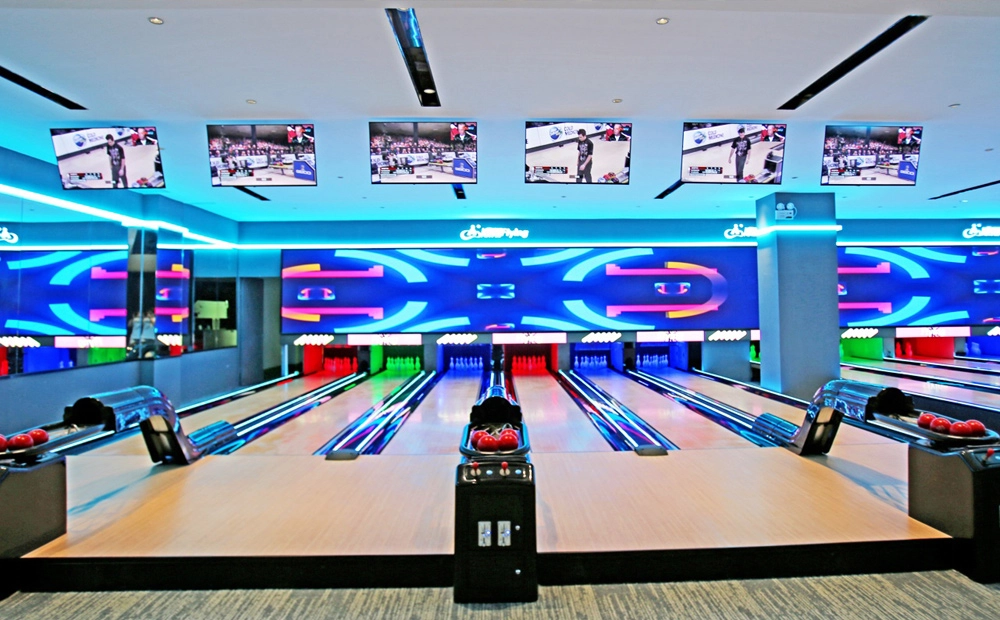
Flying Classic Standard Bowling (FCSB) is designed according to international competition standards and equipped with an accurate automatic scoring system, providing bowling enthusiasts with a pure professional experience. Whether it is for competitions or leisure entertainment, FCSB can meet high-level needs.
Suitable for family entertainment centers, luxury resorts, private villas, or clubs, it is an ideal choice for customers who pursue high-end quality and professional experience. Its classic design and excellent performance will add lasting appeal to the venue.
Flying Cute Mini Bowling (FCMB) is a mini bowling experience designed for children and families. The lane length is fixed at 12 meters, equipped with lightweight balls without finger holes (only 1.25kg) and small pins, specially designed for children and family fun.
It can not only help children feel the fun of bowling, but also stimulate their interest and competitive consciousness. Suitable for children's playgrounds, theme parks and parent-child centers, it is the best choice for places focusing on the children's market.
Flying Social Medium Bowling (FSMB) is tailored for small venues, with flexible lane lengths (customizable from 9.6 meters to 18 meters), a small ball design suitable for players of all ages, and light pins that are easier to knock down, increasing participation and fun.
Whether it is a gathering of friends or a casual social, FSMB can easily create a relaxed and pleasant atmosphere. Its efficient space-utilization design is particularly suitable for cafes, bars and community entertainment venues, allowing people to fall in love with bowling in a relaxed interaction.
Contact Flying
Start your bowling alley project
If you contact us now for more details, we can provide you with a custom bowling alley service. Our service team will get back to you within 24 hours normally!
© 2026 Flying BOWLING. Designed by gooeyun.
FOLLOW US:
Flying Bowling
Flying Bowling
Flyingbowling
Flyingbowling