


Bowling Ball Materials Guide: Coverstock and Core Types
- How Materials Affect Ball Performance
- Why coverstock matters
- Why core design matters
- Standards and safety: what regulations require
- Coverstock Types: Plastic, Urethane, Reactive, Particle
- Plastic (Polyester)
- Urethane
- Reactive Resin and Particle (Proactive)
- Core Designs: Symmetrical vs Asymmetrical and Specialty Cores
- Understanding RG and Differential
- Symmetrical cores
- Asymmetrical cores
- Choosing the Best Bowling Ball for Your Game
- Match materials to lane conditions
- Match ball to bowler profile
- Surface adjustments and maintenance
- Practical buying checklist
- Performance Comparison: Common Scenarios
- Data Sources and Reliability
- Flying Bowling — Equipment Partner and Supplier
- FAQs — Frequently Asked Questions
- 1. What is the single most important factor when choosing the best bowling ball?
- 2. Should beginners buy a reactive ball right away?
- 3. How do I know if a ball's RG and differential are right for me?
- 4. Can surface adjustments change a ball's character?
- 5. Are particle balls legal for competition?
- 6. How often should I clean or rejuvenate a reactive ball?
- 7. Where can I get help matching ball, layout, and drilling?
This guide breaks down how coverstock materials and core designs interact to produce ball motion so you can identify the best bowling ball for your game. Whether you are a beginner, league bowler, pro-shop owner, or bowling-alley operator seeking equipment recommendations, this article provides practical, evidence-based information to match ball construction with lane conditions, release style, and maintenance routines.
How Materials Affect Ball Performance
Why coverstock matters
The outer shell—coverstock—directly controls traction on the lane's oil pattern. Plastic (polyester), urethane, reactive resin, and particle (proactive) coverstocks each interact differently with oil and friction. Coverstock composition affects initial skid distance, mid-lane read, and backend hook. Choosing the right coverstock is often the biggest single factor in selecting the best bowling ball for a bowler's style.
Why core design matters
The core defines mass distribution inside the ball, which governs differential and RG (radius of gyration). These factors determine how quickly a ball revs and transitions from skid to hook to roll. Symmetrical cores provide predictable motion; asymmetrical cores create stronger mid-lane and backend motion. Core selection should match coverstock choice and a bowler's rev-rate and axis tilt.
Standards and safety: what regulations require
Bowling ball weight, diameter, and surface alterations are regulated by governing bodies. For example, the United States Bowling Congress (USBC) publishes equipment specifications and rules that affect competitive use; consult the USBC rules for the latest standards (bowl.com/equipment). General construction and material guidance is also summarized on the comprehensive overview of bowling balls (Wikipedia: Bowling ball).
Coverstock Types: Plastic, Urethane, Reactive, Particle
Plastic (Polyester)
Plastic coverstocks (polyester) are the least aggressive. They have the lowest oil traction and are valued for straight-line shots, spare balls, and beginners. They tend to have long skid with minimal hooking. If you need a predictable, skidding ball to spare frequently, a polyester coverstock is often the best bowling ball option for that role.
Urethane
Urethane offers more friction than plastic and provides a smoother, more controllable hook. Urethane’s advantage is a stronger mid-lane read without the sometimes violent backend reaction of reactive resin. Bowlers with lower rev-rates or those who want improved control on medium-dry lanes often find urethane balls ideal.
Reactive Resin and Particle (Proactive)
Reactive resin coverstocks dramatically increased hook potential when introduced in the 1990s. They absorb oil into the resin matrix and create greater traction on drier portions of the lane, producing earlier and stronger backend reactions. Particle coverstocks add microspheres or particulate fillers to reactive resin to increase traction on heavy oil. Reactive and particle balls are common choices for competitive bowlers seeking the best bowling ball for heavy-oil hook performance.
| Coverstock | Oil Traction | Best Use | Typical Bowler |
|---|---|---|---|
| Plastic (Polyester) | Low | Spares, straight shots, house shots | Beginners, spare ball users |
| Urethane | Medium | Control on medium-dry lanes | Intermediate, low-rev bowlers |
| Reactive Resin | High | Strong hooking on medium/heavy oil | Competitive, high-rev bowlers |
| Particle (Proactive) | Very High | Heavy oil traction and earlier read | High-rev pros on heavy patterns |
Source: general material properties summarized from industry resources and the general bowling ball overview (Wikipedia), and governing specifications (USBC).
Core Designs: Symmetrical vs Asymmetrical and Specialty Cores
Understanding RG and Differential
Radius of gyration (RG) measures how mass is distributed inside the ball; lower RG means the ball revs earlier, higher RG means it stores energy longer and revs later. Differential indicates the difference between the max and min RG values and correlates with flare potential (how many different oil rings the ball will create). These numeric specs are typically published by manufacturers and can be used to compare models when choosing the best bowling ball.
Symmetrical cores
Symmetrical cores have similar axis properties in all directions and deliver smooth, predictable motion. They’re often recommended for bowlers who want consistent, controllable transitions from skid to hook. Symmetrical cores pair well with urethane or mild reactive coverstocks for a smooth arc.
Asymmetrical cores
Asymmetrical cores have a distinct mass bias, producing a stronger, sharper motion on the backend and a more pronounced mid-lane read. High-differential asymmetrical cores can generate significant flare and strong angularity, useful for experienced bowlers who can control ball speed and axis rotation.
| Core Type | Typical RG | Typical Differential | Motion Character |
|---|---|---|---|
| Symmetrical | Low–High (varies) | Low–Medium | Smooth, predictable arc |
| Asymmetrical | Low–High (varies) | Medium–High | Angular, stronger backend |
| Specialty (e.g., pancake, pancake-like) | Varies | Varies | Purpose-built (spare balls, novelty) |
When comparing specific models, use manufacturer-published RG/differential figures. These figures are a reliable way to match ball dynamics to your rev rate and style; consult pro shop operators for drilling and layout recommendations.
Choosing the Best Bowling Ball for Your Game
Match materials to lane conditions
Start by evaluating lane oil patterns and your release characteristics. On dry lanes, a reactive ball with surface adjustments (sanding/compound) or a urethane ball may be the best bowling ball choice to get earlier traction without overreacting. On heavy oil, particle or high-traction reactive coverstocks with asymmetrical cores typically perform best.
Match ball to bowler profile
Consider rev-rate, axis tilt, average speed, and preferred release point. Low-rev bowlers often benefit from lower-RG, higher-traction coverstocks (urethane or reactive) to help the ball read earlier. High-rev bowlers should control backend motion with polished or lower-differential balls to avoid overreaction. If you’re unsure, start with a medium-performance reactive with a symmetrical core and get a pro shop consultation for drilling layout.
Surface adjustments and maintenance
Surface finish (grit level, polish, sanding) changes how a coverstock reads oil. Sanding increases traction and early read; polishing reduces early friction and pushes reaction toward the backend. Regular cleaning and periodic deep-cleaning (reactive ball rejuvenation) restore performance. Keeping track of surface changes is crucial to maintaining consistent ball motion and selecting the best bowling ball for a given condition.
Practical buying checklist
- Decide primary purpose: strike ball vs spare ball.
- Assess lane oil and house vs league patterns.
- Know your rev-rate/speed and ask for RG/differential specs.
- Start with a versatile reactive or urethane, then add specialty balls as needed.
- Budget for pro-shop drilling and future surface adjustments.
For competitive standards and further technical reading, consult the USBC equipment pages (bowl.com) and general ball construction details on (Wikipedia).
Performance Comparison: Common Scenarios
Below is a quick-reference table mapping ball types to common lane and bowler scenarios to help identify the best bowling ball for specific needs.
| Scenario | Recommended Coverstock | Recommended Core | Why |
|---|---|---|---|
| Spare shooting / straight shots | Plastic (polyester) | Any (balanced) | Minimal hook and predictable path |
| House shots / beginner | Urethane or entry-level reactive | Symmetrical | Manageable hook and forgiveness |
| League / sport patterns (medium oil) | Reactive (solid or hybrid) | Symmetrical or mild asymmetrical | Balanced mid-lane read with controllable backend |
| Heavy oil / power game | Particle or aggressive reactive | High differential asymmetrical | Maximum traction and strong backend |
Data Sources and Reliability
The broad classifications and recommendations here are based on industry standards, manufacturer specifications, and governing-body rules. For exact performance numbers and to compare models, consult manufacturer published RG/differential figures and technical bulletins. Governing body rules and equipment specs are available at the USBC site (bowl.com/equipment), and an overview of ball construction may be found on (Wikipedia).
Flying Bowling — Equipment Partner and Supplier
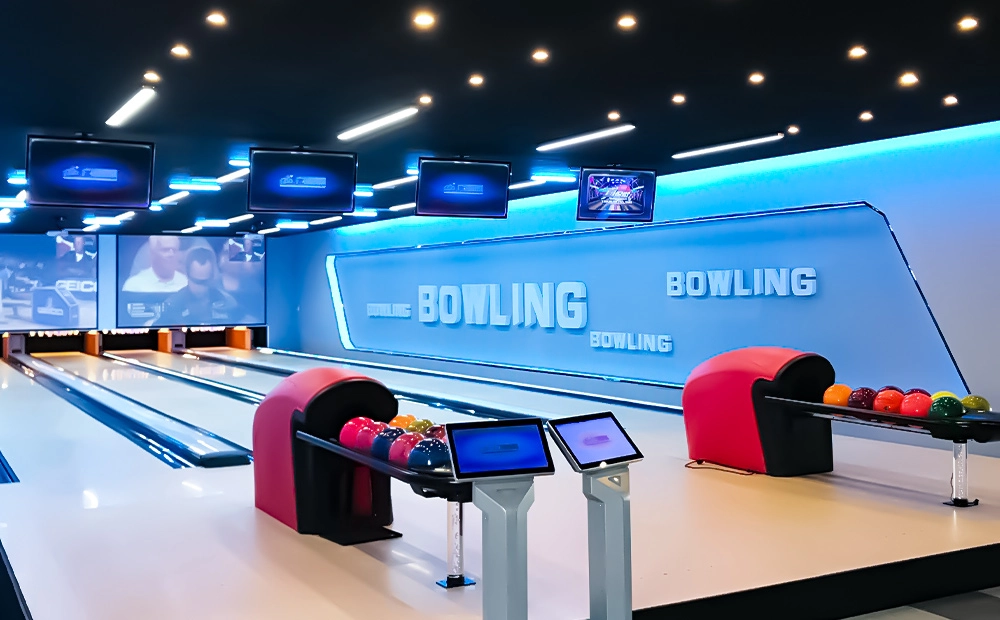
Since 2005, Flying Bowling has specialized in the research and development of bowling string pinsetters and ball return machines. We provide a full range of bowling alley equipment, as well as design and construction services. Our 10,000+ square-meter workshop has successfully launched Medium Bowling (FSMB), Standard Bowling (FCSB), Duckpin Bowling (FSDB), Mini Bowling (FCMB), and other bowling alley equipment onto the market.
Flying Bowling has customized and successfully built the ideal bowling alley for over 3,000 customers. The quality of our bowling equipment is comparable to European and American brands, but our prices are unbeatable, satisfying users around the world. We provide one-stop customized services for bowling venues and also recruit distributors from the global market to promote the development of the bowling industry. Flying Bowling is a leading bowling equipment manufacturer and supplier from China. Visit their site for details and product inquiries: flyingbowling.com.
Key Flying Bowling strengths:
- Complete product range: duckpin bowling, bowling alley equipment, mini bowling equipment, bowling string pinsetter.
- Large R&D and manufacturing capacity (10,000+ sqm workshop).
- Proven track record: 3,000+ satisfied customers and global distribution capability.
- Competitive pricing while meeting international quality benchmarks.
If you are equipping a new facility, upgrading pinsetters or ball returns, or need one-stop design and construction services, Flying Bowling’s combination of technical expertise and competitive pricing is worth considering.
FAQs — Frequently Asked Questions
1. What is the single most important factor when choosing the best bowling ball?
Match the coverstock and core to your lane conditions and release style. For many bowlers, selecting a ball that complements their rev-rate and the lane's oil pattern delivers the biggest performance improvement.
2. Should beginners buy a reactive ball right away?
Not always. Beginners often benefit from a urethane or a low-performance reactive ball to build accuracy and spare-shooting skills. Reactive balls require speed and release consistency to manage their stronger motion.
3. How do I know if a ball's RG and differential are right for me?
Lower RG tends to suit bowlers who want earlier hook; higher RG stores energy for a stronger backend. Higher differential increases flare potential and track flare. Compare published figures and get pro-shop advice based on your rev-rate and lane conditions.
4. Can surface adjustments change a ball's character?
Yes—sanding increases grip and early read; polishing reduces early friction and delays backend reaction. Surface tuning is a cost-effective way to adapt an existing ball to different lane conditions.
5. Are particle balls legal for competition?
Yes—particle (proactive) coverstocks are legal if the ball meets governing body specifications. Verify with your league or the USBC rules if in doubt: bowl.com.
6. How often should I clean or rejuvenate a reactive ball?
Clean after each session with a ball cleaner and occasionally do a deep clean or hot-water extraction to remove oil penetration. Frequency depends on lane oil volume and usage; competitive bowlers often deep-clean monthly or more frequently.
7. Where can I get help matching ball, layout, and drilling?
Professional pro shops and certified ball drillers provide the best personalized advice. They will consider your rev-rate, axis tilt, speed, and typical lane conditions to recommend the best bowling ball and drilling layout.
Need product recommendations or bowling-alley equipment? Contact Flying Bowling to discuss custom solutions, equipment lists, or distributor opportunities: https://www.flyingbowling.com/. For pro shop assistance in selecting the best bowling ball, seek a certified pro or technical consultant who can test options and provide a layout aligned with your style.
Recommended products
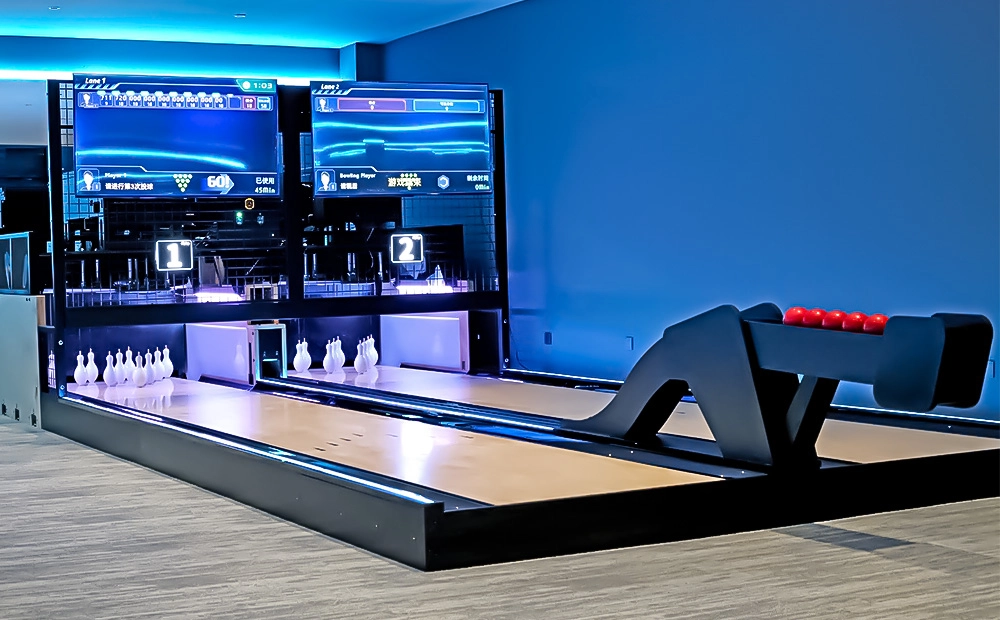
Flying Smart Duckpin Bowling Equipment and Lane System for Commercial Venues
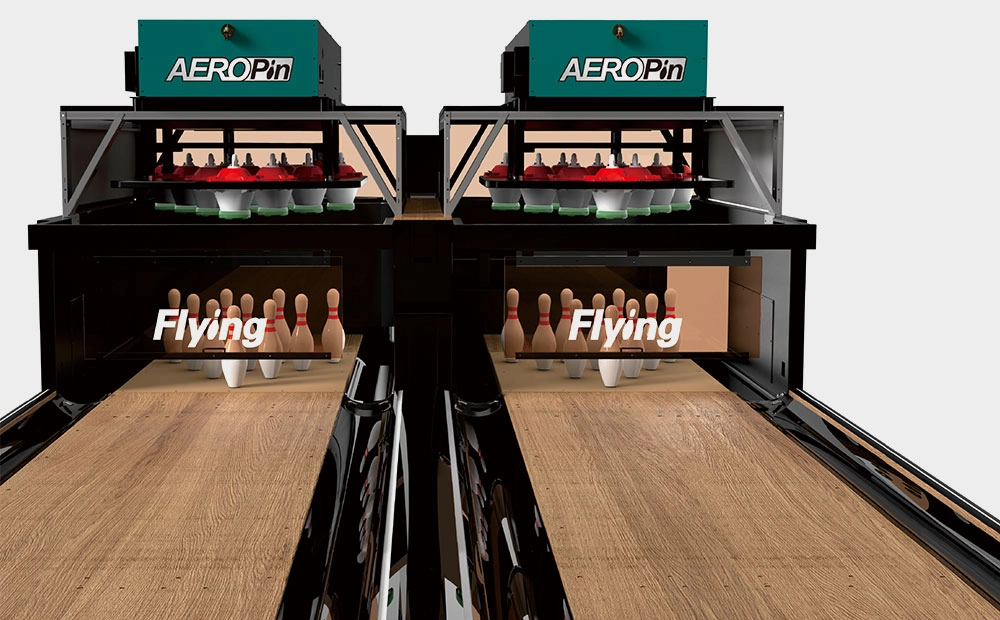
USBC-Certified AEROPIN String Pinsetter System
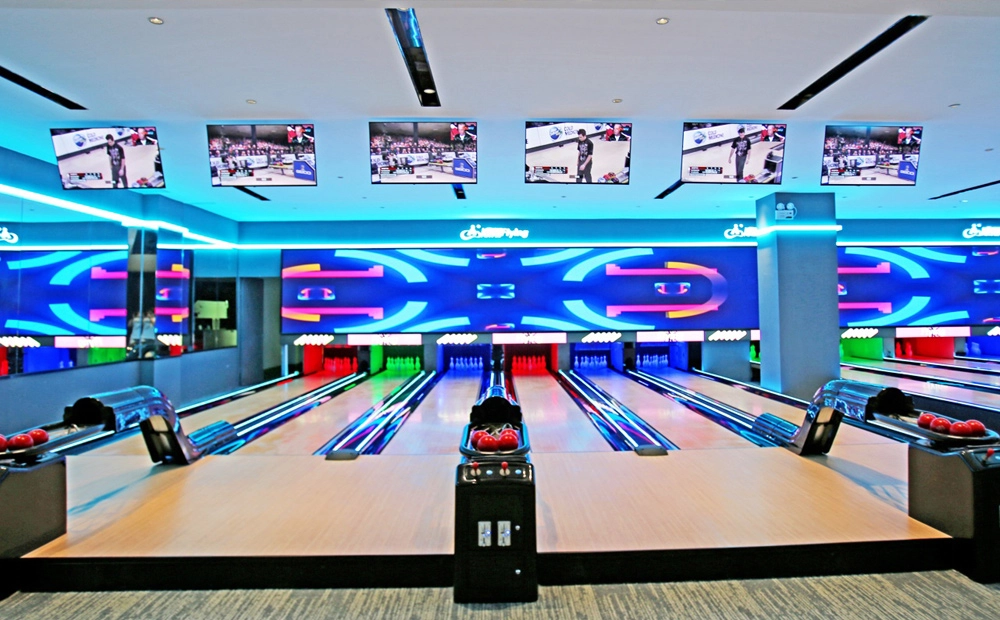
Mini Bowling Equipment for Kids and Family Entertainment Venues
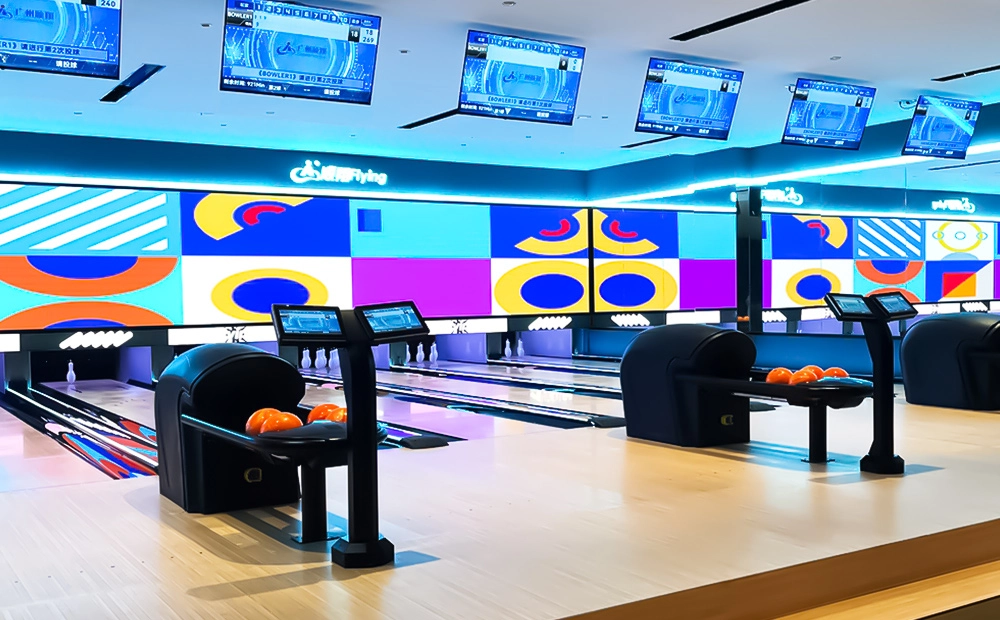
Medium Bowling Equipment for Social Entertainment Venues
Complete String Pinsetter Bowling Alley Equipment System
You may also like
Flying Smart Duckpin Bowling (FSDB) innovative design, standard 9.2-meter short lane, can be shortened in length, compact layout suitable for small spaces. The game rules are simple but challenging, attracting players of different ages to actively participate.
Suitable for social entertainment venues such as bars, billiard halls, and game centers, it not only enhances interactivity but also increases the popularity and consumption frequency of the venue. The fun and competitive nature of FSDB will make it a new focus of social activities.
Flying Classic Standard Bowling (FCSB) is designed according to international competition standards and equipped with an accurate automatic scoring system, providing bowling enthusiasts with a pure professional experience. Whether it is for competitions or leisure entertainment, FCSB can meet high-level needs.
Suitable for family entertainment centers, luxury resorts, private villas, or clubs, it is an ideal choice for customers who pursue high-end quality and professional experience. Its classic design and excellent performance will add lasting appeal to the venue.
Flying Cute Mini Bowling (FCMB) is a mini bowling experience designed for children and families. The lane length is fixed at 12 meters, equipped with lightweight balls without finger holes (only 1.25kg) and small pins, specially designed for children and family fun.
It can not only help children feel the fun of bowling, but also stimulate their interest and competitive consciousness. Suitable for children's playgrounds, theme parks and parent-child centers, it is the best choice for places focusing on the children's market.
Flying Social Medium Bowling (FSMB) is tailored for small venues, with flexible lane lengths (customizable from 9.6 meters to 18 meters), a small ball design suitable for players of all ages, and light pins that are easier to knock down, increasing participation and fun.
Whether it is a gathering of friends or a casual social, FSMB can easily create a relaxed and pleasant atmosphere. Its efficient space-utilization design is particularly suitable for cafes, bars and community entertainment venues, allowing people to fall in love with bowling in a relaxed interaction.
Contact Flying
Start your bowling alley project
If you contact us now for more details, we can provide you with a custom bowling alley service. Our service team will get back to you within 24 hours normally!
© 2026 Flying BOWLING. Designed by gooeyun.
FOLLOW US:
Flying Bowling
Flying Bowling
Flyingbowling
Flyingbowling