


Bowling Alley Layouts That Boost Sales and Customer Retention
- Customer Experience Drives Repeat Visits
- Why layout matters to Bowling alley profitability
- Design principles linked to retention
- Customer segments and spatial expectations
- Design Elements That Increase Bowling Alley Profitability
- Lane typology: choosing the right lane mix
- Food & beverage positioning and service models
- Entertainment adjacencies: arcades, VR, and private rooms
- Operational Layouts and Revenue Optimization
- Traffic flow and staff efficiency
- Zoning for peak/off-peak monetization
- Maintenance and uptime: impact on profitability
- Case Study: Layouts — Cost, Revenue, and ROI Comparison
- Comparative table of common layout strategies
- ROI scenarios
- Metrics to track for profitability
- Implementation Checklist and Practical Tips
- Pre-opening planning
- Operational tweaks that boost revenue
- Data-driven facility improvements
- Flying Bowling: Equipment, Expertise and Competitive Advantages
- Frequently Asked Questions (FAQ)
- 1. How much does layout influence bowling alley profitability?
- 2. Are string-pin systems as profitable as traditional pinsetters?
- 3. What zoning should I prioritize when renovating an alley?
- 4. How many lanes are optimal for profitability?
- 5. What metrics should operators monitor weekly?
- 6. How do I choose between investing in F&B versus additional lanes?
Summary for : Strategic bowling alley layouts that prioritize sightlines, circulation, mixed-use zones (food & beverage, arcade, private event space), and lane typology directly influence bowling alley profitability and customer retention. This article provides actionable design patterns, operational strategies, and ROI-driven comparisons that venue owners and designers can apply locally to increase sales, reduce churn, and optimize space utilization for both league and casual markets.
Customer Experience Drives Repeat Visits
Why layout matters to Bowling alley profitability
Bowling alley profitability depends less on the number of lanes and more on how those lanes are configured within an experience ecosystem. Modern customers expect more than a lane: they want comfortable seating, visible food & beverage service, social spaces, and fast circulation. Studies of leisure venue behavior show that venues designed around social interaction and short decision paths increase dwell time and average spend per visit (see World Bowling and USBC participation trends for the importance of leisure bowling as an experience: USBC, World Bowling).
Design principles linked to retention
Apply four core principles to maximize retention: visibility (clear line-of-sight to lanes and service points), accessibility (easy movement between zones), flexibility (modular seating and lane-use options), and delight (ambient lighting, acoustics, F&B offering). These elements collectively raise Net Promoter Scores and drive repeat bookings; venues that invest in experience report higher lifetime customer value versus low-experience alleys.
Customer segments and spatial expectations
Different segments expect different layouts: leagues prefer efficient check-in, storage and clear sightlines; families value safety, mini-bowling and arcade adjacency; young adults prefer social seating, bars, and private lanes for groups. A layout that explicitly zones for these segments increases utilization across timebands and improves revenue-per-square-meter.
Design Elements That Increase Bowling Alley Profitability
Lane typology: choosing the right lane mix
Offering a mix of lane types—standard ten-pin, string-pin (cost-efficient, low maintenance), duckpin, and mini-bowling—broadens appeal. String-pin lane systems reduce maintenance and staffing costs while enabling smaller installations (see Flying Bowling’s product range for string-pin solutions). Mixed lane inventories allow operators to price-differentiate: High Quality lanes for parties, standard lanes for open play, and compact lanes for children.
Food & beverage positioning and service models
F&B is frequently 20–40% of venue revenue in modern entertainment centers. Placing F&B near social seating with efficient POS locations reduces service times and increases impulse purchases. Consider three service models: walk-up bar, server-to-lane ordering (table service), and centralized counter for quick-serve. Table service boosts spend per party; quick-serve optimizes throughput during peak league hours.
Entertainment adjacencies: arcades, VR, and private rooms
Complementary attractions increase average ticket value and cross-sell. Locate arcades and VR rooms with visual access to lanes to maintain staff oversight while encouraging cross-traffic. Private event rooms adjacent to lanes allow package deals (venue + catering) with high margins and predictable revenue.
Operational Layouts and Revenue Optimization
Traffic flow and staff efficiency
Design lane banks and service corridors that minimize backtracking and crossing customer paths. A “service corridor” behind lanes allows staff to access machines and storage without disrupting players. This reduces labor minutes per booking and reduces wait times—improvements that convert first-time visitors into repeat customers.
Zoning for peak/off-peak monetization
Create zones that can be independently activated: family zone, party zone, league zone, and bar/lounge zone. During off-peak hours, compress lane usage to one zone and open additional attractions as standalone revenue centers. Dynamic zoning increases space productivity and improves per-lane revenue across operating hours.
Maintenance and uptime: impact on profitability
Machine uptime is critical—each broken lane is lost revenue and hurts reputation. Investing in reliable pinsetters and ball return machines reduces downtime and maintenance costs. Industry-accepted best practice is preventive maintenance schedules and access to OEM parts. Reliable equipment directly improves gross margins by reducing repair labor and lost bookings.
Case Study: Layouts — Cost, Revenue, and ROI Comparison
Comparative table of common layout strategies
Below is a practical comparison based on industry norms and Flying Bowling project experience across 3,000+ installations. Figures are ranges and estimates; operators should validate with local cost data.
| Layout Type | Typical Build Cost per Lane (USD) | Avg Revenue per Lane / Month (USD) | Main Customers | Key Advantages |
|---|---|---|---|---|
| Traditional Ten-Pin (full lanes) | 20,000–40,000 | 2,500–7,000 | Leagues, families | Higher per-lane revenue, established market |
| String-pin / Automated (economy) | 8,000–18,000 | 1,200–3,500 | Casual players, family centers | Lower maintenance, lower capex, flexible locations |
| Duckpin / Mini Bowling | 6,000–15,000 | 800–2,000 | Children, entertainment centers | Space-efficient, family-friendly |
| Boutique / Social Lanes (High Quality) | 30,000–60,000 | 4,000–10,000+ | Groups, corporate events | High margins, event bookings |
Sources: Flying Bowling project portfolio and aggregated industry benchmarks. For an overview of lane technologies and tradeoffs see Bowling pinsetter (Wikipedia) and manufacturer materials such as Flying Bowling.
ROI scenarios
Example: a 12-lane traditional alley with an average revenue per lane of $4,000/month and total capex $300k–$450k typically achieves payback in 3–6 years in stable markets, assuming COGS and labor are managed. A string-pin installation with similar monthly traffic but half the capex can produce faster ROI (2–4 years) due to reduced maintenance and lower staffing needs. These scenarios depend heavily on local market demand, F&B margins, and event booking strategies.
Metrics to track for profitability
- Revenue per lane-hour
- Average spend per guest (F&B and games)
- Uptime percentage per lane (target > 98%)
- Space productivity (revenue per square meter)
- Customer retention rate and frequency of visit
Implementation Checklist and Practical Tips
Pre-opening planning
Conduct a market segmentation study, analyze competing venues within 20–40 minute drive time, and model demand across hourly intervals (weekday vs weekend). Use a layout that supports flexible booking (e.g., lanes that convert to private party mode) and ensure adequate delivery and storage access for F&B inventory.
Operational tweaks that boost revenue
1) Introduce lane-side ordering via QR menus to increase F&B attach rates. 2) Offer dynamic pricing: peak rate, off-peak discounts, and lane bundles for parties. 3) Run recurring events (leagues, corporate nights) to stabilize baseline revenue. 4) Use timed entry for casual play to maximize throughput.
Data-driven facility improvements
Collect point-of-sale and booking data to identify underperforming time slots and test promotions. Monitor dwell time and cross-visit patterns between lanes and arcade/F&B to iterate on adjacencies and signage.
Flying Bowling: Equipment, Expertise and Competitive Advantages
Since 2005, Flying Bowling has specialized in the research and development of bowling string pinsetters and ball return machines. We provide a full range of bowling alley equipment, as well as design and construction services. Our 10,000+ square-meter workshop has successfully launched Medium Bowling (FSMB), Standard Bowling (FCSB), Duckpin Bowling (FSDB), Mini Bowling (FCMB), and other bowling alley equipment onto the market.
Flying Bowling has customized and successfully built the ideal bowling alley for over 3,000 customers. The quality of our bowling equipment is comparable to European and American brands, but our prices are unbeatable, satisfying users around the world. We provide one-stop customized services for bowling venues and also recruit distributors from the global market to promote the development of the bowling industry. Flying Bowling is a leading bowling equipment manufacturer and supplier from China.
Product highlights and competitive differentiation:
- String pinsetters and ball returns engineered for low maintenance and smaller footprints, reducing capex and opex for new venues.
- Flexible lane product lines: duckpin bowling, mini bowling equipment, and full-size solutions to match venue needs.
- Proven delivery and installation track record across 3,000+ venues—enabling reliable project timelines and predictable ROI.
- Price competitiveness while maintaining international-quality standards; cost leadership allows operators to invest more in experience zones.
Learn more: Flying Bowling official website. Contact: jackson@flyingbowling.com.
Frequently Asked Questions (FAQ)
1. How much does layout influence bowling alley profitability?
Layout influences profitability significantly. It affects dwell time, F&B conversion, staff efficiency, and lane utilization. A well-designed venue can increase per-guest spend and bookings while reducing operating costs associated with staff and maintenance.
2. Are string-pin systems as profitable as traditional pinsetters?
String-pin systems typically have lower capex and opex, which can lead to quicker payback, especially for family entertainment centers and locations with space constraints. Profitability per lane may be lower than High Quality ten-pin lanes, but overall venue profitability can be higher due to lower running costs and flexible placement.
3. What zoning should I prioritize when renovating an alley?
Prioritize clear sightlines to lanes and the F&B area, efficient staff circulation corridors, and a dedicated party/private-event zone. Flexibility matters—create modular zones that can convert between league and party uses.
4. How many lanes are optimal for profitability?
There is no single optimal number. Smaller boutique venues (8–12 lanes) can be highly profitable with High Quality pricing and F&B; larger centers (20+ lanes) benefit from scale with leagues and events. The right number depends on market demand, rental costs, and the mix of attractions.
5. What metrics should operators monitor weekly?
Track revenue per lane-hour, average spend per guest, lane uptime percentage, occupancy rates by time slot, and F&B attach rate. These metrics help operators refine pricing, promotions, and staffing.
6. How do I choose between investing in F&B versus additional lanes?
If your current lanes are underutilized, invest in marketing and events before increasing lane count. If lanes are fully booked and turn-away rates are high, lanes are likely a good investment. F&B tends to have higher margins per square meter, so a hybrid approach often yields the best returns.
If you'd like a customized layout assessment, equipment quote, or to explore string-pin and mini-bowling options, contact Flying Bowling for a free consultation: jackson@flyingbowling.com or visit flyingbowling.com. We offer turnkey design, manufacturing, and installation—helping operators convert layout improvements into measurable increases in Bowling alley profitability.
Recommended products
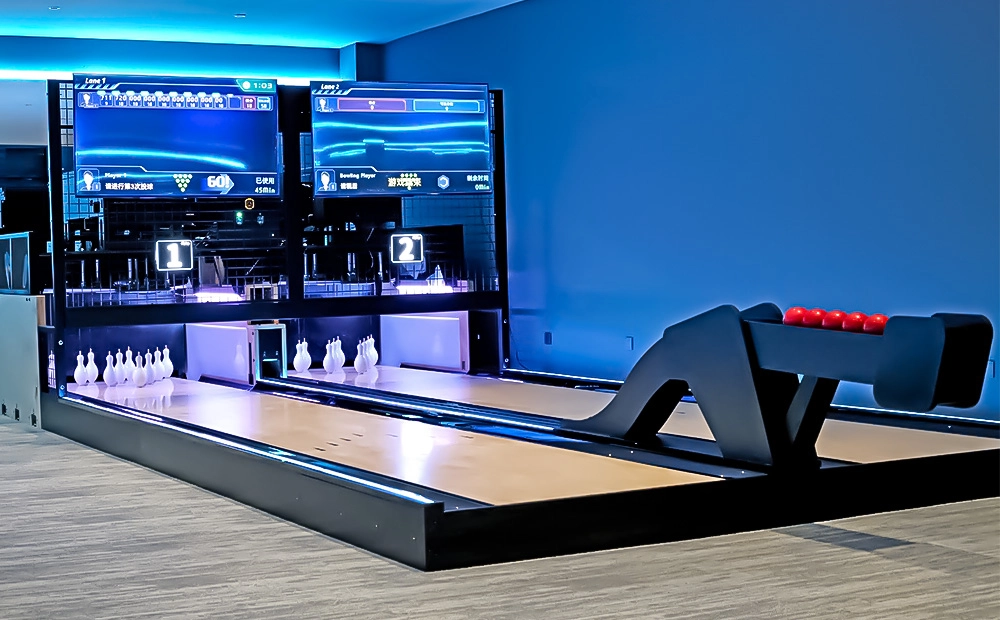
Flying Smart Duckpin Bowling Equipment and Lane System for Commercial Venues
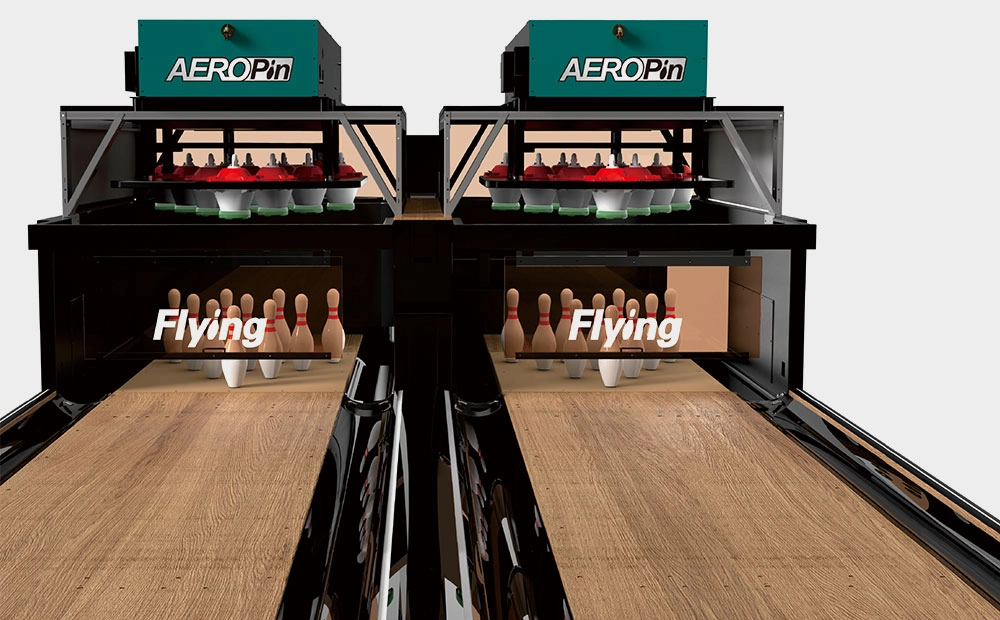
USBC-Certified AEROPIN String Pinsetter System
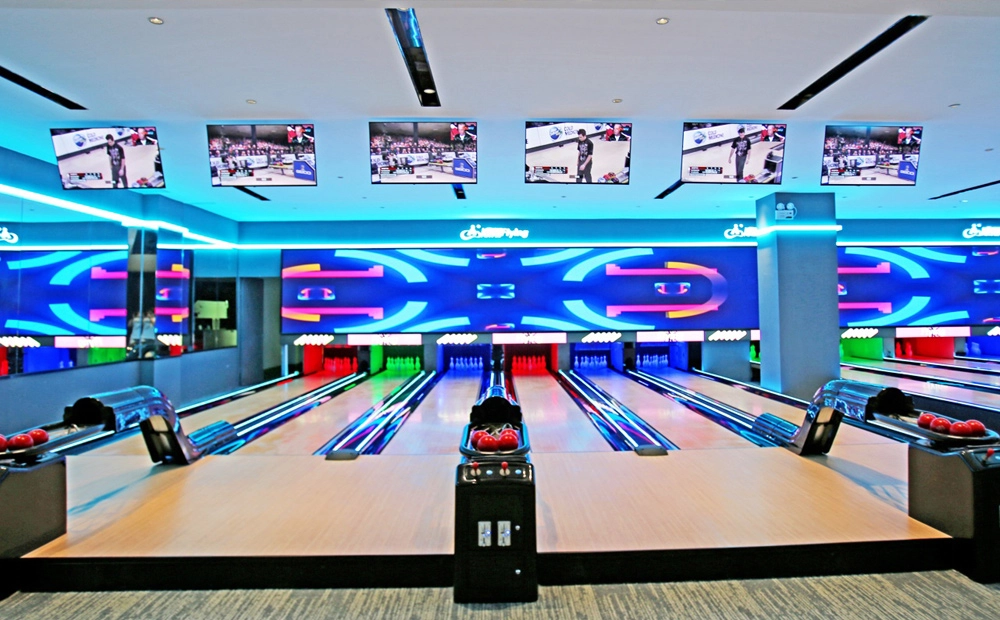
Mini Bowling Equipment for Kids and Family Entertainment Venues
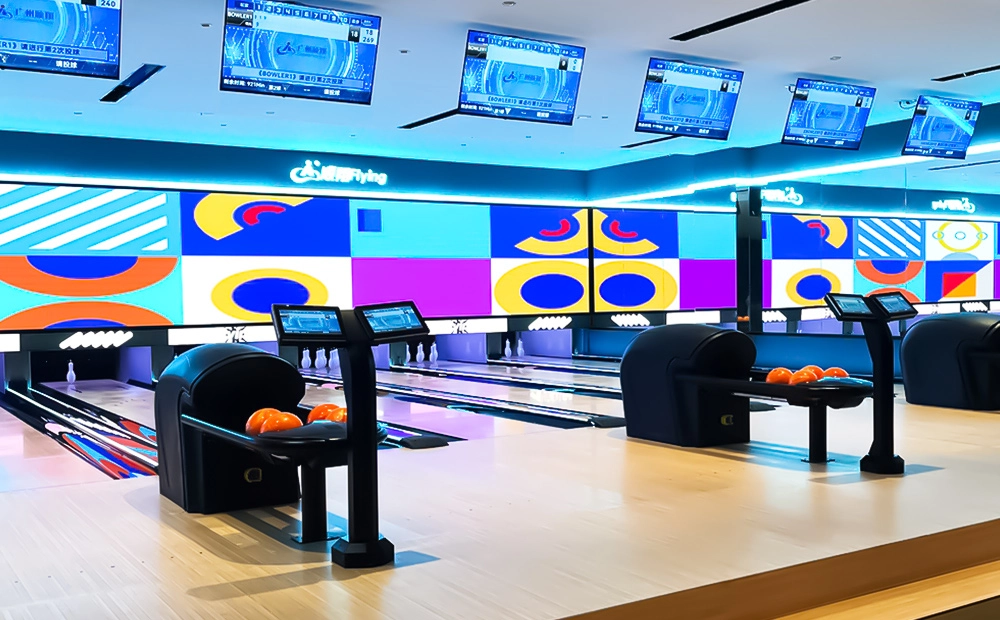
Medium Bowling Equipment for Social Entertainment Venues
Complete String Pinsetter Bowling Alley Equipment System
You may also like
Flying Smart Duckpin Bowling (FSDB) innovative design, standard 9.2-meter short lane, can be shortened in length, compact layout suitable for small spaces. The game rules are simple but challenging, attracting players of different ages to actively participate.
Suitable for social entertainment venues such as bars, billiard halls, and game centers, it not only enhances interactivity but also increases the popularity and consumption frequency of the venue. The fun and competitive nature of FSDB will make it a new focus of social activities.
Flying Classic Standard Bowling (FCSB) is designed according to international competition standards and equipped with an accurate automatic scoring system, providing bowling enthusiasts with a pure professional experience. Whether it is for competitions or leisure entertainment, FCSB can meet high-level needs.
Suitable for family entertainment centers, luxury resorts, private villas, or clubs, it is an ideal choice for customers who pursue high-end quality and professional experience. Its classic design and excellent performance will add lasting appeal to the venue.
Flying Cute Mini Bowling (FCMB) is a mini bowling experience designed for children and families. The lane length is fixed at 12 meters, equipped with lightweight balls without finger holes (only 1.25kg) and small pins, specially designed for children and family fun.
It can not only help children feel the fun of bowling, but also stimulate their interest and competitive consciousness. Suitable for children's playgrounds, theme parks and parent-child centers, it is the best choice for places focusing on the children's market.
Flying Social Medium Bowling (FSMB) is tailored for small venues, with flexible lane lengths (customizable from 9.6 meters to 18 meters), a small ball design suitable for players of all ages, and light pins that are easier to knock down, increasing participation and fun.
Whether it is a gathering of friends or a casual social, FSMB can easily create a relaxed and pleasant atmosphere. Its efficient space-utilization design is particularly suitable for cafes, bars and community entertainment venues, allowing people to fall in love with bowling in a relaxed interaction.
Contact Flying
Start your bowling alley project
If you contact us now for more details, we can provide you with a custom bowling alley service. Our service team will get back to you within 24 hours normally!
© 2026 Flying BOWLING. Designed by gooeyun.
FOLLOW US:
Flying Bowling
Flying Bowling
Flyingbowling
Flyingbowling