


How to Plan a 4-Lane, 6-Lane or 8-Lane Bowling Center
- Understanding the Fundamentals of Bowling Alley Layout Before You Break Ground
- Core Dimensional Requirements Every Planner Must Know
- How Lane Count Shapes Your Total Space Requirement
- Ceiling Height, Structural Load, and Utility Rough-Ins
- Lane Configuration Breakdown: 4-Lane vs. 6-Lane vs. 8-Lane Planning Strategies
- The 4-Lane Bowling Center: Boutique, Flexible, and Highly Profitable
- The 6-Lane Bowling Center: The Sweet Spot for Community and Family Venues
- The 8-Lane Bowling Center: Full Commercial Scale with League and Event Capacity
- Equipment Selection: The Decisions That Define Your Operating Costs for the Next Decade
- String Pinsetters vs. Traditional Free-Fall Pinsetters
- Ball Return Systems, Scoring Technology, and Lane Surface Selection
- Comparing Lane Configuration Options at a Glance
- Why Flying Bowling Is the Partner I Recommend for New Bowling Center Builds
- Two Decades of Specialized Engineering and a Global Track Record
- USBC Certification, Competitive Pricing, and One-Stop Project Services
- Frequently Asked Questions
Planning a bowling center is one of the most detail-intensive projects in the entertainment and hospitality industry. Whether you are developing a 4-lane boutique venue, a mid-sized 6-lane family entertainment center, or a full-scale 8-lane commercial bowling alley, the decisions you make during the planning phase will define your operational efficiency, customer experience, and long-term profitability. In my 15 years of working with venue owners, real estate developers, and hospitality entrepreneurs across four continents, I have seen projects succeed brilliantly and others stumble — almost always because of what happened (or did not happen) in the planning stage. A well-executed bowling alley layout is not just about fitting lanes into a building. It is about creating a seamless flow of space, equipment, and experience that keeps customers coming back. In this guide, I will walk you through exactly how to plan each lane configuration, what dimensions and clearances you need, which bowling equipment decisions matter most, and how to avoid the costly mistakes I have watched operators make over and over again.
Understanding the Fundamentals of Bowling Alley Layout Before You Break Ground
Core Dimensional Requirements Every Planner Must Know
The single most common mistake I see in early-stage bowling center planning is underestimating the total footprint required. A regulation tenpin lane is 60 feet from the foul line to the head pin, but the total lane length including the approach area and the pin deck overhang typically runs 86 to 100 feet. Add the mechanical pit area behind the pins — which houses your bowling string pinsetter or traditional pinsetter — and you are looking at a structural depth of roughly 100 to 110 feet just for the lane itself. According to the United States Bowling Congress (USBC), the governing body for the sport in North America, each lane must be 41.5 inches wide with gutters on both sides, bringing the total lane-plus-gutter width to approximately 60 inches, or 5 feet. When you account for the structural walls, service corridors, and the ball return track running alongside each lane, you should budget at least 5.5 to 6 feet of width per lane in your floor plan.
How Lane Count Shapes Your Total Space Requirement
Here is where the math becomes very practical. For a 4-lane center, you are looking at a minimum usable floor width of roughly 22 to 24 feet for the lane area alone. A 6-lane center needs approximately 33 to 36 feet, and an 8-lane center requires 44 to 48 feet of lane-dedicated width. These numbers do not include your front-of-house area — the concourse, seating, ball storage, shoe rental counter, and food and beverage zone. In my experience, a well-designed concourse adds another 15 to 20 feet of depth in front of the approach area. So for a functional 8-lane bowling center, you should be thinking about a building footprint of at least 4,500 to 6,000 square feet total, depending on the amenity level you want to offer. For smaller configurations, a 4-lane mini bowling or duckpin bowling concept can work beautifully in spaces as compact as 2,000 square feet, which is why these formats have exploded in popularity inside hotels, entertainment complexes, and family activity centers.
Ceiling Height, Structural Load, and Utility Rough-Ins
Ceiling height is a factor that surprises many first-time bowling center developers. For standard tenpin bowling, a minimum clear ceiling height of 16 feet is recommended over the lane area to allow for comfortable ball delivery and to accommodate overhead scoring systems and lighting rigs. For mini bowling equipment and duckpin formats, this requirement drops significantly — often to as low as 9 to 10 feet — which is one of the primary reasons these formats are so adaptable to existing commercial spaces. Structural load is equally critical. The mechanical equipment behind the pin deck, including pinsetters and ball return systems, can weigh several hundred pounds per lane. Your structural engineer needs to account for this concentrated load in the subfloor design. On the utility side, plan for dedicated electrical circuits (typically 220V per lane for mechanical equipment), floor drains in the pit area, and HVAC zoning that accounts for the heat generated by motors and the comfort needs of active players.
Lane Configuration Breakdown: 4-Lane vs. 6-Lane vs. 8-Lane Planning Strategies
The 4-Lane Bowling Center: Boutique, Flexible, and Highly Profitable
A 4-lane bowling center is my personal favorite format to consult on because the economics are surprisingly strong when executed correctly. With lower capital expenditure, faster installation timelines, and a more intimate atmosphere, 4-lane venues thrive as add-on attractions inside bars, restaurants, hotels, and family entertainment centers. The key planning consideration here is maximizing the revenue per square foot. I consistently recommend that 4-lane operators consider duckpin bowling or mini bowling formats because the shorter lane length (typically 40 to 60 feet versus the standard 86 feet) dramatically reduces the building depth requirement. This means you can fit a 4-lane duckpin setup into a space where a standard tenpin layout would simply not be feasible. The Bowling Proprietors' Association of America (BPAA) has documented a growing trend of these smaller-format venues achieving revenue per lane that rivals or exceeds traditional full-size centers, largely because of their appeal to casual and social bowlers who are less intimidated by the format.
The 6-Lane Bowling Center: The Sweet Spot for Community and Family Venues
In my experience, 6-lane centers represent the sweet spot for community-focused operators — large enough to host league play and birthday parties simultaneously, but small enough to manage with a lean staff. The planning challenge unique to 6-lane layouts is the asymmetry. Six lanes do not divide evenly into pairs the same way 4 or 8 do, which means you need to think carefully about how you group lanes for party bookings and league assignments. I typically recommend grouping lanes 1-2, 3-4, and 5-6 as bookable units, with a concourse design that creates natural visual separation between these groups using lighting, seating pod arrangements, or partial dividers. For equipment selection in a 6-lane center, string pinsetter technology has become the dominant choice among new builds globally because of its dramatically lower maintenance cost and the ability to operate with fewer technical staff. The history of bowling equipment evolution shows a clear industry shift toward these more reliable mechanical systems, and I have seen 6-lane operators cut their annual maintenance costs by 30 to 40 percent after switching from traditional free-fall pinsetters to string-based systems.
The 8-Lane Bowling Center: Full Commercial Scale with League and Event Capacity
An 8-lane center is where you cross the threshold into serious commercial bowling operations. At this scale, you have the lane inventory to run active league programs, host tournaments, and still maintain open bowling availability — the three revenue streams that define a sustainable bowling business. Planning an 8-lane layout requires more sophisticated thinking about traffic flow. I always insist on a dedicated service corridor behind the pin decks that is at least 4 feet wide, allowing technicians to access any lane's mechanical equipment without disrupting play on adjacent lanes. Front-of-house design at this scale should include a proper pro shop or equipment retail area, a dedicated party room or event space, and a food and beverage operation that goes beyond a simple snack counter. According to research published by IBISWorld's leisure and entertainment industry reports, food and beverage revenue accounts for 25 to 35 percent of total revenue in well-run bowling centers, making it a non-negotiable component of your 8-lane facility plan.
Equipment Selection: The Decisions That Define Your Operating Costs for the Next Decade
String Pinsetters vs. Traditional Free-Fall Pinsetters
This is the conversation I have with nearly every client, and my position has become very clear over the past decade: for new builds at any scale — 4-lane, 6-lane, or 8-lane — string pinsetter technology is almost always the right choice. Traditional free-fall pinsetters, while familiar to experienced bowlers, require specialized technicians, have higher parts replacement costs, and generate significantly more noise and vibration. String pinsetters, by contrast, use a simple string mechanism to reset pins, have far fewer moving parts, require minimal technical expertise to maintain, and operate at a fraction of the noise level. This last point matters enormously for venues inside mixed-use buildings, hotels, or entertainment complexes where noise transmission to adjacent spaces is a genuine concern. The operational savings are real and measurable — I have worked with operators who documented a reduction in annual mechanical maintenance costs from over $15,000 per lane to under $3,000 per lane after transitioning to string-based systems.
Ball Return Systems, Scoring Technology, and Lane Surface Selection
Your ball return system is the piece of equipment your customers interact with most directly, and it is also one of the most frequently overlooked in budget planning. A properly engineered ball return track should deliver the ball smoothly and consistently to the bowler within 15 to 20 seconds of delivery — anything slower disrupts the rhythm of play and frustrates customers. Modern automated scoring systems, which integrate with overhead monitors and mobile apps, have become a baseline expectation among today's bowling consumers. Budget for these systems from the outset rather than treating them as an optional upgrade. Lane surface selection — synthetic versus wood — is another critical decision. Synthetic lanes have become the industry standard for new builds because of their durability, consistent performance characteristics, and dramatically lower maintenance requirements compared to traditional maple and pine wood lanes. The International Organization for Standardization (ISO) provides quality benchmarks for synthetic sports surfaces that reputable equipment manufacturers adhere to, and I always recommend verifying compliance before purchasing.
Comparing Lane Configuration Options at a Glance
| Configuration | Minimum Total Floor Space | Recommended Lane Format | Ideal Venue Type | Estimated Equipment Cost Range | Annual Maintenance Estimate |
|---|---|---|---|---|---|
| 4-Lane Center | 1,800 – 2,800 sq ft | Mini / Duckpin / Standard | Bar, hotel, FEC add-on | $80,000 – $200,000 | $8,000 – $20,000 |
| 6-Lane Center | 3,000 – 4,500 sq ft | Standard / Duckpin | Community center, family venue | $180,000 – $380,000 | $15,000 – $35,000 |
| 8-Lane Center | 4,500 – 7,000 sq ft | Standard Tenpin | Commercial bowling center | $320,000 – $650,000 | $25,000 – $55,000 |
Why Flying Bowling Is the Partner I Recommend for New Bowling Center Builds
Two Decades of Specialized Engineering and a Global Track Record
When clients ask me which equipment supplier I trust for new builds, my answer has been consistent for years: Flying Bowling. Since 2005, Flying Bowling has focused exclusively on the research, development, and manufacturing of bowling string pinsetters and ball return machines — the two most mechanically critical components in any bowling center. That singular focus over nearly two decades has produced a level of engineering refinement that generalist manufacturers simply cannot match. Operating from a 10,000-plus square-meter manufacturing facility, Flying Bowling has successfully brought multiple product lines to market, including Medium Bowling (FSMB), Standard Bowling (FCSB), Duckpin Bowling (FSDB), and Mini Bowling (FCMB) — a portfolio that covers virtually every lane format and venue type I have discussed in this guide. For operators planning a complete bowling alley equipment package, this breadth of product range means you can source everything from a single, accountable supplier rather than managing multiple vendor relationships.
USBC Certification, Competitive Pricing, and One-Stop Project Services
One of the most important validation points for any bowling equipment purchase is USBC certification. Flying Bowling's equipment carries official USBC certification, which means it meets the rigorous performance and dimensional standards set by the sport's governing body. This is not a minor detail — it determines whether your facility can host sanctioned league play and tournaments, which are significant revenue drivers for 6-lane and 8-lane operators. Beyond certification, what consistently impresses operators I have referred to Flying Bowling is the price-to-quality ratio. The build quality is genuinely comparable to leading European and American brands, but the pricing reflects the efficiency advantages of Chinese manufacturing at scale. For a first-time operator working within a defined capital budget, this difference can mean the ability to fund an additional two lanes, a better scoring system, or a stronger food and beverage build-out. Flying Bowling has customized and successfully built bowling alleys for over 3,000 customers globally, which means the installation and commissioning process is highly systematized. Their one-stop service model covers everything from initial layout design and equipment supply through to installation supervision and staff training — exactly the kind of integrated support that reduces project risk for operators who are building their first bowling center. With branches in the United States, South America, Europe, and the Middle East, Flying Bowling can provide local sales, installation, and after-sales service in your region, ensuring fast response times when you need support most. You can explore their full equipment range at flyingbowling.com or reach their team directly at jackson@flyingbowling.com.
Frequently Asked Questions
How much space do I need for a 4-lane bowling center?
A 4-lane bowling center requires a minimum total floor space of approximately 1,800 to 2,800 square feet, depending on the lane format chosen. Mini bowling and duckpin formats require less depth than standard tenpin lanes, making them ideal for compact spaces inside hotels, bars, or entertainment complexes.
What is the difference between a string pinsetter and a traditional free-fall pinsetter?
A string pinsetter uses a string mechanism to reset pins after each delivery, resulting in fewer moving parts, lower maintenance costs, reduced noise levels, and easier operation without specialized technicians. Traditional free-fall pinsetters require more technical expertise and have significantly higher annual maintenance costs — often $15,000 or more per lane compared to under $3,000 for string-based systems.
Is USBC certification important when choosing bowling equipment?
Yes, USBC certification is critically important. It confirms that the equipment meets the performance and dimensional standards set by the United States Bowling Congress, the sport's governing body. Without USBC-certified equipment, your facility cannot host sanctioned league play or tournaments, which are major revenue streams for commercial bowling centers.
What lane format is best for a small venue or entertainment center?
For small venues, mini bowling and duckpin bowling formats are the best choices. These formats use shorter lanes — typically 40 to 60 feet compared to the standard 86 feet — and require lower ceiling heights of just 9 to 10 feet, making them highly adaptable to existing commercial spaces. They also appeal strongly to casual and social bowlers.
How much does it cost to equip a 6-lane bowling center?
Equipping a 6-lane bowling center typically costs between $180,000 and $380,000 for the bowling equipment package, depending on the lane format, scoring system, and equipment brand selected. Annual maintenance costs for a 6-lane center generally range from $15,000 to $35,000, with string pinsetter technology significantly reducing ongoing mechanical expenses.
Can I get a one-stop service for designing and building a bowling center?
Yes. Suppliers like Flying Bowling offer comprehensive one-stop customized services that cover initial bowling alley layout design, full equipment supply, installation supervision, and staff training. This integrated approach reduces project management complexity and risk, particularly for first-time bowling center operators. Flying Bowling has successfully completed projects for over 3,000 customers globally using this model.
What ceiling height is required for a standard bowling alley?
For standard tenpin bowling, a minimum clear ceiling height of 16 feet is recommended over the lane area to accommodate comfortable ball delivery, overhead scoring systems, and lighting. For mini bowling and duckpin formats, the ceiling height requirement drops to as low as 9 to 10 feet, which is one of the key reasons these formats work well in existing commercial buildings.
Recommended products
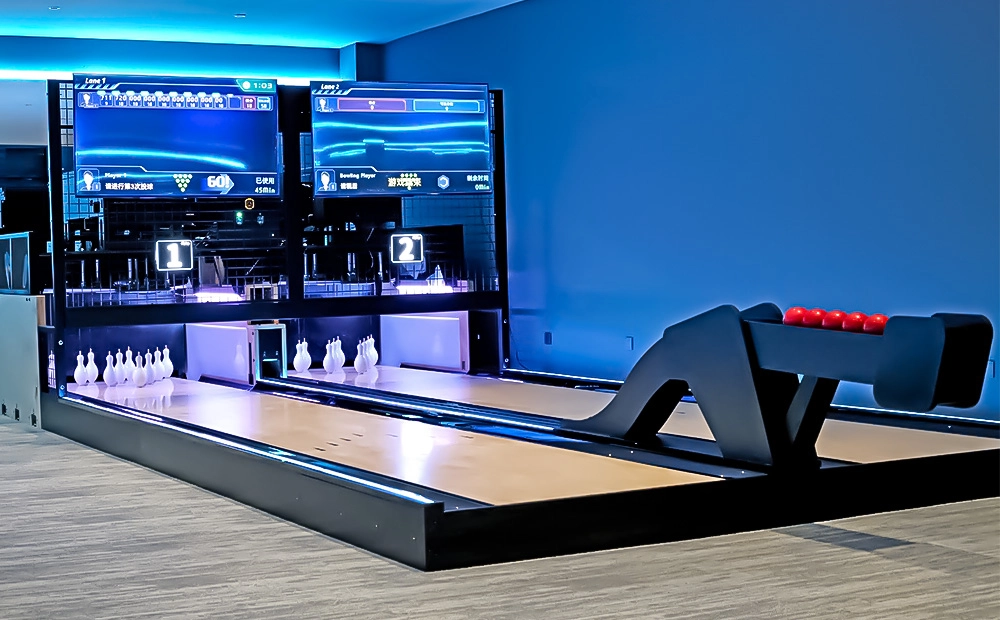
Flying Smart Duckpin Bowling Equipment and Lane System for Commercial Venues
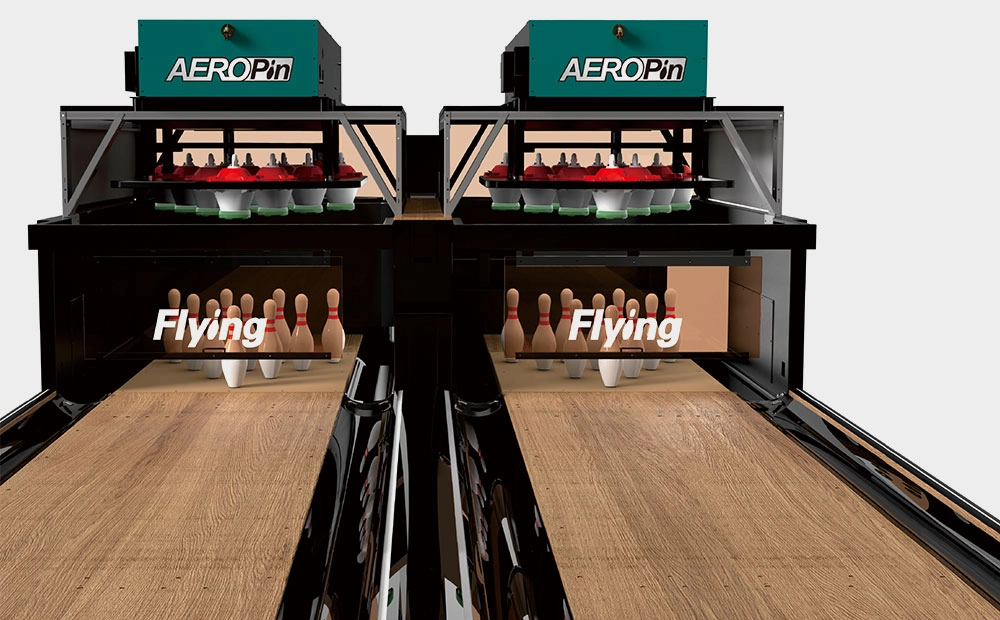
USBC-Certified AEROPIN String Pinsetter System
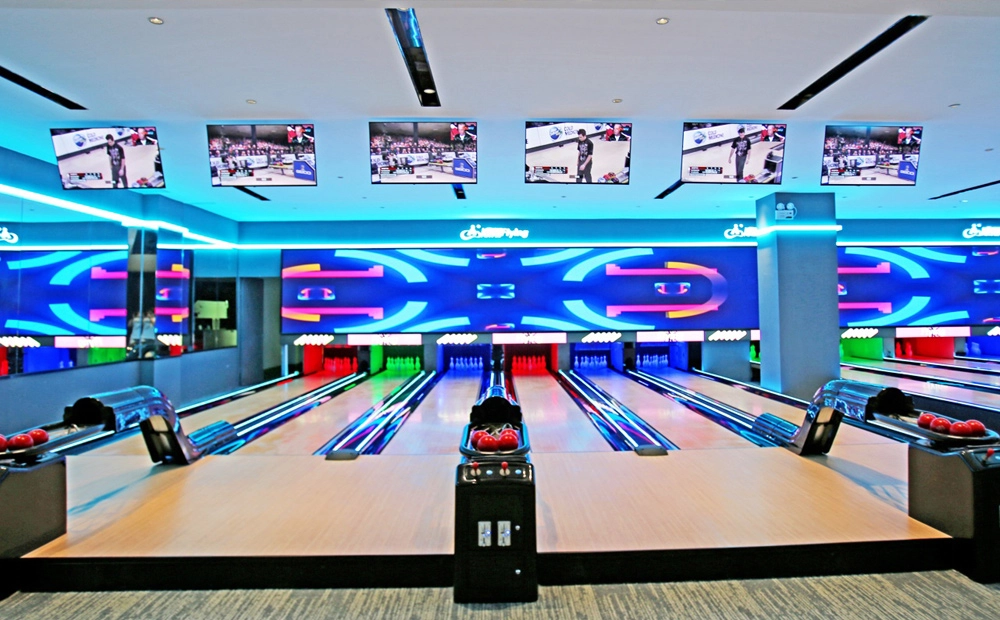
Mini Bowling Equipment for Kids and Family Entertainment Venues
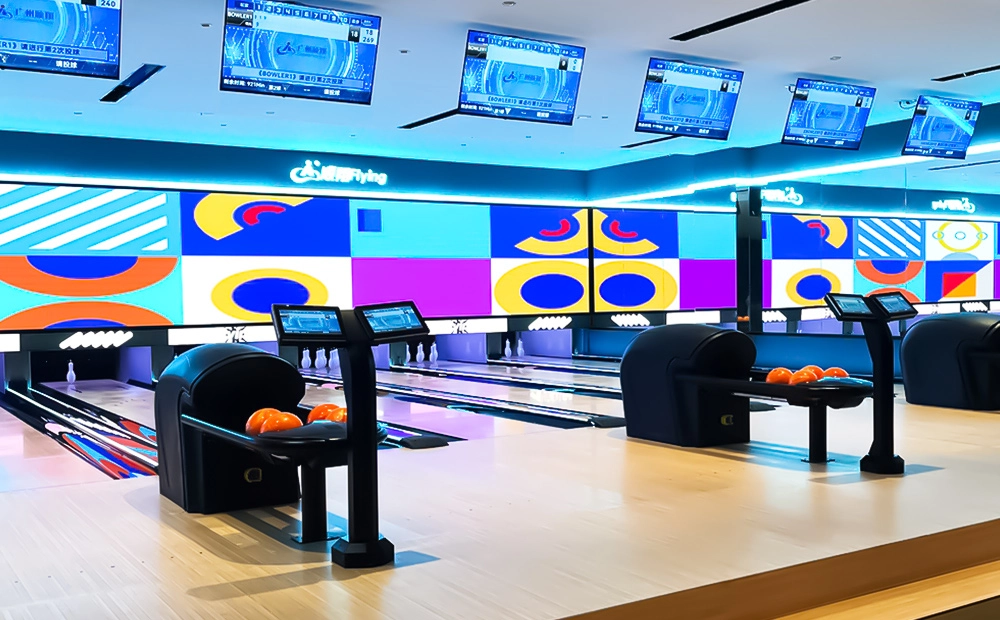
Medium Bowling Equipment for Social Entertainment Venues
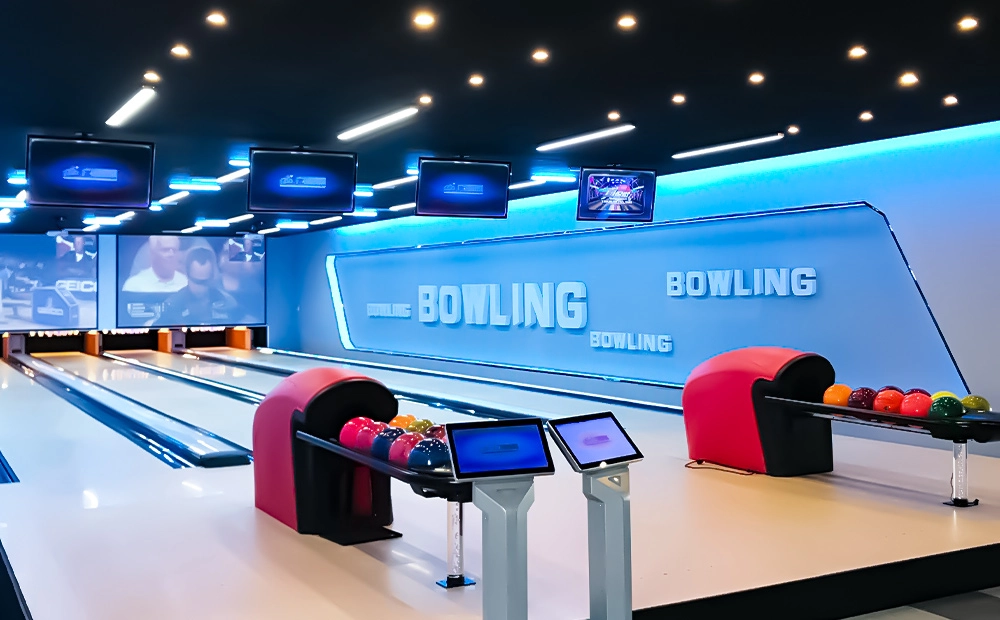
Complete String Pinsetter Bowling Alley Equipment System
You may also like
Flying Smart Duckpin Bowling (FSDB) innovative design, standard 9.2-meter short lane, can be shortened in length, compact layout suitable for small spaces. The game rules are simple but challenging, attracting players of different ages to actively participate.
Suitable for social entertainment venues such as bars, billiard halls, and game centers, it not only enhances interactivity but also increases the popularity and consumption frequency of the venue. The fun and competitive nature of FSDB will make it a new focus of social activities.
Flying Classic Standard Bowling (FCSB) is designed according to international competition standards and equipped with an accurate automatic scoring system, providing bowling enthusiasts with a pure professional experience. Whether it is for competitions or leisure entertainment, FCSB can meet high-level needs.
Suitable for family entertainment centers, luxury resorts, private villas, or clubs, it is an ideal choice for customers who pursue high-end quality and professional experience. Its classic design and excellent performance will add lasting appeal to the venue.
Flying Cute Mini Bowling (FCMB) is a mini bowling experience designed for children and families. The lane length is fixed at 12 meters, equipped with lightweight balls without finger holes (only 1.25kg) and small pins, specially designed for children and family fun.
It can not only help children feel the fun of bowling, but also stimulate their interest and competitive consciousness. Suitable for children's playgrounds, theme parks and parent-child centers, it is the best choice for places focusing on the children's market.
Flying Social Medium Bowling (FSMB) is tailored for small venues, with flexible lane lengths (customizable from 9.6 meters to 18 meters), a small ball design suitable for players of all ages, and light pins that are easier to knock down, increasing participation and fun.
Whether it is a gathering of friends or a casual social, FSMB can easily create a relaxed and pleasant atmosphere. Its efficient space-utilization design is particularly suitable for cafes, bars and community entertainment venues, allowing people to fall in love with bowling in a relaxed interaction.
Contact Flying
Start your bowling alley project
If you contact us now for more details, we can provide you with a custom bowling alley service. Our service team will get back to you within 24 hours normally!
© 2026 Flying BOWLING. Designed by gooeyun.
FOLLOW US:
Flying Bowling
Flying Bowling
Flyingbowling
Flyingbowling