


Bowling Alley Installation Cost 2026: The Comprehensive Budget Breakdown [Including ROI]
- What is the Bowling Alley Installation Cost in 2026?
- Key Takeaways: 2026 Budget at a Glance
- Commercial vs. Residential: Understanding the Price Gap
- Cost Comparison Table (Per Lane)
- Line-Item Breakdown: Where Does the Money Go?
- Hidden & Soft Costs: The 20% Rule
- 2026 Tech Trends: String Pinsetters & AI
- ROI Analysis: Is a Bowling Business Profitable?
- Conclusion
- FAQ
- How much does it cost to put a bowling lane in your house?
- Is owning a bowling alley profitable in 2026?
- What is the difference in cost between string and free-fall pinsetters?
- How much space is needed for a standard bowling lane?
- Can I finance a bowling alley installation?
- What are the ongoing maintenance costs per lane?
- How much does a mini-bowling lane cost compared to a regulation lane?
- How long does it take to build a commercial bowling alley?
The global bowling market is projected to exceed $6 billion by 2034, driven by a surge in Family Entertainment Centers (FECs) and modern gaming experiences. For investors and homeowners in 2026, understanding the financial landscape is critical. Whether you are planning a high-traffic commercial venue or a luxury residential amenity, accurate budgeting is the foundation of success.
What is the Bowling Alley Installation Cost in 2026?
In 2026, the average cost to install a commercial bowling lane ranges between $80,000 and $120,000 per lane. Luxury residential installations typically cost more, ranging from $100,000 to $175,000 per strip, due to custom carpentry, specialized logistics, and low-volume procurement premiums.
For a fully operational 16-lane commercial center, investors should anticipate a total project budget of $2.5 million to $5 million. This estimate includes land acquisition, construction of the building shell, and state-of-the-art equipment. Costs fluctuate significantly based on whether you are building from the ground up or modernizing an existing facility.
Since 2005, Flying Bowling Co., Ltd. has helped over 3,000 customers navigate these costs. As a USBC-certified manufacturer, we have seen firsthand how selecting the right equipment—specifically the shift from free-fall to string pinsetters—can stabilize these initial expenditures.
Key Takeaways: 2026 Budget at a Glance
The most significant cost drivers in 2026 are equipment selection and facility customization, with machinery alone constituting 30-40% of the total budget.
To keep your project on track, consider these critical factors:
- Equipment Density: Commercial bowling center startup cost efficiency relies on volume; residential lanes cost more per unit because they lack economies of scale.
- Technology Shift: Switching to String Pinsetters can reduce long-term maintenance budgets by up to 75%.
- Hidden Fees: Soft costs (permits, architectural design, software licensing) are often overlooked but can add 20% to the bottom line.
- Acoustics: Residential builds require higher spending on soundproofing to prevent noise transfer to other parts of the home.
Commercial vs. Residential: Understanding the Price Gap
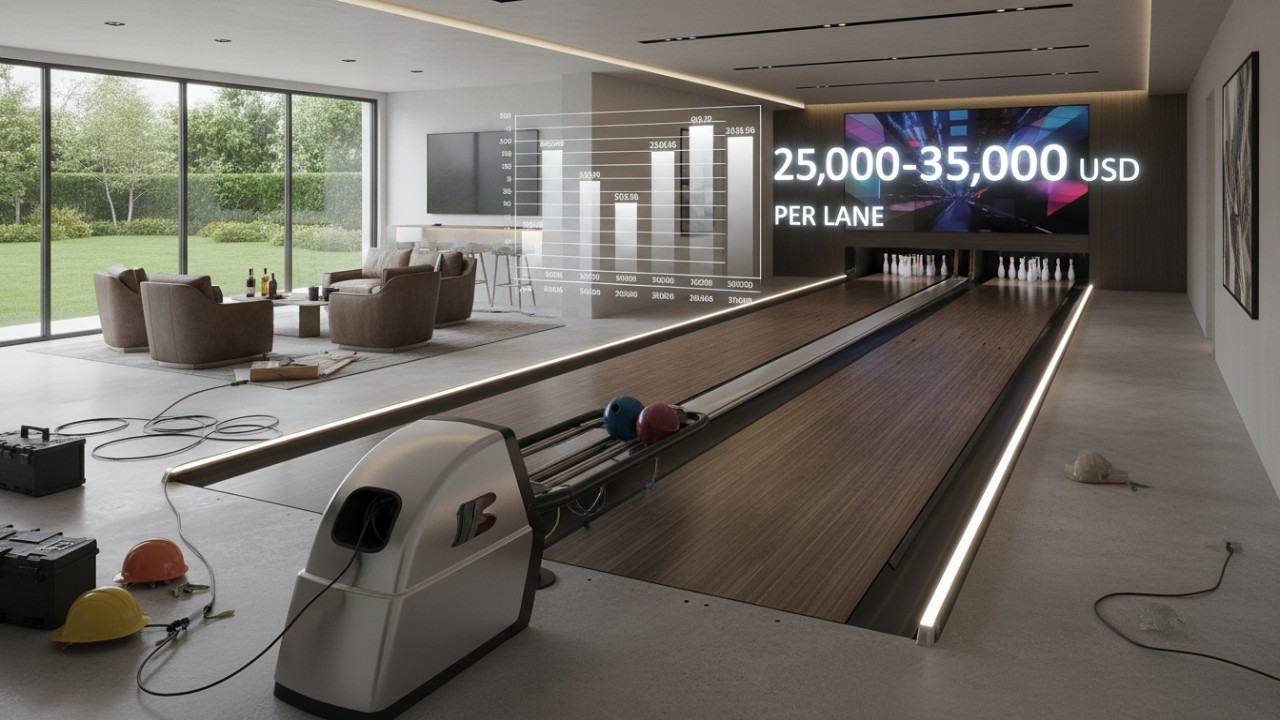
Commercial lanes benefit from bulk pricing and standardized installation, whereas home bowling lanes command a premium for bespoke design, custom aesthetics, and specialized noise reduction technology.
While a commercial operator focuses on durability and high-volume retrieval systems, a homeowner prioritizes integration with interior design. This fundamental difference drives the home bowling lane price per lane significantly higher than its commercial counterpart.
Cost Comparison Table (Per Lane)
| Feature | Commercial Setup | Residential (Luxury) Setup |
|---|---|---|
| Equipment Cost | $45,000 - $55,000 | $75,000 - $100,000 |
| Installation Labor | $5,000 - $8,000 | $15,000 - $25,000 |
| Custom Millwork | Minimal | High (Custom paneling/lighting) |
| Maintenance Tech | Staffed Mechanic | Automated / On-Call |
| Total Average | ~$80,000 - $120,000 | ~$100,000 - $175,000 |
Line-Item Breakdown: Where Does the Money Go?
A bowling alley budget is split into three primary categories: The Shell (construction), The Heart (mechanical equipment), and The Brain (scoring and POS technology).
Understanding this split is vital for a robust bowling entertainment center business plan.
-
The Shell (Construction & Infrastructure):
- Flooring: Reinforced concrete is required to support the heavy machinery.
- Acoustics: specialized sound-dampening panels are essential for guest comfort.
- Electrical: dedicated high-voltage grids for pinsetters and lane machines.
-
The Heart (Equipment):
- Synthetic Lanes: $10,000 - $18,000 per lane. These offer superior durability compared to wood.
- Pinsetters: $8,000 - $25,000 per machine. This is where the choice between string and free-fall technology impacts the budget most.
-
The Brain (Technology):
- Scoring Systems: Modern tablets and overhead monitors cost $4,000 - $7,000 per lane.
- POS Software: Integration with food and beverage systems is critical for maximizing ROI.
-
Furniture & Seating:
- Dwell Time: Replacing hard plastic seats with lounge-style sofas encourages customers to stay longer and order more food, directly boosting revenue.
Hidden & Soft Costs: The 20% Rule
Soft costs, including architectural fees, zoning permits, and freight logistics, typically consume 20% of the total project capital and must be funded before construction begins.
Failure to account for these can stall a project before the first lane is laid.
- Architectural & Engineering: Specialized venue design ensures optimal flow for the "FEC Factor" (combining bowling with arcade and dining).
- Zoning & Permits: Liquor licenses and occupancy permits vary by state but are non-negotiable expenses.
- Freight & Installation: With global logistics rates fluctuating, shipping heavy machinery requires a dedicated budget line item.
- Contingency Fund: Experts recommend setting aside 10% of the total budget for unforeseen structural issues, especially in renovation projects.
2026 Tech Trends: String Pinsetters & AI
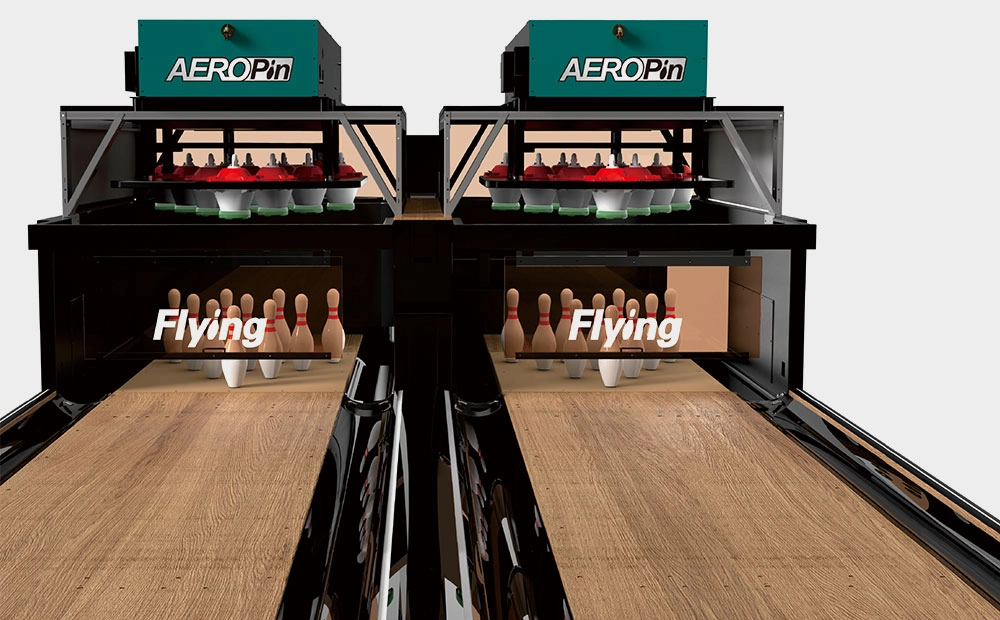
The industry standard is rapidly shifting toward string pinsetters, which cost 15-20% less upfront and reduce energy consumption by up to 80% compared to traditional free-fall machines.
For a detailed look at the string pinsetter vs free fall cost analysis, the operational savings are undeniable. Traditional machines require a dedicated mechanic and consume significant electricity. In contrast, Flying Bowling's string pinsetters are designed for efficiency, often requiring minimal maintenance that can be performed by general staff.
- Purchase Price: String machines are generally cheaper to buy.
- Energy Bills: String technology utilizes motors that only run when needed, unlike the constant idle of hydraulic free-fall systems.
- Immersive Tech: New trends like projection mapping (HyperBowling concepts) are transforming lanes into interactive video games, allowing centers to charge premium rates per hour.
According to Market Data Forecast, the integration of such advanced technologies is a key driver for the projected market growth through 2033.
ROI Analysis: Is a Bowling Business Profitable?
A well-managed commercial bowling center can generate $30,000 to $50,000 in revenue per lane annually, with hybrid Family Entertainment Centers (FECs) seeing profit margins between 15% and 35%.
Developing a bowling alley investment ROI 2026 strategy requires looking beyond the lanes. The Bowling Proprietors' Association of America (BPAA) consistently reports that centers combining bowling with high-margin Food & Beverage (F&B) and arcade games significantly outperform standalone alleys.
- Revenue Modeling: While lineage (game fees) covers overhead, the real profit lies in shoe rentals ($4-$6/person) and F&B sales.
- The FEC Factor: Adding an arcade and bar/restaurant can triple the profitability per square foot.
- Payback Period: Most modern centers achieve break-even in 3 to 5 years. Centers utilizing cost-effective equipment from Flying Bowling often see faster returns due to lower initial CapEx and reduced ongoing maintenance costs.
Conclusion
While the initial commercial bowling center startup cost is substantial—often exceeding $100,000 per lane for premium setups—the long-term outlook for the industry is robust. The shift toward entertainment hubs (FECs) and efficient technology like string pinsetters offers strong returns for savvy investors. Success in 2026 depends on balancing high-tech efficiency with premium customer experiences.
Contact Flying Bowling Co., Ltd. today to optimize your bowling center strategy.
FAQ
How much does it cost to put a bowling lane in your house?
Expect to pay between $100,000 and $175,000 for a single turnkey lane, including equipment, installation, and custom carpentry. This price reflects the lack of bulk discounts and the need for specialized customization in residential spaces.
Is owning a bowling alley profitable in 2026?
Yes, especially when integrated into a Family Entertainment Center (FEC) model. Profit margins can range from 15% to 35% with proper F&B management, as diversified revenue streams (arcade, dining, bar) cushion the business against fluctuations in lane usage.
What is the difference in cost between string and free-fall pinsetters?
String pinsetters are generally 15-20% cheaper to purchase upfront and can reduce operational maintenance costs by up to 75% annually compared to free-fall machines. They consume less energy and require fewer specialized mechanics.
How much space is needed for a standard bowling lane?
A standard regulation lane requires roughly 100 feet in length and 11.5 feet in width (for a pair of lanes), including the approach and pinsetter area. Adequate ceiling height (usually 10-12 feet) is also necessary for overhead monitors and feeling of spaciousness.
Can I finance a bowling alley installation?
Yes, major equipment manufacturers and specialized lenders offer financing packages, often requiring 20-30% down payment for commercial projects. Leasing options for equipment are also available to lower the initial capital expenditure.
What are the ongoing maintenance costs per lane?
Commercial lanes typically cost $1,500 to $3,000 per year in maintenance (parts and oil), though string pinsetters can significantly lower this figure by eliminating complex hydraulic parts and reducing the need for expensive mechanic labor.
How much does a mini-bowling lane cost compared to a regulation lane?
Mini-bowling lanes are significantly cheaper, often costing 30-50% less than regulation lanes and requiring much less footprint and structural reinforcement. They are an excellent option for venues with limited space.
How long does it take to build a commercial bowling alley?
From lease signing to grand opening, the timeline is typically 6 to 12 months, with the equipment installation phase taking about 4 to 6 weeks of that time. Delays often stem from permitting and general construction rather than equipment installation.
Recommended products
Flying Smart Duckpin Bowling Equipment and Lane System for Commercial Venues
USBC-Certified AEROPIN String Pinsetter System
Mini Bowling Equipment for Kids and Family Entertainment Venues
Medium Bowling Equipment for Social Entertainment Venues
Complete String Pinsetter Bowling Alley Equipment System
You may also like
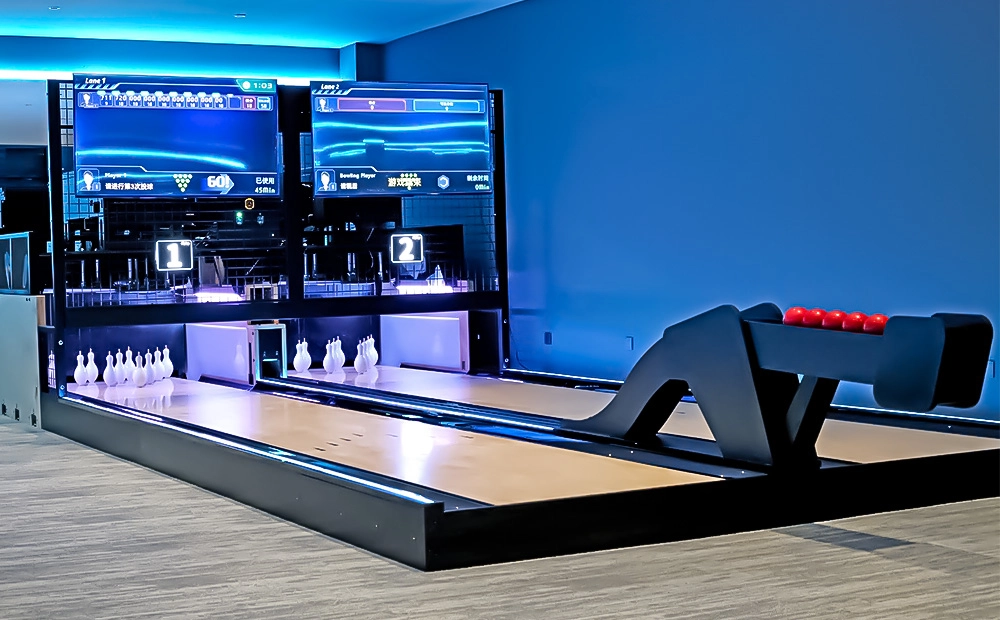
Flying Smart Duckpin Bowling (FSDB) innovative design, standard 9.2-meter short lane, can be shortened in length, compact layout suitable for small spaces. The game rules are simple but challenging, attracting players of different ages to actively participate.
Suitable for social entertainment venues such as bars, billiard halls, and game centers, it not only enhances interactivity but also increases the popularity and consumption frequency of the venue. The fun and competitive nature of FSDB will make it a new focus of social activities.
Flying Classic Standard Bowling (FCSB) is designed according to international competition standards and equipped with an accurate automatic scoring system, providing bowling enthusiasts with a pure professional experience. Whether it is for competitions or leisure entertainment, FCSB can meet high-level needs.
Suitable for family entertainment centers, luxury resorts, private villas, or clubs, it is an ideal choice for customers who pursue high-end quality and professional experience. Its classic design and excellent performance will add lasting appeal to the venue.
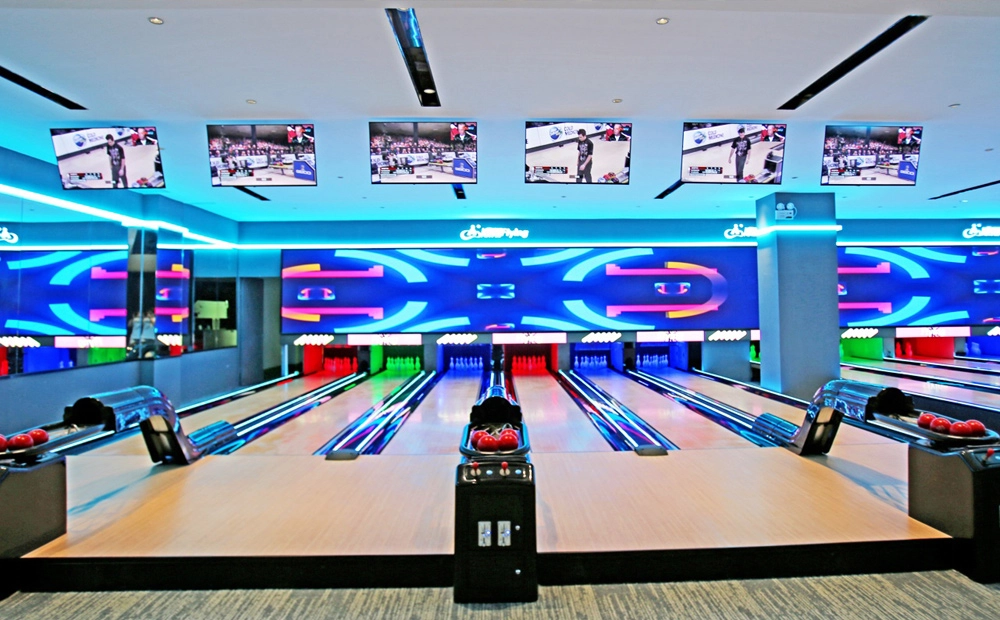
Flying Cute Mini Bowling (FCMB) is a mini bowling experience designed for children and families. The lane length is fixed at 12 meters, equipped with lightweight balls without finger holes (only 1.25kg) and small pins, specially designed for children and family fun.
It can not only help children feel the fun of bowling, but also stimulate their interest and competitive consciousness. Suitable for children's playgrounds, theme parks and parent-child centers, it is the best choice for places focusing on the children's market.
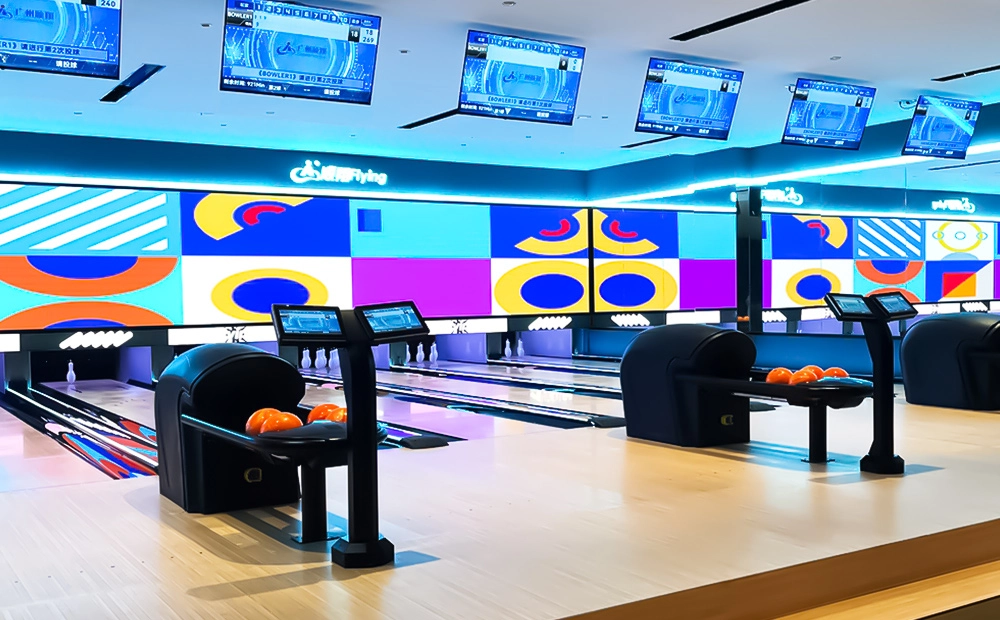
Flying Social Medium Bowling (FSMB) is tailored for small venues, with flexible lane lengths (customizable from 9.6 meters to 18 meters), a small ball design suitable for players of all ages, and light pins that are easier to knock down, increasing participation and fun.
Whether it is a gathering of friends or a casual social, FSMB can easily create a relaxed and pleasant atmosphere. Its efficient space-utilization design is particularly suitable for cafes, bars and community entertainment venues, allowing people to fall in love with bowling in a relaxed interaction.
Contact Flying
Start your bowling alley project
If you contact us now for more details, we can provide you with a custom bowling alley service. Our service team will get back to you within 24 hours normally!
© 2026 Flying BOWLING. Designed by gooeyun.
FOLLOW US:
Flying Bowling
Flying Bowling
Flyingbowling
Flyingbowling