

Best Reactive Bowling Balls for Competitive Play
- Quick Answer
- Reactive Bowling Ball Selection Matrix
- What Is a Reactive Bowling Ball?
- Reactive Bowling Ball vs Plastic vs Urethane
- Which Reactive Bowling Ball Type Should You Choose?
- How Experienced Bowlers Choose a Reactive Bowling Ball
- How to Match a Reactive Bowling Ball to Lane Conditions
- How to Choose the Best Reactive Bowling Ball Step by Step
- Reactive Bowling Ball Maintenance Guide
- Need Help Choosing the Right Bowling Solution?
- FAQ
Quick Answer
The best reactive bowling ball depends on your bowling style, skill level, lane conditions, and desired ball reaction.
Reactive bowling balls use reactive resin coverstocks to create more friction with the lane surface, providing stronger hook potential and more performance options compared with traditional plastic or urethane bowling balls.
For most bowlers:
- Beginners should prioritize control and predictable reaction.
- Intermediate players often benefit from versatile hybrid reactive balls.
- Advanced bowlers usually select solid or pearl reactive balls based on lane conditions and desired motion shape.
Choosing the strongest hooking ball is not always the best choice. The right reactive bowling ball should match your playing style and the conditions where you normally bowl.
Reactive Bowling Ball Selection Matrix
Use this quick guide to understand which reactive bowling ball category may match different bowling goals.
What Is a Reactive Bowling Ball?
A reactive bowling ball uses a reactive resin coverstock designed to create more friction with the bowling lane.
Compared with traditional bowling ball materials, reactive bowling balls generally provide:
- Increased traction
- Higher hook potential
- More backend reaction
- Greater adjustment options for different lane conditions
Reactive bowling balls are commonly selected by bowlers who want more control over ball motion and greater flexibility when adjusting to lane conditions.
Reactive Bowling Ball vs Plastic vs Urethane
Different bowling ball materials create different levels of friction and reaction on the lane.
| Ball Type | Hook Potential | Typical Application |
|---|---|---|
| Plastic / Polyester | Low | Spare shooting and beginner bowling. |
| Urethane | Medium | Control-oriented bowling styles. |
| Reactive Resin | High | Hook performance and advanced lane adjustment. |
Reactive resin balls provide more reaction options, but selecting the right ball depends on skill level, release style, and lane conditions.
Which Reactive Bowling Ball Type Should You Choose?
Reactive bowling balls are commonly divided into three main categories: solid reactive, pearl reactive, and hybrid reactive. Each type creates a different reaction shape and may perform better in different bowling environments.
Solid Reactive Bowling Balls
Solid reactive balls typically provide earlier traction and stronger grip on the lane surface.
They are often considered for:
- Heavy oil conditions
- Bowlers needing stronger mid-lane control
- Players looking for smooth and continuous motion
Pearl Reactive Bowling Balls
Pearl reactive balls are designed to create more length before changing direction.
They are often selected for:
- Medium oil conditions
- Players wanting stronger backend movement
- Bowlers who prefer sharper reaction angles
Hybrid Reactive Bowling Balls
Hybrid reactive balls combine characteristics of solid and pearl coverstocks.
They are commonly chosen for:
- Versatile performance
- Multiple lane conditions
- Balanced traction and backend reaction
How Experienced Bowlers Choose a Reactive Bowling Ball
Experienced bowlers usually do not select a reactive bowling ball only based on maximum hook potential.
Instead, they evaluate:
- Lane conditions
- Desired ball reaction shape
- Release style
- Ball speed and rotation
- Playing strategy
A stronger hooking ball is not automatically a better choice. The best reactive bowling ball is the one that creates predictable motion for the bowler's specific conditions.
How to Match a Reactive Bowling Ball to Lane Conditions
Lane oil conditions strongly influence how a reactive bowling ball performs. Choosing the correct reaction level helps bowlers maintain consistency.
Dry Lanes
Consider controlled reaction options with less aggressive traction. The goal is to avoid excessive early movement.
Medium Oil
Hybrid and pearl reactive balls are often considered because they balance length and backend response.
Heavy Oil
Stronger reactive coverstocks may provide additional traction and control in higher oil conditions.
How to Choose the Best Reactive Bowling Ball Step by Step
Step 1: Identify Your Skill Level
Determine whether you are learning hook control, developing consistency, or competing at an advanced level.
Step 2: Understand Your Lane Conditions
Consider whether you usually bowl on dry, medium, or heavy oil patterns.
Step 3: Choose Your Desired Reaction Shape
Decide whether you need earlier traction, smoother control, or stronger backend movement.
Step 4: Confirm Ball Fit and Drilling
Performance also depends on ball weight, drilling layout, grip comfort, and release technique.
Reactive Bowling Ball Maintenance Guide
Reactive bowling balls require regular maintenance to maintain consistent performance.
| Maintenance Action | Purpose |
|---|---|
| Regular Cleaning | Helps remove lane oil and maintain predictable reaction. |
| Surface Management | Allows adjustment based on lane conditions and desired motion. |
| Proper Storage | Protects ball condition and long-term performance. |
Need Help Choosing the Right Bowling Solution?
Choosing the right bowling equipment depends on your project requirements, venue type, operating goals, and performance expectations. Contact Flying Bowling to discuss suitable bowling solutions and product options.
Contact Us Explore ProductsFAQ
What is the best reactive bowling ball for beginners?
Beginners should choose a reactive bowling ball that provides predictable reaction and manageable hook potential. A ball with moderate reaction characteristics is usually easier to control while learning how lane conditions and release style affect ball movement.
Are reactive bowling balls better than plastic or urethane bowling balls?
Reactive bowling balls provide stronger hook potential and more reaction options compared with plastic or urethane balls. However, they are not always the best choice for every bowler. The right ball depends on skill level, bowling style, lane conditions, and performance goals.
What is the difference between solid, pearl, and hybrid reactive bowling balls?
Solid reactive bowling balls typically provide earlier traction and smoother control. Pearl reactive bowling balls usually offer more length and stronger backend movement. Hybrid reactive bowling balls combine characteristics of both and provide balanced performance across different lane conditions.
Which reactive bowling ball is best for heavy oil lanes?
Solid reactive bowling balls are often considered suitable for heavy oil conditions because they generally provide stronger traction and earlier lane response. The best choice still depends on the bowler’s speed, release style, and desired ball reaction.
How do I choose the right reactive bowling ball for my bowling style?
The right reactive bowling ball depends on factors such as bowling experience, ball speed, rev rate, release technique, preferred reaction shape, and common lane conditions. Bowlers should choose a ball that creates a predictable and controllable reaction.
How long does a reactive bowling ball last?
The service life of a reactive bowling ball depends on usage frequency, maintenance habits, surface care, storage conditions, and how often the ball is adjusted. Regular cleaning and proper maintenance can help maintain consistent performance.
What should I consider before buying a reactive bowling ball?
Before purchasing a reactive bowling ball, consider your skill level, typical lane conditions, desired hook potential, ball weight, drilling requirements, and maintenance expectations. Choosing based only on maximum hook is not always the best approach.
Recommended products
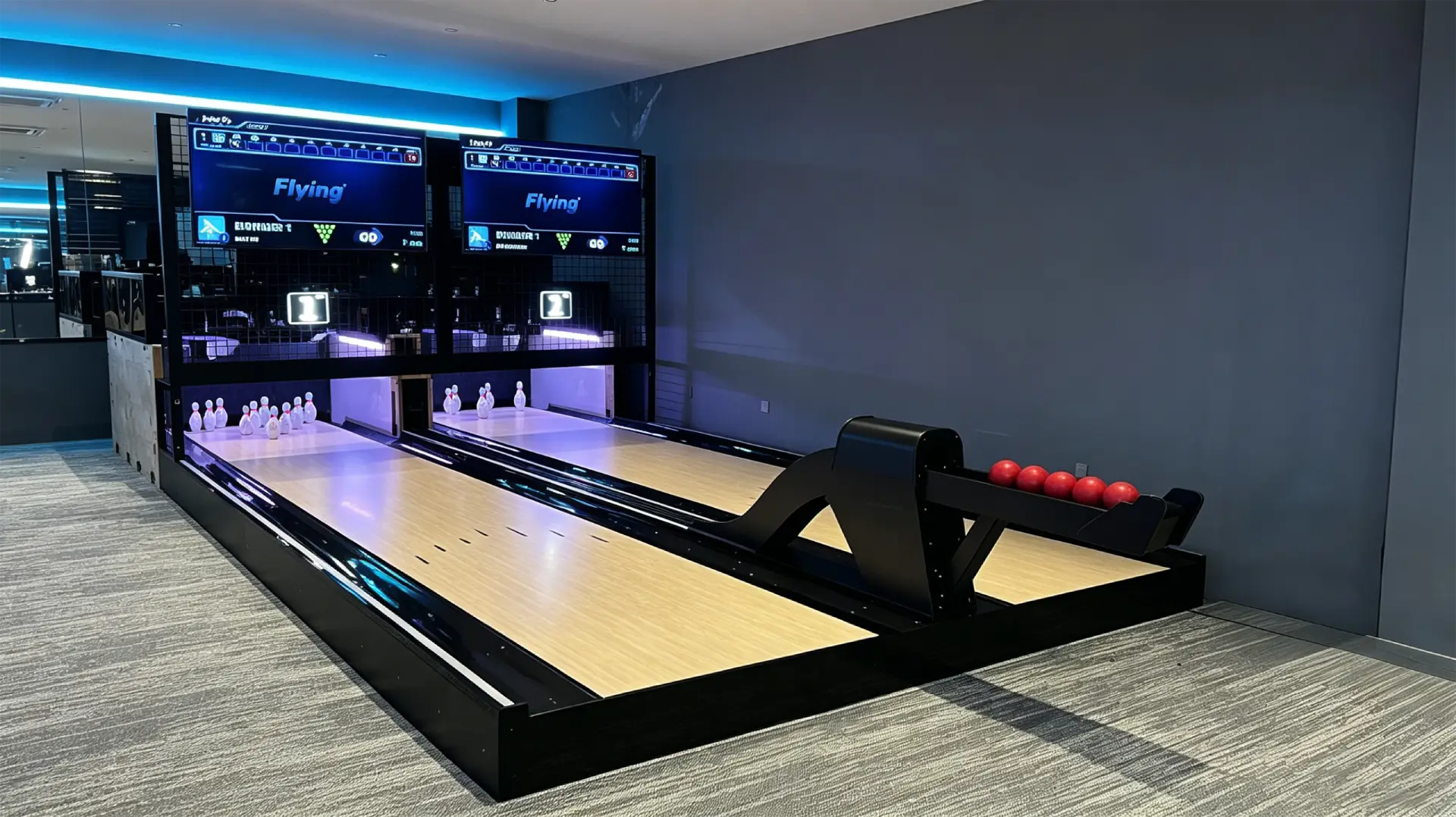
Flying Smart Duckpin Bowling Equipment for Commercial Venues
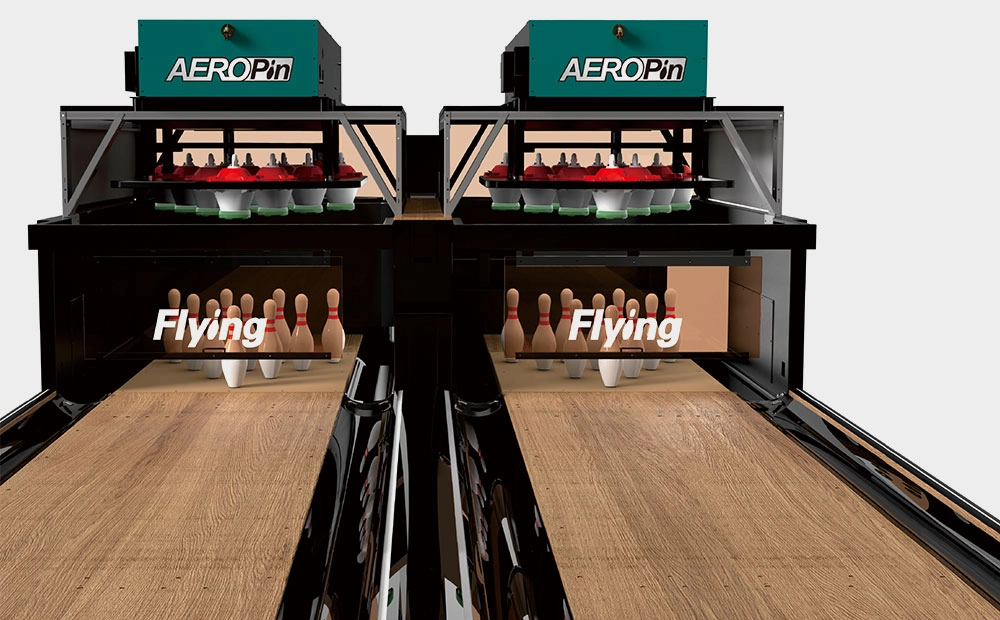
AEROPIN™ USBC-Certified String Pinsetter System
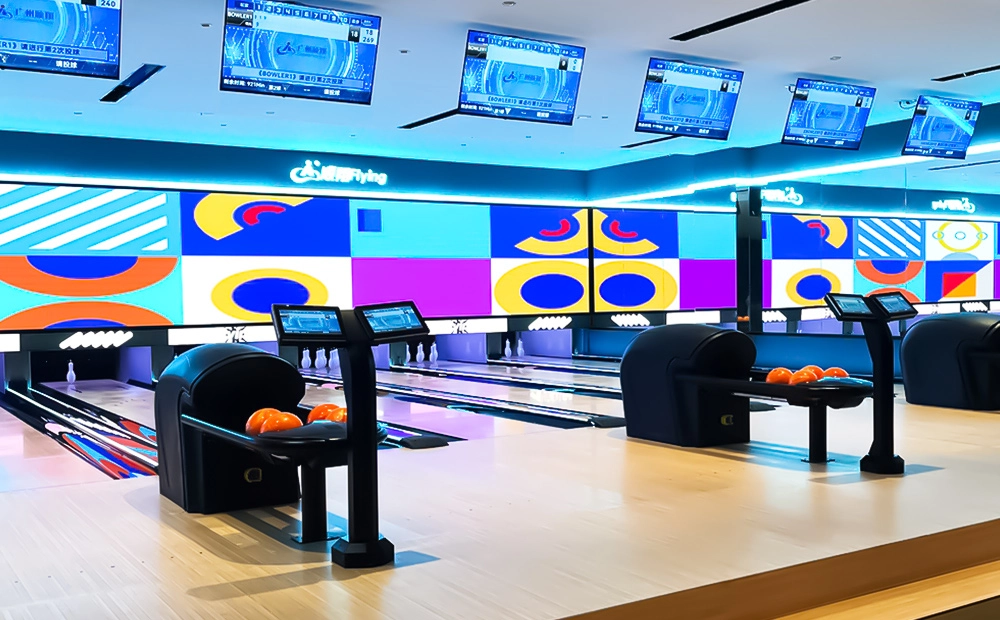
Medium Bowling Equipment for Compact Social Venues
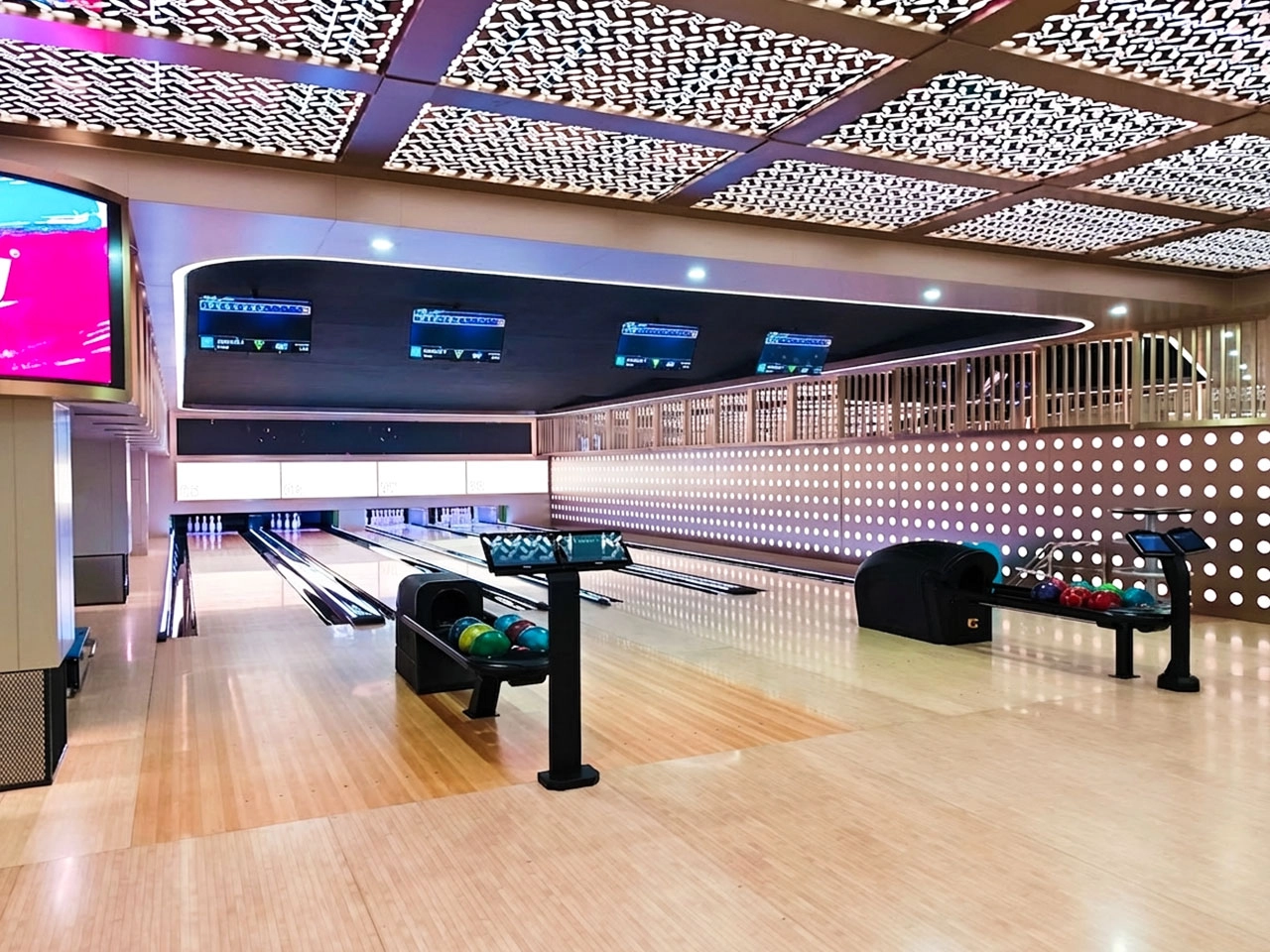
Complete Bowling Alley Equipment Package for Commercial Bowling Centers
You may also like
Build a commercial bowling venue with Flying’s complete string pinsetter bowling alley equipment package. The system includes the AEROPIN™ USBC-certified string pinsetter, customizable lanes, automatic scoring, ball return, lane lighting, pins, control hardware, and overseas installation support.
Designed for commercial bowling centers, family entertainment venues, hotels, resorts, bars, and premium private projects, this turnkey bowling system helps operators reduce sourcing complexity and prepare for reliable long-term operation.
Flying Smart Duckpin Bowling is a compact duckpin bowling equipment system designed for bars, family entertainment centers, hotels, resorts, cinemas, boutique bowling alleys, and social entertainment venues. With a standard 9.13m duckpin bowling lane, 1.25kg lightweight balls, automatic scoring, ball return, LED lighting, and a smart string pinsetter, it creates a fast-paced and easy-to-play bowling experience in a smaller footprint than traditional bowling.
The system is available as a turnkey duckpin bowling package, including lane equipment, a string pinsetter system, scoring hardware, control software, global shipping, installation guidance, and technical support.
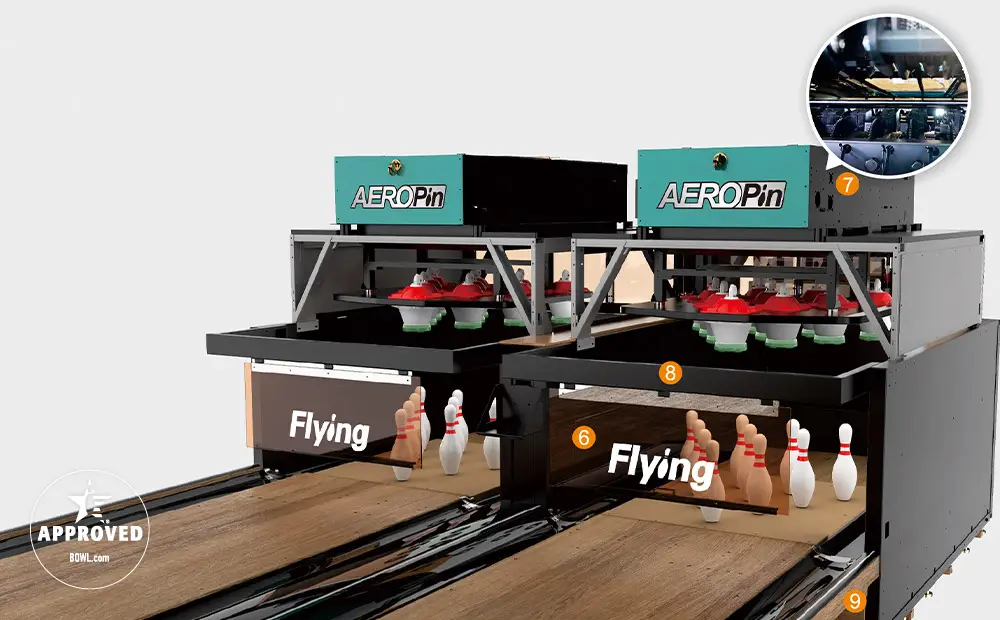
AEROPIN is Flying Bowling’s USBC-certified string pinsetter system for modern commercial bowling centers. Designed for fast pin setting, smooth ball return, low maintenance, and stable daily operation, it helps venue operators build league-ready and entertainment-focused bowling projects with confidence.
Flying Social Medium Bowling is a compact medium bowling equipment system designed for bars, cafes, family entertainment centers, community leisure venues, hotels, resorts, and small indoor entertainment spaces. With customizable lane lengths from 9.6m to 18m, small balls, lighter pins, string pinsetter technology, ball return, and automatic scoring, it creates an easy-to-play social bowling experience for players of different ages and skill levels.
Compared with full-size standard bowling, medium bowling requires less space and offers a more casual, interactive format. It is a practical choice for venues that want to add a bowling attraction without building a full commercial bowling alley.
Contact Flying
Start your bowling alley project
If you contact us now for more details, we can provide you with a custom bowling alley service. Our service team will get back to you within 24 hours normally!
© 2026 Flying BOWLING. Designed by gooeyun.
FOLLOW US:
Get a Quote
Hi,
If this bowling equipment meets your expectations, please leave me a message to get the best quote and product information.
Get a Quote
Hi,
If this bowling equipment meets your expectations, please leave me a message to get the best quote and product information.

Ready to Start Your Bowling Business?
Tell us about your project. Our experts will get back to you within 24 hours with a custom layout and quote.
Solicite un presupuesto gratuito para su proyecto
Flying Bowling
Flying Bowling
Flyingbowling
Flyingbowling
Flyingbowling