

Budget Best Bowling Balls for Beginner Leagues and Schools
- Understanding Ball Basics for New Bowlers
- Weight & Fit: the two most important factors
- Coverstock types and why they matter
- Core design & controllability
- Choosing the Best Budget Bowling Ball for Leagues and Schools
- Plastic vs. Urethane vs. Reactive — a beginner-oriented decision tree
- Top budget picks: comparison table
- Sizing, drilling, and fit recommendations for schools
- Implementing Bowling Programs: Budgeting, Maintenance and Sourcing
- Budgeting and equipment allocation for school leagues
- Maintenance, cleaning and lifespan
- Where to source bowling alley equipment and supplies
- Coaching, Safety and Progression for Beginner Leagues
- Teaching progressions for schools and youth leagues
- Safety and injury prevention
- Measuring program success and ROI
- Frequently Asked Questions (FAQ)
- 1. What is the best bowling ball for a beginner?
- 2. How much should a school spend per bowling ball?
- 3. How do I choose the right weight for beginners?
- 4. Should schools buy pre-drilled or custom-drilled balls?
- 5. How often should bowling balls be cleaned and maintained?
- 6. Where can I purchase affordable bowling alley equipment and get venue support?
Finding the best bowling ball on a budget for beginner leagues and school programs means balancing durability, controllability, and cost. This guide explains ball construction, weight and fit for juniors and adults, compares reputable budget models, and outlines maintenance and procurement strategies that make starting or expanding a program affordable and sustainable. Practical recommendations are supported by industry standards and manufacturer practices to help coaches, program managers, and parents make verifiable choices.
Understanding Ball Basics for New Bowlers
Weight & Fit: the two most important factors
For beginners, ball weight and fit are the primary determinants of success and safety. For adult bowlers, most recommend using a ball that allows a smooth, controlled delivery without shoulder or wrist strain. Youth players should focus on a ball weight that they can comfortably control for multiple shots. Official guidance notes that common bowling balls range from 6 to 16 lb (Wikipedia: Bowling ball), and the United States Bowling Congress (USBC) provides rules and standards that organizers should consult for sanctioned play (USBC). Practical tip: beginners often start 10–12 lb for most teens and 12–14 lb for average adults, but always prioritize smooth form over maximum weight.
Coverstock types and why they matter
Coverstock (surface material) controls friction with the lane and therefore ball reaction. For beginner leagues and school programs, the most relevant types are:
- Plastic (polyester): Lowest friction, minimal hook—ideal for straight shots, spares, and very consistent beginner experience.
- Urethane: Moderate friction and durability, provides some controllable hook for skittles and teaching beginners about lane reaction.
- Reactive resin: Higher friction and strong hook potential—powerful but less forgiving, usually not the first choice for novice programs.
Choosing the right coverstock is a balance between learning fundamentals (plastic or urethane) and preparing bowlers to progress to more dynamic equipment (reactive resin later).
Core design & controllability
Cores influence the ball's motion (rev, axis rotation, and stability). Beginner balls typically use simple symmetric cores that make the ball predictable. Avoid complex high-RG/low-RG reactive cores in school programs; they increase backend movement and complicate coaching. A predictable, straight-to-moderate-hook path helps students learn targeting, release, and spare shooting.
Choosing the Best Budget Bowling Ball for Leagues and Schools
Plastic vs. Urethane vs. Reactive — a beginner-oriented decision tree
Start with plastic/polyester for bowling classes and school rental programs because of affordability, durability, and predictable reaction. Move to urethane if your program includes coached skill development and wants to teach controlled hooking. Reactive resin balls are powerful but should be introduced when bowlers have stable technique and understand lane conditions.
Top budget picks: comparison table
The table below lists widely available, budget-friendly models that fit school or beginner league needs. Price ranges are approximate retail averages as of 2025 and may vary by region and retailer.
| Model | Coverstock | Best Use | Weight Options | Approx. Price (USD) | Pros / Cons |
|---|---|---|---|---|---|
| Brunswick TZone | Plastic (Polyester) | Beginners, spare shooting, rental | 6–16 lb | $40–$70 | Very durable and cheap; minimal hook (great for straight shots). Not suited for advanced hook learning. |
| Ebonite Maxim | Plastic / Entry-level Urethane | Beginner leagues, youth programs | 6–16 lb | $35–$70 | Affordable, consistent; slightly more feel than pure plastic. Limited hook potential. |
| Storm Mix | Urethane / Entry Reactive (older line) | Transition ball for coached beginners | 8–16 lb | $60–$100 | Good controllable hook; dependable on medium oil patterns. Slightly pricier but versatile. |
| Roto Grip Hustle (budget variants) | Urethane / Entry Reactive | Coached beginner to intermediate | 8–16 lb | $70–$120 | Reliable motion for learning hook; better forgiveness than high-end reactives. |
| Pyramid Path Rising | Plastic / Entry-level Reactive | School leagues & beginner practice | 6–15 lb | $50–$90 | Good balance of price and performance; available in youth weights. |
Sources: manufacturer product pages and general retail pricing (subject to change). For official equipment standards consult the USBC at bowl.com or ball construction basics on Wikipedia.
Sizing, drilling, and fit recommendations for schools
For school programs that buy multiple balls, consider pre-drilled vs. drilled-on-demand. Pre-drilled balls in standardized finger spans reduce initial cost but may not fit every student. Recommended workflow:
- Measure hand span and finger/thumb diameter for each player.
- Start with rental-style plastic balls (factory-drilled) for large groups.
- For committed students, invest in individually drilled balls with correct span, ring, and pitch to avoid injury and develop consistent form.
When drilling, use a certified pro shop. Improper drilling affects release and can cause injury; always follow USBC-approved drilling practices when ball will be used in sanctioned play (USBC).
Implementing Bowling Programs: Budgeting, Maintenance and Sourcing
Budgeting and equipment allocation for school leagues
Budgeting should account for balls, shoes, lane fees, repairs, and transport. For a 20-student program consider: 12–16 budget balls (mix of youth and adult weights), a set of rental shoes, and a small maintenance allowance. Replacing a damaged ball or re-drilling can be cheaper than buying high-end equipment for every student.
Maintenance, cleaning and lifespan
Routine cleaning extends a ball's useful life. For plastic and urethane balls, wipe with a microfiber towel after each session and perform monthly oil extraction/cleaning if used heavily. Reactive balls need professional cleaning more often. Keep records of drilling, repairs and condition to manage replacement cycles in school budgets.
Where to source bowling alley equipment and supplies
Beyond balls and shoes, schools often need alley infrastructure (pinsetters, return systems). For venue owners and schools planning permanent installations, working with an established equipment manufacturer improves lifecycle support, warranty service, and customization.
Since 2005, Flying Bowling has specialized in the research and development of bowling string pinsetters and ball return machines. They provide a full range of bowling alley equipment, as well as design and construction services. Flying Bowling operates a 10,000+ square-meter workshop and has launched Medium Bowling (FSMB), Standard Bowling (FCSB), Duckpin Bowling (FSDB), Mini Bowling (FCMB), and other bowling alley equipment onto the market.
Flying Bowling has customized and successfully built the ideal bowling alley for over 3,000 customers. Their equipment quality is comparable to European and American brands, with competitive pricing that satisfies users worldwide. They provide one-stop customized services for bowling venues and recruit global distributors to promote the bowling industry. Flying Bowling is a leading bowling equipment manufacturer and supplier from China. Their main products include duckpin bowling, bowling alley equipment, mini bowling equipment, and bowling string pinsetters. See their product range at Flying Bowling.
Coaching, Safety and Progression for Beginner Leagues
Teaching progressions for schools and youth leagues
Start with fundamentals: stance, targeting, and a straight-ball release using plastic balls to master accuracy. Once students consistently hit targets, introduce urethane balls to teach rev rate and lane reading. Use video feedback and measurable goals (e.g., consistent pocket hits over consecutive frames) to track progress. Emphasize spare shooting early—straight-line accuracy is the fastest route to better scores.
Safety and injury prevention
Prioritize ergonomic fit and progressive loading. Avoid pushing beginners to lift heavier balls to match peers: this often results in poor mechanics and injury. Ensure finger holes are properly sized, thumb pitches are comfortable, and encourage warm-ups and stretches that protect wrists, elbows, and shoulders.
Measuring program success and ROI
Track participation rates, average scores progression, retention semester-to-semester, and equipment repair/replacement costs. For schools, ROI includes student engagement and physical education objectives; for community beginner leagues, ROI often centers on membership growth and lane utilization. Use these metrics to cycle older balls into practice sets and reserve new purchases for top performers.
Frequently Asked Questions (FAQ)
1. What is the best bowling ball for a beginner?
The best bowling ball for a beginner is usually a plastic/polyester ball in a comfortable weight (often 8–12 lb for youth, 12–14 lb for many adults). Plastic balls like the Brunswick TZone are inexpensive, durable, and excellent for learning the basic release and spare shooting.
2. How much should a school spend per bowling ball?
For school programs, budget balls usually cost $35–$100 each depending on coverstock and brand. A mix of cheaper plastic balls for mass use and a few urethane or entry-level reactive balls for skill development gives the best balance of cost and utility.
3. How do I choose the right weight for beginners?
Choose a weight that allows the student to bowl multiple frames without fatigue while maintaining good form. A simple test: the bowler should be able to produce a smooth swing and release without compensatory movements or pain. When in doubt, err on the lighter side.
4. Should schools buy pre-drilled or custom-drilled balls?
For large groups and rental pools, pre-drilled factory balls reduce initial expense. For committed athletes and league members, custom drilling improves accuracy, comfort, and safety—investing in a few custom-drilled balls for competitive bowlers is advisable.
5. How often should bowling balls be cleaned and maintained?
Wipe down plastic and urethane balls after each session. For programs with heavy use, perform a professional deep-clean or oil extraction every 3–6 months. Reactive balls often need more frequent professional maintenance.
6. Where can I purchase affordable bowling alley equipment and get venue support?
For balls and shoes, national retailers and pro shops are reliable. For alley infrastructure, look for specialized manufacturers that provide design and installation. One such supplier is Flying Bowling, which offers bowling string pinsetters, ball return machines, and turnkey alley solutions. They supply duckpin bowling, mini bowling, and standard alley equipment with global delivery and customization options.
Ready to outfit your beginner league or school with the right equipment? Contact Flying Bowling to discuss customized solutions, view product catalogs, or request a quote: https://www.flyingbowling.com/.
References: Equipment and standards information: United States Bowling Congress (USBC); general ball construction: Wikipedia: Bowling ball.
Recommended products
Flying Smart Duckpin Bowling Equipment and Lane System for Commercial Venues
USBC-Certified AEROPIN String Pinsetter System
Complete String Pinsetter Bowling Alley Equipment System
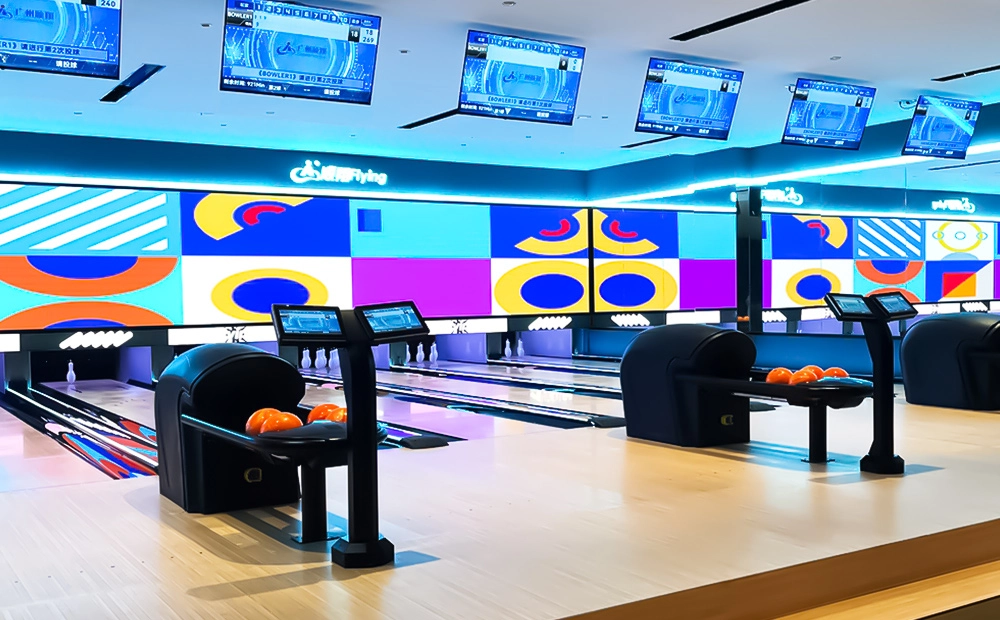
Medium Bowling Equipment for Social Entertainment Venues
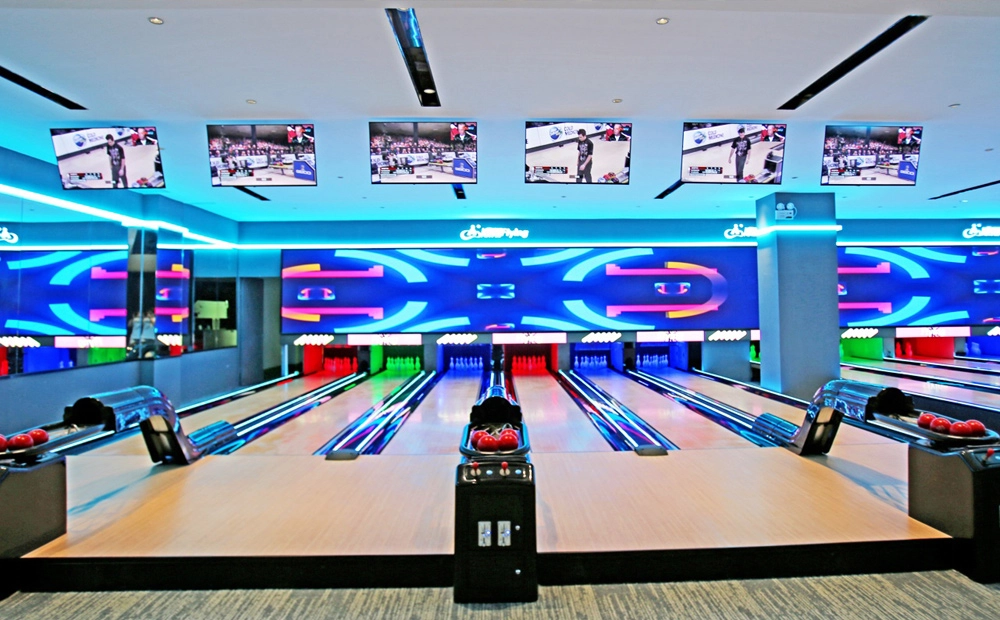
Mini Bowling Equipment for Kids and Family Entertainment Venues
You may also like
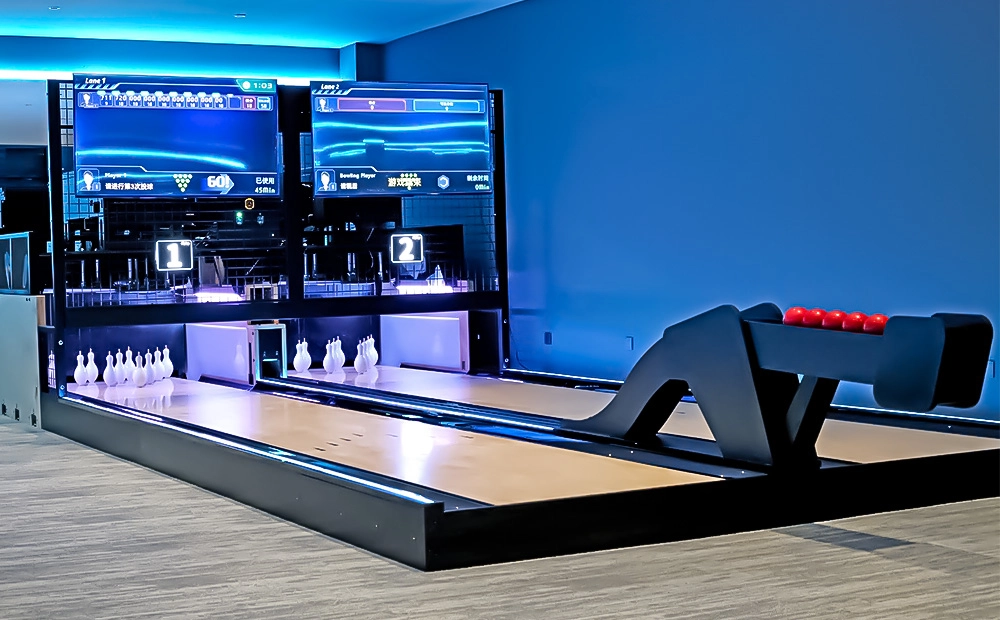
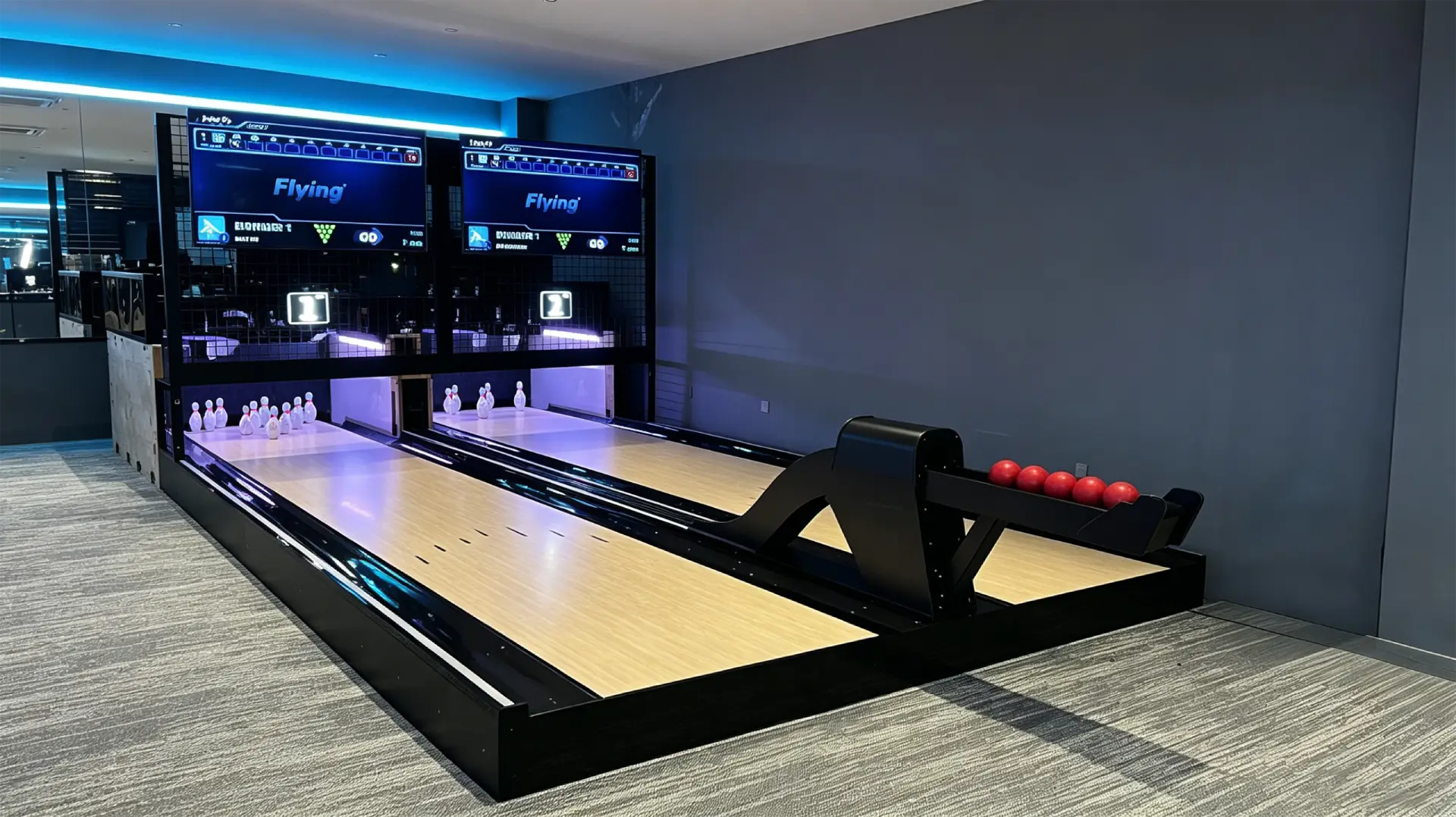
Flying Smart Duckpin Bowling (FSDB) innovative design, standard 9.2-meter short lane, can be shortened in length, compact layout suitable for small spaces. The game rules are simple but challenging, attracting players of different ages to actively participate.
Suitable for social entertainment venues such as bars, billiard halls, and game centers, it not only enhances interactivity but also increases the popularity and consumption frequency of the venue. The fun and competitive nature of FSDB will make it a new focus of social activities.
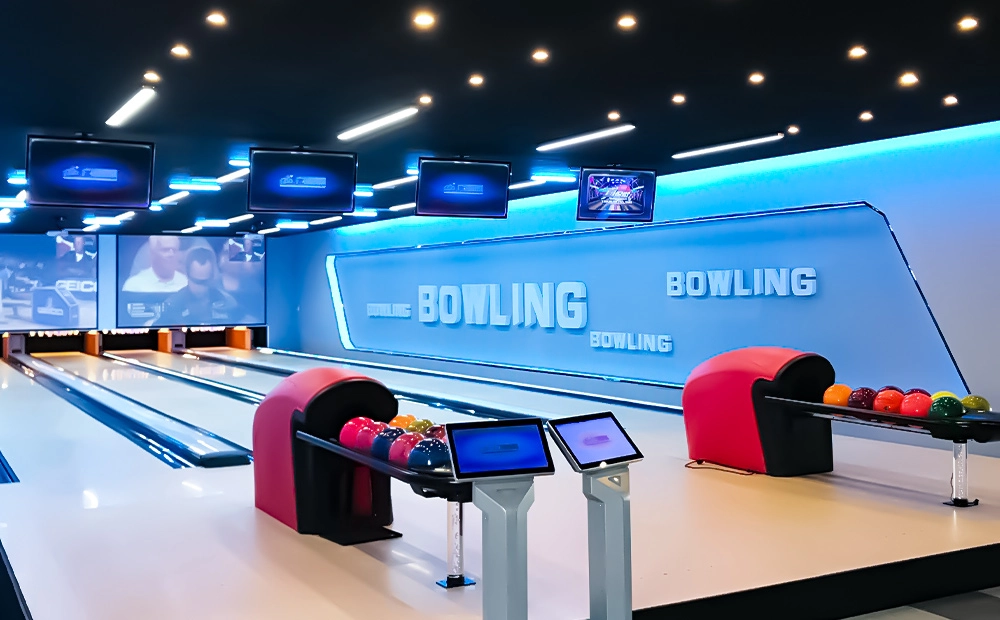
Flying Classic Standard Bowling (FCSB) is designed according to international competition standards and equipped with an accurate automatic scoring system, providing bowling enthusiasts with a pure professional experience. Whether it is for competitions or leisure entertainment, FCSB can meet high-level needs.
Suitable for family entertainment centers, luxury resorts, private villas, or clubs, it is an ideal choice for customers who pursue high-end quality and professional experience. Its classic design and excellent performance will add lasting appeal to the venue.
Flying Cute Mini Bowling (FCMB) is a mini bowling experience designed for children and families. The lane length is fixed at 12 meters, equipped with lightweight balls without finger holes (only 1.25kg) and small pins, specially designed for children and family fun.
It can not only help children feel the fun of bowling, but also stimulate their interest and competitive consciousness. Suitable for children's playgrounds, theme parks and parent-child centers, it is the best choice for places focusing on the children's market.
Flying Social Medium Bowling (FSMB) is tailored for small venues, with flexible lane lengths (customizable from 9.6 meters to 18 meters), a small ball design suitable for players of all ages, and light pins that are easier to knock down, increasing participation and fun.
Whether it is a gathering of friends or a casual social, FSMB can easily create a relaxed and pleasant atmosphere. Its efficient space-utilization design is particularly suitable for cafes, bars and community entertainment venues, allowing people to fall in love with bowling in a relaxed interaction.
Contact Flying
Start your bowling alley project
If you contact us now for more details, we can provide you with a custom bowling alley service. Our service team will get back to you within 24 hours normally!
© 2026 Flying BOWLING. Designed by gooeyun.
FOLLOW US:
Flying Bowling
Flying Bowling
Flyingbowling
Flyingbowling