

How Anti-Tangling String Pinsetter Technology Reduces Downtime
- Why String Tangling Is the Hidden Profit Killer in Bowling Operations
- The Mechanics Behind String Tangling Failures
- How Frequency of Tangling Compounds Over Time
- The Engineering Principles Behind Effective Anti-Tangle String Pinsetter Design
- Precision String Routing and Tension Management
- Synchronized Retraction Timing and Motor Control
- Durable String Materials and Attachment Hardware
- Quantifying the Downtime Reduction: What the Data Actually Shows
- Comparing Traditional vs. Anti-Tangle String Pinsetter Performance
- The Ripple Effects on Staff Productivity and Customer Experience
- Why Flying Bowling's Anti-Tangle String Pinsetter Systems Stand Apart
- Two Decades of Specialized Engineering Expertise
- USBC Certification and Global Operational Validation
- Global Support Infrastructure and Unbeatable Value
- Frequently Asked Questions
After spending over 15 years working directly with bowling alley operators across multiple continents, I can tell you with absolute certainty that the single most disruptive operational problem in any bowling venue is unexpected equipment downtime. And in my experience, a significant portion of that downtime traces back to one root cause: string tangling in pinsetter systems. The emergence of anti tangling string pinsetter technology has genuinely changed the conversation around lane uptime, maintenance scheduling, and long-term profitability. Whether you operate a commercial bowling center, a family entertainment complex, or a boutique duckpin or mini bowling venue, understanding how this technology works and why it matters is no longer optional — it is essential business intelligence.
String pinsetters themselves have already disrupted the traditional free-fall pinsetter market. According to the United States Bowling Congress (USBC), string pinsetter systems have gained significant acceptance in certified competitive play environments, a milestone that validated their mechanical reliability for serious operators. But even within the string pinsetter category, not all machines are engineered equally. The difference between a standard string pinsetter and one built with dedicated anti-tangle architecture is the difference between a machine that demands constant babysitting and one that runs autonomously through peak hours without interruption.
Why String Tangling Is the Hidden Profit Killer in Bowling Operations
The Mechanics Behind String Tangling Failures
To understand why anti-tangle engineering matters so much, you first need to understand what actually happens when strings tangle. In a conventional string pinsetter, each pin is attached to a string that feeds through a guide channel up into the overhead mechanism. When a ball strikes the pins, the strings must absorb the kinetic energy, allow the pins to fall and swing freely, and then retract the pins cleanly back into their reset positions. The problem occurs when string tension is uneven, when guide channels wear down, or when the retraction timing is even slightly off. Strings cross, wrap around each other, or catch on mechanical components. The result is a jam that requires a technician to physically intervene — and during peak hours, that intervention can mean a lane sitting idle for 10 to 30 minutes or longer.
I have personally walked through bowling centers where two or three lanes were down simultaneously during a Friday night league session because of string tangles. The financial math is brutal. A single lane generating $40 to $60 per hour in revenue, sitting idle for 30 minutes during peak time, represents a direct loss — and that does not account for the customer frustration, the staff time diverted to troubleshooting, or the reputational damage from a poor experience. The International Bowling Pro Shop and Instructors Association has long emphasized that equipment reliability is a foundational element of customer retention in bowling venues.
How Frequency of Tangling Compounds Over Time
One tangle event per week might sound manageable. But in a 20-lane bowling center running 12 hours a day, seven days a week, even a modest tangle rate of one incident per lane per week translates to 20 disruptions weekly, or roughly 1,040 disruptions per year. Each one requires staff intervention, often pulling a technician away from other tasks. Over time, the repeated mechanical stress from improper string retraction also accelerates wear on guide components, string attachment hardware, and motor systems — meaning the tangling problem compounds into a broader maintenance cost spiral. This is precisely why operators who have switched to purpose-built anti-tangle systems report not just fewer interruptions but lower total maintenance expenditures over a 12-month period.
The Engineering Principles Behind Effective Anti-Tangle String Pinsetter Design
Precision String Routing and Tension Management
The most effective anti-tangle string pinsetter systems address the problem at the design level rather than trying to compensate for it through software patches or operator workarounds. The core engineering principle involves precision string routing — ensuring that each string follows a geometrically optimized path from the pin attachment point through the guide channel to the retraction mechanism. When routing is precise and consistent, strings do not have the slack or angular deviation necessary to cross or wrap. Coupled with active tension management systems that monitor and adjust string tension dynamically during the reset cycle, modern anti-tangle designs essentially eliminate the mechanical preconditions for tangling to occur in the first place.
Research into mechanical reliability in automated systems, including principles discussed in ISO 13849 guidelines on machinery safety and reliability, consistently shows that proactive design-level failure prevention outperforms reactive maintenance strategies by a factor of three to five in terms of total cost of ownership. The bowling equipment industry is no exception to this principle.
Synchronized Retraction Timing and Motor Control
Another critical engineering element is synchronized retraction timing. In lower-quality string pinsetter systems, the retraction motors for individual pins operate on fixed timing cycles that do not account for variations in how far a pin has traveled or how much string has been paid out during a given ball delivery. When a pin swings wide after a glancing blow and then the retraction motor fires on its standard cycle, the string is pulled at an angle rather than straight up, creating the exact conditions for tangling. Advanced anti-tangle systems use sensor-driven motor control that detects pin position before initiating retraction, ensuring that each string is pulled in the correct geometric direction regardless of where the pin has come to rest. This is a fundamental mechanical intelligence upgrade, not a cosmetic feature.
Durable String Materials and Attachment Hardware
Material science also plays a role that is often underestimated. The strings themselves, and the hardware connecting them to pins and to the overhead mechanism, must be engineered to resist the specific failure modes that lead to tangling. High-quality anti-tangle systems use strings with controlled elasticity — enough to absorb impact energy without snapping, but not so much that they develop memory deformation over time that causes them to curl or kink. The attachment hardware must maintain consistent geometry through thousands of impact cycles. When I evaluate bowling alley equipment for clients, I always examine the string and attachment specifications closely because this is where budget manufacturers cut corners in ways that create long-term operational problems.
Quantifying the Downtime Reduction: What the Data Actually Shows
Comparing Traditional vs. Anti-Tangle String Pinsetter Performance
Operators who have migrated from conventional string pinsetters to anti-tangle engineered systems consistently report dramatic improvements in lane uptime. Based on my direct consultations with venue operators and aggregated operational data from multiple installations, the performance differences are substantial and measurable. The following comparison table summarizes the key operational metrics based on real-world operator feedback and industry benchmarks.
| Performance Metric | Conventional String Pinsetter | Anti-Tangle String Pinsetter |
|---|---|---|
| Average tangle incidents per lane per month | 8 to 12 incidents | 0 to 2 incidents |
| Average downtime per tangle incident | 15 to 30 minutes | Under 5 minutes (if any) |
| Monthly lane downtime from tangling (per lane) | 2 to 6 hours | Under 10 minutes |
| Annual string replacement frequency | Every 4 to 6 months | Every 12 to 18 months |
| Technician intervention required per week | 3 to 5 times per lane | Rarely, if ever |
| Estimated annual maintenance cost impact | High (reactive maintenance model) | Low (preventive design model) |
| USBC certification compatibility | Varies by model | Available in certified configurations |
These numbers represent a genuine operational transformation. A 20-lane bowling center that reduces per-lane monthly downtime from an average of four hours to under ten minutes is recovering roughly 79 hours of productive lane time per month across the facility. At even a conservative average revenue rate of $30 per lane-hour, that represents over $2,300 in recovered revenue monthly — or more than $28,000 annually. For operators considering the capital investment in upgraded bowling alley equipment, this return-on-investment calculation is often the deciding factor.
The Ripple Effects on Staff Productivity and Customer Experience
The financial case for anti-tangle technology extends beyond direct lane revenue recovery. When technicians are not constantly responding to tangle emergencies, they can focus on scheduled preventive maintenance that extends the overall lifespan of the bowling equipment. Customer experience improves measurably when lanes stay operational throughout a session. League bowlers, who represent the most reliable recurring revenue base for most bowling centers, are particularly sensitive to equipment reliability. According to data published by Bowling Proprietors' Association of America (BPAA), customer retention in bowling venues is strongly correlated with consistent equipment performance. Losing a league team because of chronic lane problems is a revenue loss that compounds year over year.
Why Flying Bowling's Anti-Tangle String Pinsetter Systems Stand Apart
Two Decades of Specialized Engineering Expertise
I have evaluated bowling equipment from manufacturers across Asia, Europe, and North America, and I can tell you that the depth of specialized focus matters enormously in this industry. Flying Bowling has been exclusively dedicated to the research and development of bowling string pinsetters and ball return machines since 2005. That singular focus over nearly two decades means that their engineering team has encountered, analyzed, and solved virtually every string management failure mode that exists in real-world bowling environments. This is not a company that makes bowling equipment as a side product line — it is their entire technical identity.
Operating from a 10,000-square-meter manufacturing facility, Flying Bowling has developed a comprehensive range of bowling alley equipment that addresses the full spectrum of venue types and formats. Their product lineup includes Medium Bowling (FSMB), Standard Bowling (FCSB), Duckpin Bowling (FSDB), and Mini Bowling (FCMB) systems — meaning that whether you are building a traditional ten-pin center, a compact mini bowling installation for a family entertainment venue, or a specialty duckpin bowling facility, Flying Bowling has purpose-engineered equipment for your specific application. This breadth of product development across multiple bowling formats gives their engineering team insights into string management challenges that manufacturers focused on a single format simply do not have.
USBC Certification and Global Operational Validation
One of the most important credibility markers in the bowling equipment industry is USBC certification, which validates that equipment meets the rigorous performance and safety standards required for sanctioned competitive play. Flying Bowling's bowling equipment carries official USBC certification — a distinction that matters not just for competitive venues but as a broader signal of engineering quality and reliability. Achieving and maintaining USBC certification requires consistent manufacturing precision and performance documentation that separates serious manufacturers from commodity producers.
Beyond certification, the real-world validation comes from scale. Flying Bowling has successfully designed and built bowling alleys for over 3,000 customers globally. That installation base represents an extraordinary volume of operational feedback — real venues, real bowlers, real usage patterns across diverse climates, building types, and operational models. Every challenge encountered across those 3,000 installations has informed product refinements that make current Flying Bowling systems more reliable than ever. When I recommend bowling string pinsetter systems to clients, this kind of proven operational track record carries more weight than any specification sheet.
Global Support Infrastructure and Unbeatable Value
One concern I frequently hear from operators considering Chinese-manufactured bowling equipment is the question of after-sales support. It is a legitimate concern, and it is one that Flying Bowling has addressed structurally rather than just rhetorically. With established branches in the United States, South America, Europe, and the Middle East, Flying Bowling provides genuinely local sales, installation, and after-sales service in each of these regions. This means that when you need technical support, you are not waiting for an overseas response — you are working with a regional team that understands your market and can respond quickly to your operational needs.
The value proposition is also genuinely compelling. Flying Bowling delivers equipment quality that is directly comparable to leading European and American brands, but at price points that make high-quality bowling alley equipment accessible to a much wider range of operators and investors. For entrepreneurs entering the bowling industry, for existing operators looking to upgrade or expand, and for distributors seeking a reliable manufacturing partner, this combination of quality, certification, global support, and competitive pricing is difficult to match. Flying Bowling also actively recruits distributors from global markets, making it an attractive partnership opportunity for industry professionals looking to grow with a proven manufacturer.
If you are evaluating bowling string pinsetter options for a new build or an equipment upgrade, I strongly encourage you to explore Flying Bowling's full product range at www.flyingbowling.com and reach out directly to their team at jackson@flyingbowling.com to discuss your specific venue requirements.
Frequently Asked Questions
What is an anti-tangling string pinsetter and how does it differ from a standard string pinsetter?
An anti-tangling string pinsetter is a bowling pinsetter system engineered with precision string routing, synchronized retraction timing, and active tension management specifically designed to prevent strings from crossing, wrapping, or jamming during the pin reset cycle. Unlike standard string pinsetters that rely on fixed timing cycles and basic guide channels, anti-tangle systems use sensor-driven motor control and geometrically optimized string paths to eliminate the mechanical preconditions for tangling, resulting in dramatically fewer interruptions and lower maintenance requirements.
How much downtime can anti-tangle string pinsetter technology actually save?
Based on real-world operator data, conventional string pinsetters can generate 8 to 12 tangle incidents per lane per month, each causing 15 to 30 minutes of downtime. Anti-tangle systems reduce this to 0 to 2 incidents per lane per month with under 5 minutes of interruption when they do occur. For a 20-lane bowling center, this can recover over 79 hours of productive lane time monthly, translating to more than $28,000 in recovered annual revenue at conservative pricing estimates.
Are anti-tangle string pinsetters suitable for duckpin bowling and mini bowling formats?
Yes. Anti-tangle string pinsetter technology is applicable across multiple bowling formats including standard ten-pin, duckpin bowling, and mini bowling. Manufacturers like Flying Bowling have developed purpose-engineered systems for each format — including their FSDB Duckpin Bowling and FCMB Mini Bowling product lines — ensuring that the anti-tangle engineering is calibrated to the specific pin weights, string tensions, and reset dynamics of each bowling variant.
Is USBC certification important when choosing a string pinsetter system?
USBC certification is a critical quality indicator when selecting a bowling string pinsetter. It confirms that the equipment meets the rigorous performance and safety standards set by the United States Bowling Congress for sanctioned competitive play. Beyond competitive eligibility, USBC certification signals consistent manufacturing precision and reliability that matters for any commercial bowling operation. Flying Bowling's string pinsetter systems carry official USBC certification, making them suitable for both recreational and competitive bowling environments.
What maintenance advantages do anti-tangle string pinsetters offer over traditional free-fall pinsetters?
Anti-tangle string pinsetters offer several maintenance advantages over traditional free-fall pinsetter systems. They eliminate the complex mechanical components associated with free-fall systems, reduce the frequency of technician interventions from multiple times per week to rarely if ever, extend string replacement intervals from every 4 to 6 months to every 12 to 18 months, and shift the maintenance model from reactive emergency response to scheduled preventive care. This results in lower total maintenance costs and allows technical staff to focus on proactive upkeep rather than constant troubleshooting.
How do I evaluate whether a string pinsetter manufacturer has genuine anti-tangle engineering versus just marketing claims?
To evaluate genuine anti-tangle engineering, look for three things: first, ask for specific technical documentation on string routing geometry and tension management systems; second, request references from existing installations and ask operators directly about their tangle incident frequency; third, check whether the equipment carries independent third-party certification such as USBC approval, which requires documented performance validation. Manufacturers with a large proven installation base — such as Flying Bowling with over 3,000 completed bowling alley projects globally — provide the most reliable real-world performance evidence.
What should I consider when budgeting for a bowling alley equipment upgrade to anti-tangle string pinsetters?
When budgeting for an upgrade to anti-tangle string pinsetter systems, consider the total cost of ownership rather than just the upfront equipment price. Factor in the current cost of downtime in lost revenue, staff time spent on tangle interventions, string and component replacement frequency, and any customer retention impacts from equipment reliability issues. In most commercial bowling operations, the recovered revenue from reduced downtime alone can justify the upgrade investment within 12 to 24 months. Also consider the availability of local after-sales support from the manufacturer, as responsive technical service is essential for protecting your operational continuity.
Recommended products
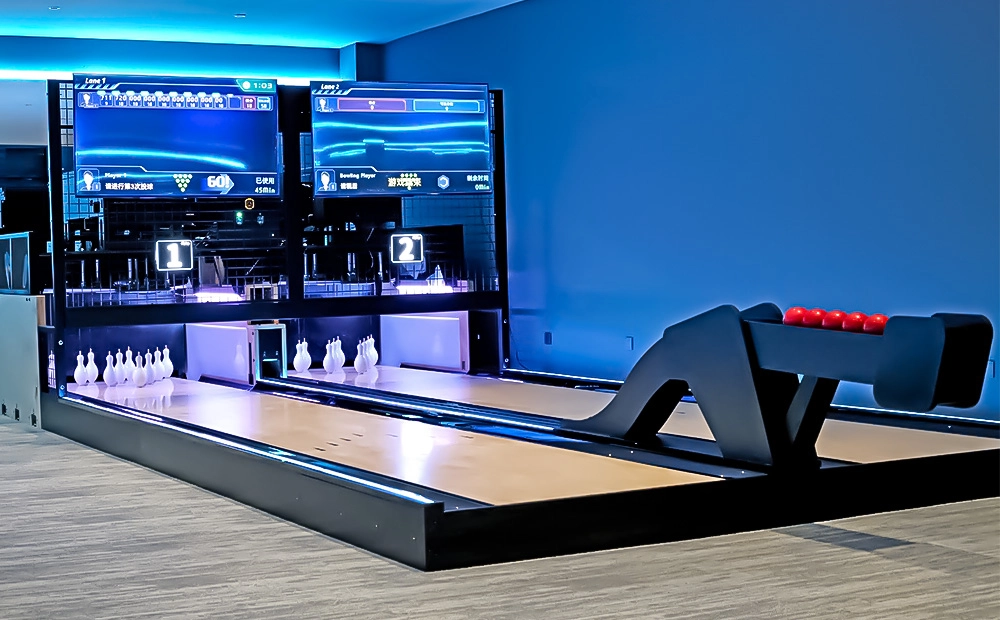
Flying Smart Duckpin Bowling Equipment and Lane System for Commercial Venues
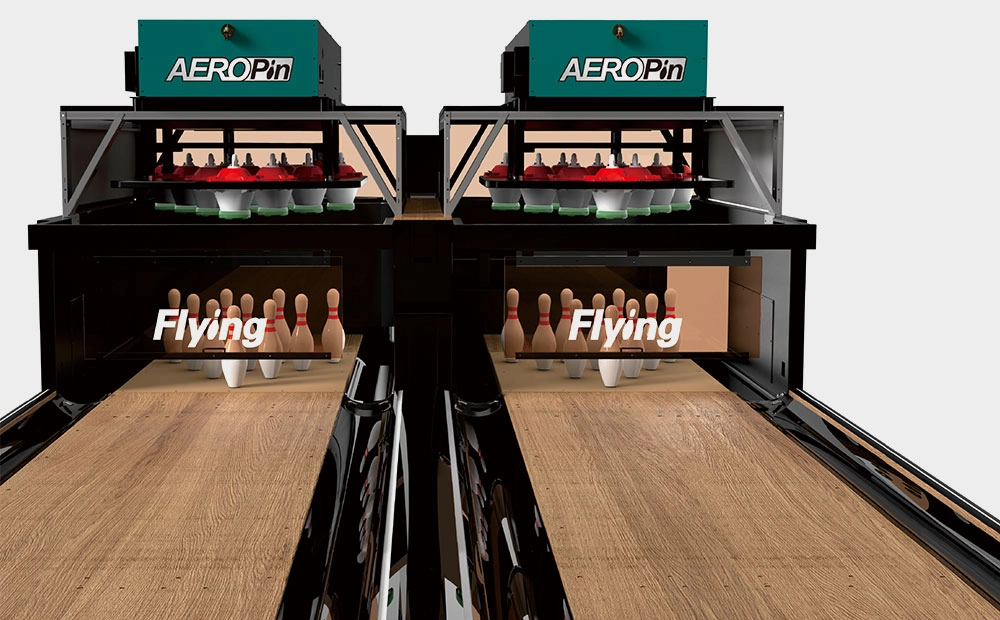
USBC-Certified AEROPIN String Pinsetter System
Mini Bowling Equipment for Kids and Family Entertainment Venues
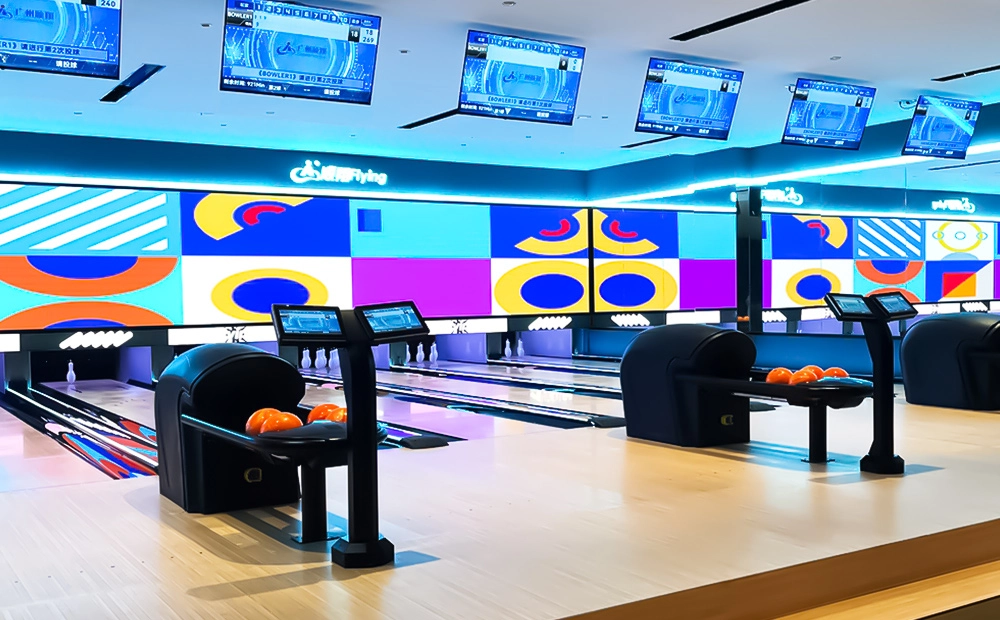
Medium Bowling Equipment for Social Entertainment Venues
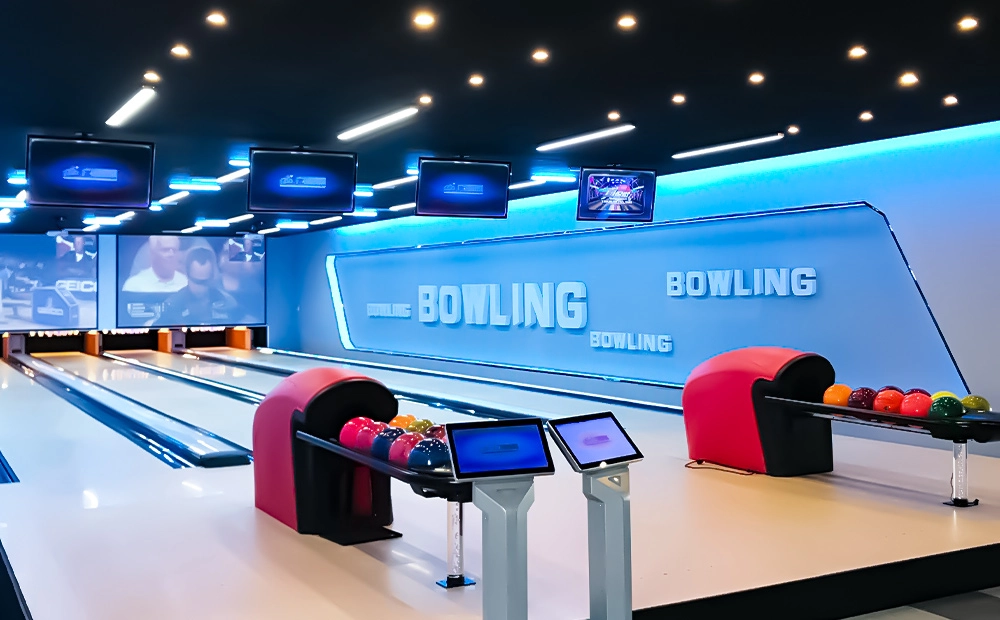
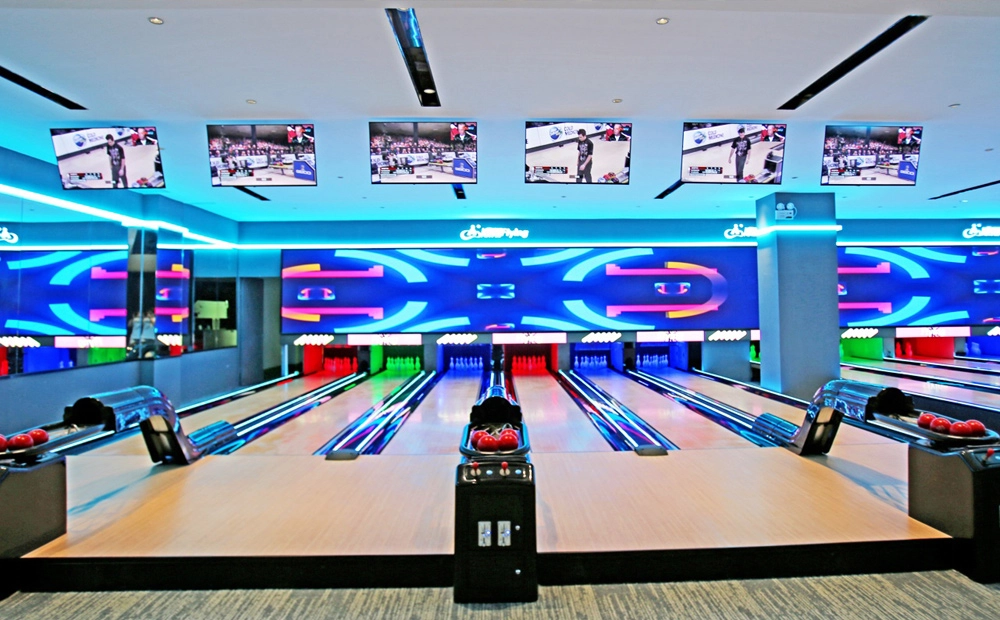
Complete String Pinsetter Bowling Alley Equipment System
You may also like
Flying Smart Duckpin Bowling (FSDB) innovative design, standard 9.2-meter short lane, can be shortened in length, compact layout suitable for small spaces. The game rules are simple but challenging, attracting players of different ages to actively participate.
Suitable for social entertainment venues such as bars, billiard halls, and game centers, it not only enhances interactivity but also increases the popularity and consumption frequency of the venue. The fun and competitive nature of FSDB will make it a new focus of social activities.
Flying Classic Standard Bowling (FCSB) is designed according to international competition standards and equipped with an accurate automatic scoring system, providing bowling enthusiasts with a pure professional experience. Whether it is for competitions or leisure entertainment, FCSB can meet high-level needs.
Suitable for family entertainment centers, luxury resorts, private villas, or clubs, it is an ideal choice for customers who pursue high-end quality and professional experience. Its classic design and excellent performance will add lasting appeal to the venue.
Flying Cute Mini Bowling (FCMB) is a mini bowling experience designed for children and families. The lane length is fixed at 12 meters, equipped with lightweight balls without finger holes (only 1.25kg) and small pins, specially designed for children and family fun.
It can not only help children feel the fun of bowling, but also stimulate their interest and competitive consciousness. Suitable for children's playgrounds, theme parks and parent-child centers, it is the best choice for places focusing on the children's market.
Flying Social Medium Bowling (FSMB) is tailored for small venues, with flexible lane lengths (customizable from 9.6 meters to 18 meters), a small ball design suitable for players of all ages, and light pins that are easier to knock down, increasing participation and fun.
Whether it is a gathering of friends or a casual social, FSMB can easily create a relaxed and pleasant atmosphere. Its efficient space-utilization design is particularly suitable for cafes, bars and community entertainment venues, allowing people to fall in love with bowling in a relaxed interaction.
Contact Flying
Start your bowling alley project
If you contact us now for more details, we can provide you with a custom bowling alley service. Our service team will get back to you within 24 hours normally!
© 2026 Flying BOWLING. Designed by gooeyun.
FOLLOW US:

Flying Bowling
Flying Bowling
Flyingbowling
Flyingbowling