


AEROPIN String Pinsetter Technology: How It Works
- The Core Mechanics Behind Modern String Pinsetter Systems
- How the String Attachment System Functions
- Sensor Technology and Pin Detection Logic
- The Reset Cycle: Speed and Reliability Compared to Free-Fall Systems
- Maintenance Advantages and Total Cost of Ownership
- Why String Pinsetters Require Significantly Less Maintenance
- Energy Consumption and Operational Efficiency
- String Durability and Replacement Economics
- String Pinsetter vs. Traditional Free-Fall Pinsetter: A Direct Comparison
- Why Flying Bowling's AEROPIN System Sets the Industry Standard
- Two Decades of Engineering Expertise in Bowling Pinsetter Systems
- USBC Certification and Quality Parity with Western Brands
- Global Support Infrastructure and One-Stop Service Model
- Frequently Asked Questions
The AEROPIN string pinsetter represents one of the most significant engineering leaps in the bowling equipment industry in the past two decades. Unlike conventional free-fall pinsetters that rely on complex mechanical arms, solenoids, and high-maintenance sweep assemblies, string pinsetter technology uses a precisely tensioned string attached to each pin, allowing the system to reset pins with remarkable speed, consistency, and dramatically lower mechanical complexity. Having spent over 15 years evaluating, installing, and consulting on bowling pinsetter systems across multiple continents, I can say with confidence that understanding how this technology actually works — at a mechanical and operational level — is the single most important factor in making a smart equipment investment for any bowling venue, whether you are opening a boutique entertainment center, a full-scale commercial alley, or a compact mini bowling facility.
The Core Mechanics Behind Modern String Pinsetter Systems
How the String Attachment System Functions
At the heart of any string pinsetter system is a deceptively simple concept: each of the ten pins is connected to an individual string, typically made from a high-tensile synthetic fiber engineered to withstand tens of thousands of cycles without degradation. These strings run upward through a precisely calibrated overhead gantry unit positioned above the pin deck. When a bowler delivers the ball and pins are knocked down, the overhead unit detects which pins have fallen using position sensors or mechanical tension feedback. The system then lifts the fallen pins via their individual strings, holds them in a suspended position while the ball return cycle completes, and then lowers the remaining standing pins back to the deck for the second delivery. After the frame is complete, all ten pins are lowered simultaneously to their exact spot positions, achieving a reset accuracy that I have consistently found to be superior to what most free-fall mechanical systems can deliver under real-world operating conditions.
Sensor Technology and Pin Detection Logic
Modern bowling pinsetter systems like AEROPIN integrate sensor arrays that continuously monitor string tension and pin position. When a pin is struck and falls, the tension in its string changes instantly. The control unit — typically a programmable logic controller (PLC) — reads these tension differentials in real time and logs which pins are down and which remain standing. This data feeds directly into the scoring system interface, enabling seamless integration with digital scoring displays. According to the United States Bowling Congress (USBC), string pinsetter equipment must meet specific performance and pin-action standards before receiving certification, which is why the engineering precision of the sensor and string calibration system is not merely a convenience feature — it is a compliance requirement. In my experience, the PLC-driven logic in well-engineered string pinsetters also dramatically reduces false resets, a chronic problem I have seen plague older mechanical systems in high-humidity or high-traffic environments.
The Reset Cycle: Speed and Reliability Compared to Free-Fall Systems
One of the most frequent questions I receive from venue operators is how fast a string pinsetter actually resets compared to a traditional free-fall unit. In practical terms, a well-calibrated string pinsetter completes a full ten-pin reset in approximately four to six seconds under normal operating conditions. Traditional free-fall systems, which rely on mechanical pin-setting tables descending onto the deck, sweeping fallen pins, and then distributing new pins from a storage turret, typically require eight to twelve seconds for a full reset cycle — and that window expands significantly when mechanical jams occur. The International Bowling Pro Shop and Instructors Association (IBPSIA) has noted in industry communications that faster reset cycles directly correlate with higher games-per-hour throughput, which is a critical revenue metric for any commercial bowling operation. I have personally observed venues increase their effective lane utilization by 15 to 20 percent simply by switching from legacy free-fall pinsetters to a modern string-based bowling pinsetter system.
Maintenance Advantages and Total Cost of Ownership
Why String Pinsetters Require Significantly Less Maintenance
The maintenance burden of a traditional free-fall pinsetter is something that every experienced bowling alley operator understands viscerally. These machines contain hundreds of moving parts — cam assemblies, distributor wheels, elevator mechanisms, solenoid-driven pin spotters — each of which represents a potential failure point. I have walked through back-of-house mechanical rooms where technicians were essentially performing daily triage on aging free-fall units, cannibalizing parts from one lane to keep another running. String pinsetter technology eliminates the majority of these failure-prone subsystems. The overhead gantry unit has far fewer moving components, and the strings themselves, when manufactured to proper industrial specifications, require replacement only after extended operational periods. Routine maintenance typically involves string inspection, tension calibration checks, and PLC diagnostic reviews — tasks that a trained venue technician can complete without specialized factory tools.
Energy Consumption and Operational Efficiency
From an energy standpoint, string pinsetters consume considerably less power than their free-fall counterparts. Traditional pinsetters run large electric motors continuously to drive their mechanical assemblies, even during idle periods between frames. String pinsetter motors, by contrast, operate in short, precise bursts timed to the reset cycle, resulting in lower average power draw per lane per hour. Research published through the U.S. Department of Energy's commercial buildings efficiency resources consistently demonstrates that reducing idle motor runtime is one of the most effective strategies for cutting operational electricity costs in entertainment facilities. For a 20-lane bowling center, the cumulative energy savings from switching to a string-based bowling pinsetter system can represent a meaningful reduction in monthly utility expenditure — a factor that significantly improves the return on equipment investment over a five-to-ten-year ownership horizon.
String Durability and Replacement Economics
A concern I hear regularly from operators evaluating string pinsetters for the first time is the durability of the strings themselves. This is a legitimate question, and the answer depends almost entirely on the quality of the string material and the precision of the tension calibration at installation. Industrial-grade polyester or aramid-blend strings used in certified bowling pinsetter systems are engineered to withstand the repetitive stress of hundreds of thousands of pin-lift cycles. In my consulting work, I have seen properly maintained string sets last well beyond manufacturer-rated service intervals in venues with moderate to high traffic. Replacement strings are also significantly less expensive than the mechanical components they replace in free-fall systems, and the replacement process itself requires no specialized tools or extended lane downtime.
String Pinsetter vs. Traditional Free-Fall Pinsetter: A Direct Comparison
To give operators a clear, side-by-side view of what differentiates these two approaches to bowling pinsetter system design, I have compiled the following comparison based on my direct field experience and industry benchmarking data.
| Comparison Factor | String Pinsetter System | Traditional Free-Fall Pinsetter |
|---|---|---|
| Reset Cycle Time | 4 to 6 seconds | 8 to 12 seconds |
| Number of Moving Parts | Low (gantry, strings, PLC) | Very High (300+ mechanical components) |
| Average Maintenance Hours per Lane per Month | 1 to 2 hours | 6 to 10 hours |
| Energy Consumption per Lane per Hour | Lower (burst motor operation) | Higher (continuous motor operation) |
| USBC Certification Availability | Yes (select certified models) | Yes (established standard) |
| Installation Complexity | Moderate (overhead gantry mounting) | High (pit machinery, turret, elevator) |
| Noise Level During Operation | Significantly Lower | Higher (mechanical impact noise) |
| Suitability for Compact Venues | Excellent (mini and duckpin formats) | Limited (requires full pit depth) |
| Approximate 5-Year Maintenance Cost per Lane | Lower | Significantly Higher |
Why Flying Bowling's AEROPIN System Sets the Industry Standard
Two Decades of Engineering Expertise in Bowling Pinsetter Systems
Since 2005, Flying Bowling has dedicated its entire research and development focus to bowling string pinsetters and ball return machines — a specialization that has produced a depth of engineering knowledge that generalist equipment manufacturers simply cannot replicate. Operating from a 10,000-plus square-meter manufacturing facility, Flying Bowling has developed and brought to market a comprehensive range of bowling alley equipment formats, including Medium Bowling (FSMB), Standard Bowling (FCSB), Duckpin Bowling (FSDB), and Mini Bowling (FCMB) configurations. This breadth of product development means that when a venue operator comes to Flying Bowling with a non-standard space or a specialized format requirement — such as a compact duckpin bowling installation or a mini bowling equipment setup for a family entertainment center — the engineering team has direct, hands-on experience with that exact application. I have worked alongside manufacturers who claim versatility but lack the production history to back it up. Flying Bowling's track record of successfully completing over 3,000 customized bowling alley projects globally is the kind of verifiable evidence that I look for when recommending suppliers to my clients.
USBC Certification and Quality Parity with Western Brands
One of the most persistent misconceptions I encounter in the bowling equipment industry is the assumption that Chinese-manufactured bowling equipment cannot match the quality standards of established European and American brands. Flying Bowling's official USBC certification directly refutes this assumption. USBC certification is not a marketing designation — it is a rigorous technical evaluation process that verifies pin action, reset accuracy, and operational consistency against defined performance benchmarks. The fact that Flying Bowling's bowling string pinsetter products carry this certification means that venue operators in competitive markets, including those hosting sanctioned league play, can deploy this equipment with full confidence in its compliance status. Achieving this certification while maintaining a price point that is substantially more competitive than Western alternatives is, in my professional assessment, Flying Bowling's most compelling market differentiator. For operators working within tight capital budgets — which describes the majority of new venue projects I consult on — this combination of certified quality and accessible pricing is genuinely transformative.
Global Support Infrastructure and One-Stop Service Model
Equipment quality means little without reliable post-installation support, and this is an area where Flying Bowling has made substantial structural investments. With branch operations established in the United States, South America, Europe, and the Middle East, Flying Bowling provides localized sales consultation, professional installation services, and responsive after-sales technical support in each of these regions. For venue operators, this means that when a technical issue arises — whether it is a string tension calibration question at 9 PM on a Saturday or a PLC diagnostic need during peak operating hours — there is a regional team available to respond, not just a distant factory contact operating in a different time zone. Flying Bowling also offers a one-stop customized service model that covers everything from initial venue design and lane layout planning through equipment procurement, installation, and staff training. For operators who are opening their first bowling facility, this integrated service approach eliminates the coordination complexity of managing multiple vendors — a source of project delays and cost overruns that I have seen derail otherwise well-funded venue projects. Additionally, Flying Bowling actively recruits distributors from global markets, creating a network that extends local expertise and support to regions where direct branch presence is still developing. You can explore the full product range and reach the team directly at flyingbowling.com or by contacting jackson@flyingbowling.com.
Frequently Asked Questions
What is a string pinsetter and how does it differ from a traditional free-fall pinsetter?
A string pinsetter attaches individual strings to each pin, using an overhead gantry and PLC control system to lift, hold, and reset pins automatically. Traditional free-fall pinsetters use complex mechanical assemblies with hundreds of moving parts — including elevator mechanisms, distributor wheels, and solenoid spotters — to physically place pins on the deck. String pinsetters have far fewer moving components, reset faster (4 to 6 seconds versus 8 to 12 seconds), consume less energy, and require significantly less maintenance.
Is the AEROPIN string pinsetter USBC certified for sanctioned league play?
Yes. Flying Bowling's AEROPIN string pinsetter carries official USBC certification, which means it has been evaluated against the United States Bowling Congress's performance and pin-action standards. Venues using USBC-certified equipment are eligible to host sanctioned league and tournament play, making this certification a critical compliance factor for competitive bowling operations.
How long do the strings last in a string pinsetter system, and how difficult are they to replace?
When manufactured from industrial-grade synthetic fibers such as high-tensile polyester or aramid blends, strings in a properly calibrated bowling pinsetter system are engineered to withstand hundreds of thousands of pin-lift cycles. In moderate-to-high-traffic venues with proper maintenance, strings can last well beyond standard service intervals. Replacement is straightforward, requires no specialized factory tools, and can typically be completed by a trained venue technician with minimal lane downtime.
Can string pinsetter technology be used for duckpin bowling and mini bowling formats?
Yes, and this is one of the key advantages of string pinsetter systems over traditional free-fall designs. Because string pinsetters do not require a deep mechanical pit beneath the lane, they are well-suited for compact venue formats including duckpin bowling and mini bowling installations. Flying Bowling specifically offers Duckpin Bowling (FSDB) and Mini Bowling (FCMB) equipment lines built around string pinsetter technology, making it possible to install a fully functional bowling experience in spaces where traditional pinsetters would be impractical.
What kind of maintenance does a string pinsetter system require?
Routine maintenance for a string pinsetter system typically involves periodic string inspection for wear or fraying, tension calibration checks to ensure consistent pin positioning, and PLC diagnostic reviews to verify sensor and control system performance. These tasks can generally be performed by a trained venue technician without specialized factory equipment. Compared to traditional free-fall pinsetters, which may require 6 to 10 maintenance hours per lane per month, string pinsetter systems typically require only 1 to 2 hours per lane per month under normal operating conditions.
How does Flying Bowling support customers after installation of their bowling pinsetter system?
Flying Bowling maintains branch operations in the United States, South America, Europe, and the Middle East, providing localized installation services and after-sales technical support in each region. Customers can reach regional teams directly for technical assistance, calibration support, and parts supply. Flying Bowling also offers a one-stop customized service model that covers venue design, equipment procurement, installation, and staff training, making it a comprehensive partner for both new venue openings and existing alley upgrades. Contact the team at jackson@flyingbowling.com or visit flyingbowling.com for more information.
Recommended products
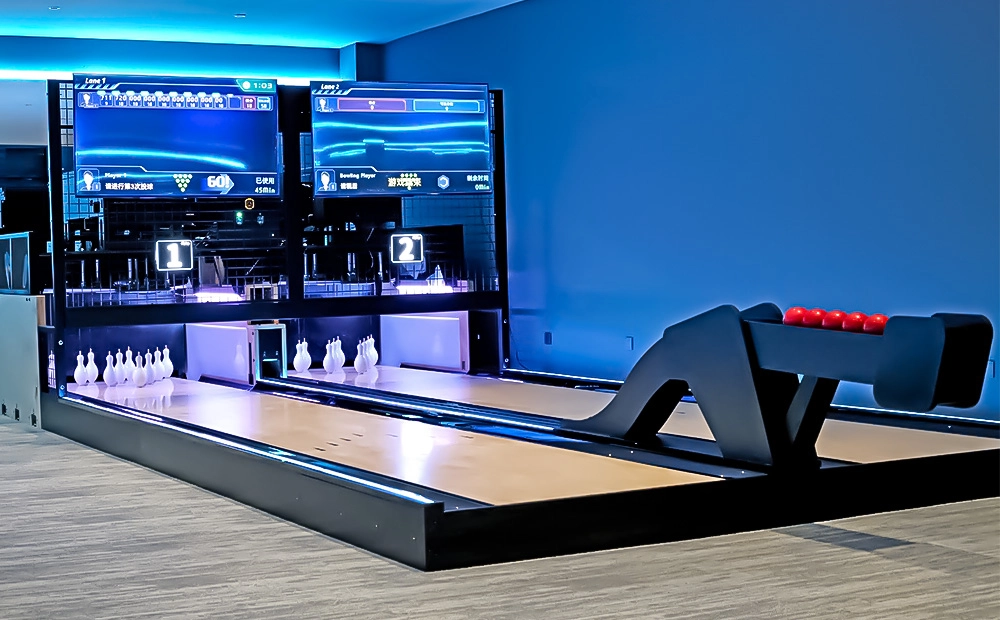
Flying Smart Duckpin Bowling Equipment and Lane System for Commercial Venues
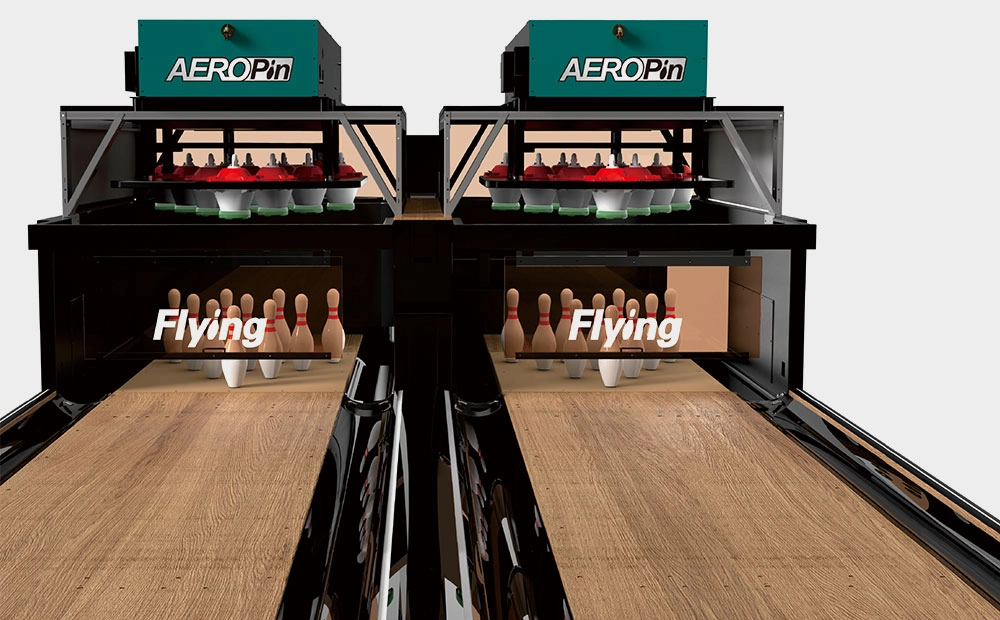
USBC-Certified AEROPIN String Pinsetter System
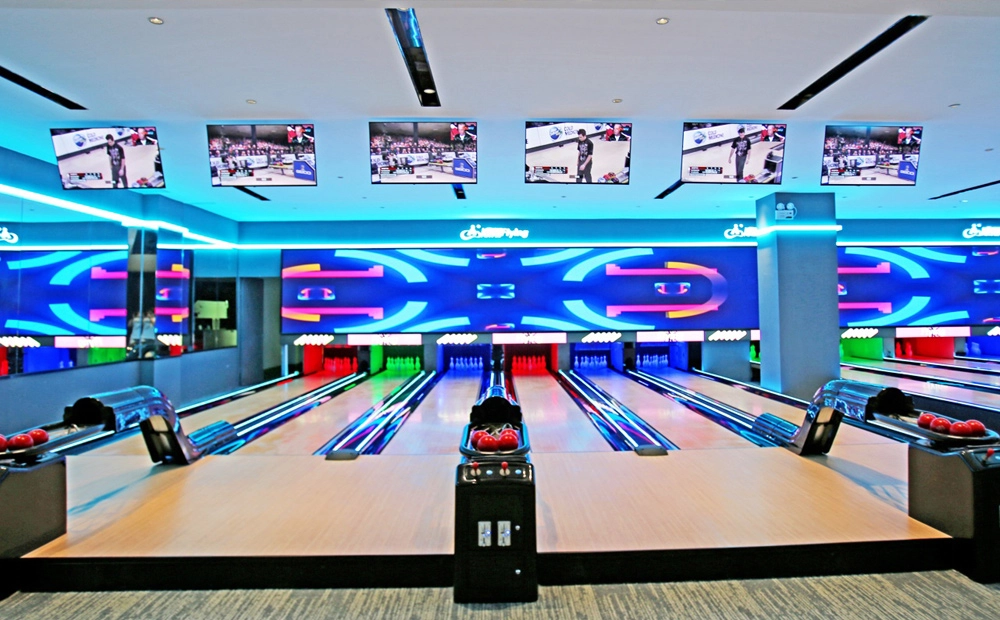
Mini Bowling Equipment for Kids and Family Entertainment Venues
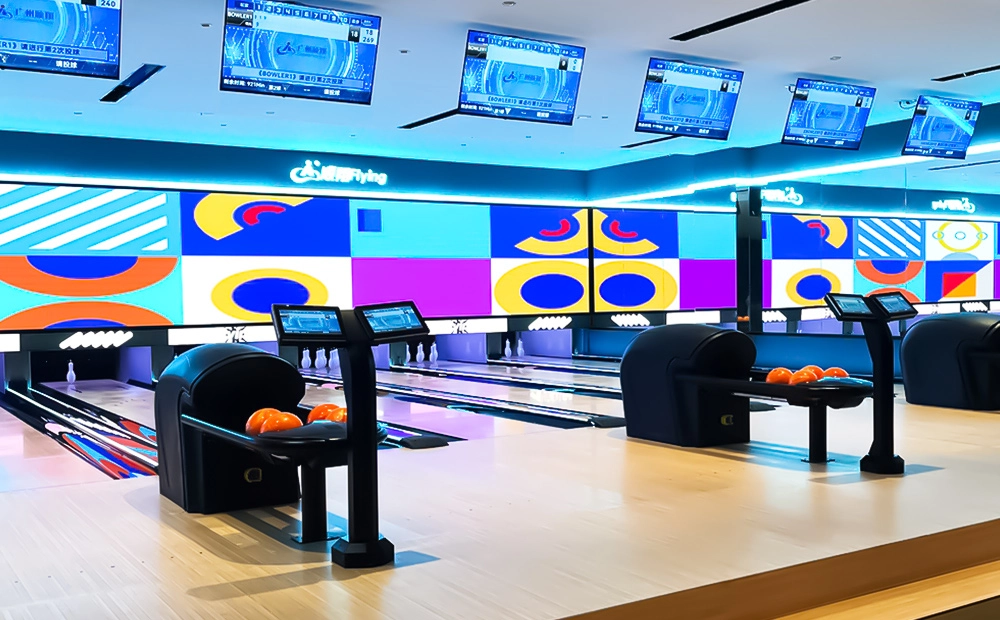
Medium Bowling Equipment for Social Entertainment Venues
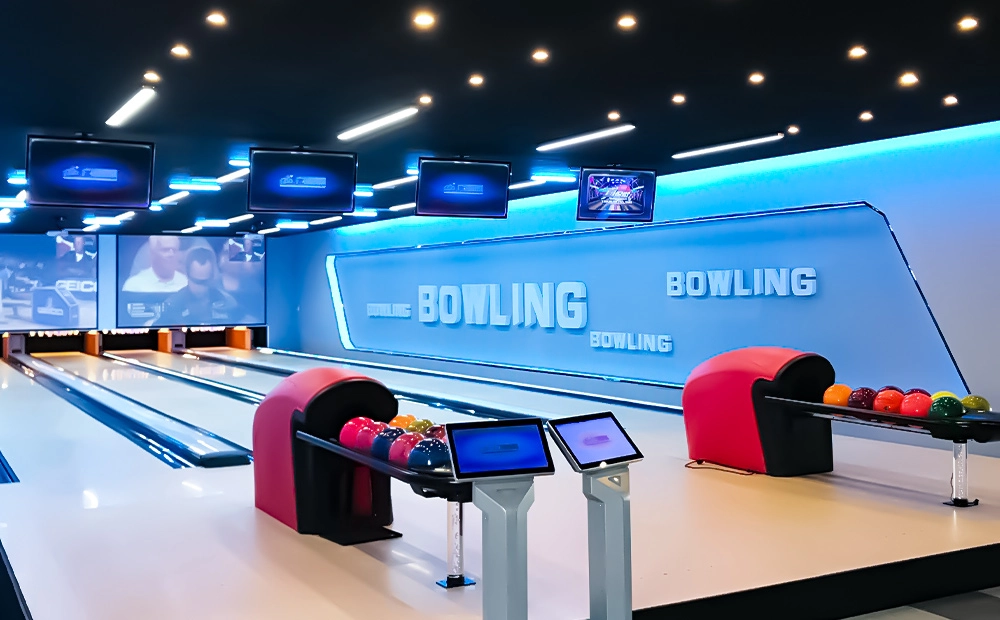
Complete String Pinsetter Bowling Alley Equipment System
You may also like
Flying Smart Duckpin Bowling (FSDB) innovative design, standard 9.2-meter short lane, can be shortened in length, compact layout suitable for small spaces. The game rules are simple but challenging, attracting players of different ages to actively participate.
Suitable for social entertainment venues such as bars, billiard halls, and game centers, it not only enhances interactivity but also increases the popularity and consumption frequency of the venue. The fun and competitive nature of FSDB will make it a new focus of social activities.
Flying Classic Standard Bowling (FCSB) is designed according to international competition standards and equipped with an accurate automatic scoring system, providing bowling enthusiasts with a pure professional experience. Whether it is for competitions or leisure entertainment, FCSB can meet high-level needs.
Suitable for family entertainment centers, luxury resorts, private villas, or clubs, it is an ideal choice for customers who pursue high-end quality and professional experience. Its classic design and excellent performance will add lasting appeal to the venue.
Flying Cute Mini Bowling (FCMB) is a mini bowling experience designed for children and families. The lane length is fixed at 12 meters, equipped with lightweight balls without finger holes (only 1.25kg) and small pins, specially designed for children and family fun.
It can not only help children feel the fun of bowling, but also stimulate their interest and competitive consciousness. Suitable for children's playgrounds, theme parks and parent-child centers, it is the best choice for places focusing on the children's market.
Flying Social Medium Bowling (FSMB) is tailored for small venues, with flexible lane lengths (customizable from 9.6 meters to 18 meters), a small ball design suitable for players of all ages, and light pins that are easier to knock down, increasing participation and fun.
Whether it is a gathering of friends or a casual social, FSMB can easily create a relaxed and pleasant atmosphere. Its efficient space-utilization design is particularly suitable for cafes, bars and community entertainment venues, allowing people to fall in love with bowling in a relaxed interaction.
Contact Flying
Start your bowling alley project
If you contact us now for more details, we can provide you with a custom bowling alley service. Our service team will get back to you within 24 hours normally!
© 2026 Flying BOWLING. Designed by gooeyun.
FOLLOW US:
Flying Bowling
Flying Bowling
Flyingbowling
Flyingbowling