

The Definitive Guide to Bowling Pins: Unveiling Every Type & Their Impact in 2026
A comprehensive guide analyzing every major type of bowling pin, including Tenpin, Duckpin, Candlepin, and Fivepin. Covers precise dimensions, material composition, manufacturing processes, the physics of pin action, and the modern debate around string pinsetters.
- Introduction: Understanding the Foundation of Your Game
- The Anatomy of a Bowling Pin: More Than Just Wood
- The Role of Weight Blocks and Voids
- The Major Players: Tenpin, Duckpin, and Candlepin
- 1. Tenpin Bowling Pins (The Global Standard)
- 2. Duckpin Bowling Pins (The Smaller Challenge)
- 3. Candlepin Bowling Pins (The Tall, Slender Tradition)
- Other Notable Pin Types: Expanding the Bowling Universe
- Fivepin Bowling Pins (The Weighted Wonder)
- Ninepin Bowling Pins (Kegel Pins)
- Pin Construction and Materials: The Evolution of Durability
- The Wood Core
- The Synthetic Coat
- Modern Synthetic Pins
- The Science of Pin Action: How Different Pins React to Impact
- Modern Innovations: String Pins, Smart Pins, and the Future
- String Pins (Tethered Systems)
- Smart Pins
- Maintaining Your Pins: Longevity and Performance
- The Environmental Impact of Bowling Pin Production
- Conclusion: The Enduring Legacy and Evolving Future
- Frequently Asked Questions
- What are the main differences between tenpin, duckpin, and candlepin bowling pins?
- How do string pins differ from traditional free-standing pins?
- What materials are modern bowling pins made from?
- Do bowling pin dimensions and weight vary significantly between different types?
- How often are bowling pins replaced in a typical alley?
- Can you use any bowling ball with any type of bowling pin?
- What is 'pin action' and how does it relate to pin types?
- Are there specific rules or standards for bowling pins?
- References
Introduction: Understanding the Foundation of Your Game
While the bowling ball often gets the glory—with its reactive resin coverstocks and complex weight blocks—the bowling pin is the silent protagonist of the sport. It is the target, the antagonist, and the ultimate judge of a bowler's skill. Understanding the engineering and variety of these targets is essential for anyone serious about the sport, whether you are a lane operator or a competitive player.
In 2026, the landscape of bowling continues to evolve. From the classic thunder of Tenpin to the strategic precision of Candlepin, the diversity of bowling pin types comparison reveals a rich tapestry of history and physics. This guide goes beyond the surface, offering a deep dive into tenpin vs duckpin vs candlepin, bowling pin materials, and the controversial rise of string pin technology.
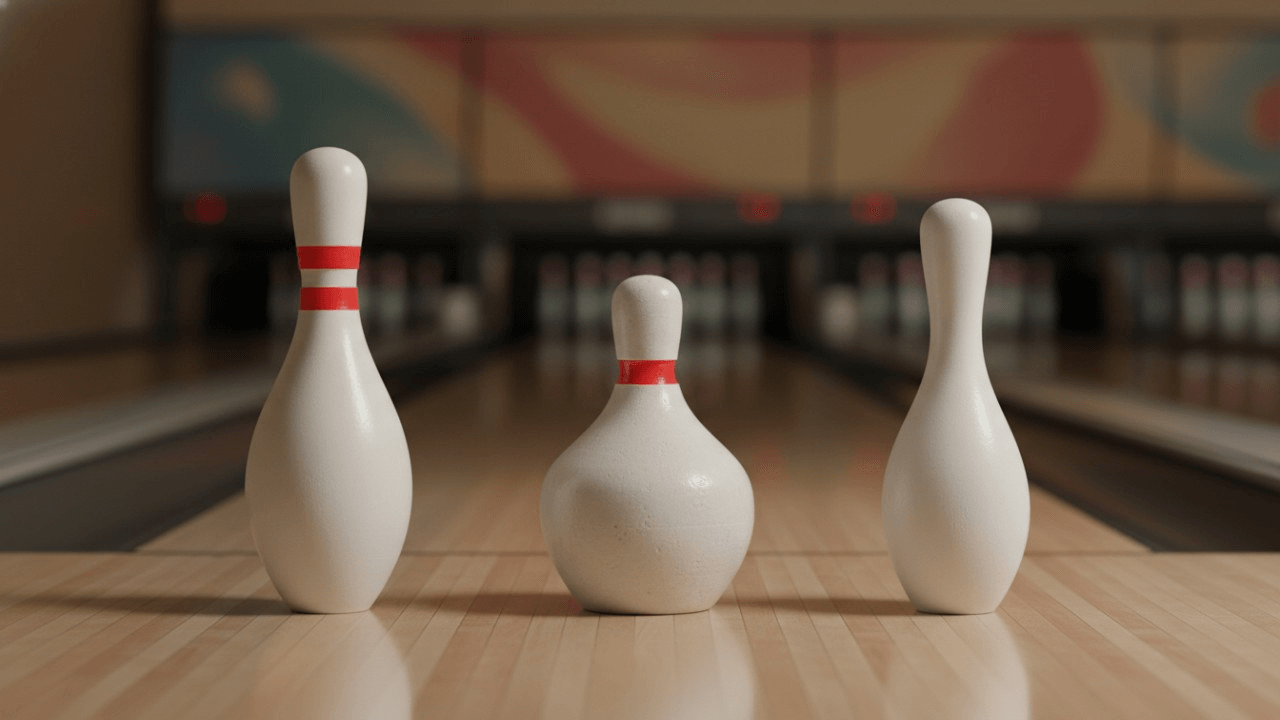
The Anatomy of a Bowling Pin: More Than Just Wood
A standard bowling pin is a marvel of industrial design, engineered to withstand repeated impacts of over 3,000 pounds of force. To the untrained eye, it appears to be a simple white club, but its anatomy is distinct and purposeful.
· The Base: The bottom foundation, usually reinforced with a plastic ring or separate base attachment to provide stability and minimize sliding.
· The Body (Belly): The widest part of the pin, where the ball makes contact. This is the area most critical for "pin action."
· The Neck: The tapered section connecting the body to the head. This area is structural but also aesthetic, often bearing the manufacturer's stripes.
· The Head: The top knob, crucial for the pinsetter's mechanical grippers to lift and reset the pin.
The Role of Weight Blocks and Voids
Deep inside high-performance pins, physics takes over. As detailed in technical analyses by bowlingball.com, modern pins often contain internal voids. These air pockets are not defects; they are calculated spaces designed to adjust the center of gravity and the radius of gyration. This internal balancing ensures that pin action physics remains consistent, allowing for the rotational energy required to create "messenger" pins that slide across the deck to take out corner pins.
The Major Players: Tenpin, Duckpin, and Candlepin
The three dominant forms of bowling in North America differ drastically in their equipment specifications. Here is how they stack up.
1. Tenpin Bowling Pins (The Global Standard)
· Dimensions: 15 inches (38.1 cm) tall; 4.75 inches (12.1 cm) wide at the belly.
· Weight: Strictly regulated by the United States Bowling Congress (USBC) to be between 3 lbs 6 oz and 3 lbs 10 oz (approx. 1.54–1.64 kg).
· Game Impact: These are the heavyweights. Their high center of gravity creates a toppling effect that generates the explosive "strike" reaction. The sheer mass of the pin requires a heavier ball (up to 16 lbs) to generate sufficient carry.
2. Duckpin Bowling Pins (The Smaller Challenge)
· Dimensions: Significantly smaller, standing roughly 9.4 inches (23.3 cm) tall and 4.125 inches wide.
· Weight: Regulated at approximately 1.5 lbs (0.68 kg)—less than half the weight of a tenpin.
· Game Impact: Do not let the size fool you; Duckpin is arguably the hardest game. Because the pins are lighter and the ball is small (approx. 3.75 lbs), the ball passes through the pins rather than plowing them down. This necessitates three balls per frame and emphasizes extreme precision over power.
3. Candlepin Bowling Pins (The Tall, Slender Tradition)
· Dimensions: The tallest of the bunch at 15.75 inches (40 cm), but with a slender profile of only 2.9 inches (7.5 cm) wide.
· Weight: Approximately 2.43 lbs (1.1 kg).
· Key Characteristics: Unlike the others, Candlepins are vertically symmetrical cylinders; they have no distinct top or bottom and can be set on either end.
· Game Impact: In Candlepin, fallen pins (deadwood) are left on the lane, becoming strategic obstacles or aids. The "billiard-like" sound and the deflection of the pins make for a unique, chaotic pin action.
Other Notable Pin Types: Expanding the Bowling Universe
Fivepin Bowling Pins (The Weighted Wonder)
Exclusively popular in Canada, Fivepin offers a distinct twist. The pins are roughly midway between duckpins and tenpins in size (12.5 inches tall) but feature a wide, heavy rubber band around the belly. This band increases the liveliness of the pin when struck, making strikes more frequent than in Duckpin. The weighted base aids in stability, and the scoring values differ based on which pin is hit (center pin is worth 5 points).
Ninepin Bowling Pins (Kegel Pins)
This is the historic ancestor of Tenpin, still played in Europe (Kegeln) and parts of Texas. The pins are arranged in a diamond shape. The central pin (the Kingpin) is often red. In traditional Ninepin, the goal is often to knock down the surrounding pins without knocking down the Kingpin, a feat requiring surgical accuracy. The pins are generally similar in height to tenpins but may lack the standardized USBC void construction.
Pin Construction and Materials: The Evolution of Durability
To understand how bowling pins are made, one must look at the marriage of organic and synthetic materials.
The Wood Core
The gold standard for high-quality pins remains Hard Rock Maple (Sugar Maple). As noted in manufacturing documentaries by Discovery UK, this wood is chosen for its incredible density (1450 on the Janka hardness scale) and resilience. Logs are dried in kilns for days to reach exact moisture levels before being turned on lathes into the iconic shape.
The Synthetic Coat
Once shaped, the wooden core is not enough. It is encapsulated in a high-tech plastic coating, typically Surlyn (the same resin used in golf ball covers) or Ethylen. This is done via injection molding, creating a seamless shell that protects the wood from shattering. The plastic coating also provides the "crack" sound familiar to bowlers.
Modern Synthetic Pins
While wood is traditional, fully synthetic pins (often with foam or composite cores) are gaining traction, particularly in entertainment centers. They offer superior consistency and longevity but are often debated by purists for their different sound and bounce characteristics.
The Science of Pin Action: How Different Pins React to Impact
Pin action physics is governed by the conservation of momentum and energy transfer. When a 15-pound ball hits a 3.5-pound pin, the collision is partially elastic.
· Tenpins: The high center of gravity promotes toppling. A perfect strike shot hits the "pocket" (between pins 1 and 3 for righties), causing the head pin to take out the 2-pin, while the ball deflects to take out the 5-9. The "messenger" is usually the 2-pin or 4-pin flying across the deck to trip the 10-pin.
· Lighter Pins (Duck/Candle): Because the mass ratio between the ball and pin is much closer (almost 1:1 in Candlepin), the ball deflects significantly upon impact. There is less "plowing" and more scattering, which is why high scores are so rare in these variations.
Modern Innovations: String Pins, Smart Pins, and the Future
The most heated debate in the industry today revolves around string bowling pins pros cons.
String Pins (Tethered Systems)
In 2023, the USBC officially certified string pinsetters for competition, provided the string length is at least 54 inches.
· Pros: Massive reduction in maintenance (fewer moving mechanical parts), lower energy costs, and faster resets.
· Cons: Purists argue the strings affect pin fall. Data from the USBC 2023 research report indicated a 7.1% reduction in strike percentage compared to free-fall pins, largely because "messenger" pins are restrained by the strings and cannot fly across the deck as freely.
Smart Pins
Looking ahead, we are seeing prototypes of "Smart Pins" embedded with RFID chips or sensors. These pins can track their own location, rotation speed, and impact force, providing data for broadcast analytics or automated diagnostics for alley mechanics.
Maintaining Your Pins: Longevity and Performance
Proper bowling pin maintenance is crucial for fair play.
1. Rotation: Pins should be rotated frequently to ensure even wear.
2. Cleaning: Dirt and oil buildup changes the friction coefficient of the pin, altering how it slides across the lane. Regular cleaning with approved solvents is mandatory.
3. Resting: Wooden pins actually need to "rest." The wood fibers compress upon impact; rotating sets allows the moisture content and fiber structure to rebound, extending the pin's life.
The Environmental Impact of Bowling Pin Production
Environmental bowling pins are becoming a priority. The reliance on maple requires sustainable forestry practices. Leading manufacturers are now certified by forestry commissions to ensure that for every tree harvested, new ones are planted. Furthermore, the shift toward synthetic pins, while introducing plastics, reduces the frequency of replacement, thereby lowering the total carbon footprint over the lifecycle of the alley's equipment. Old synthetic pins are increasingly being ground down and recycled into other industrial plastic components.
Conclusion: The Enduring Legacy and Evolving Future
From the ancient rites of German Kegels to the high-tech, string-tethered lanes of 2026, the history of bowling pins is a story of adaptation. Whether you are aiming for the perfect 300 in Tenpin, struggling to break 100 in Duckpin, or simply enjoying a night out, the pins you target are the result of centuries of engineering. They are designed to challenge, to endure, and to delight with that unmistakable crash that keeps us coming back to the lanes.
Frequently Asked Questions
What are the main differences between tenpin, duckpin, and candlepin bowling pins?
Tenpins are the largest (15" tall, 3.6 lbs) with a curvy hourglass shape, designed for power bowling. Duckpins are much shorter (9.4" tall) and lighter (1.5 lbs), making them harder to hit with the small ball required. Candlepins are the tallest (15.75") but very thin (2.9" wide) and cylindrical; they weigh about 2.4 lbs and are unique because fallen pins remain on the lane during play.
How do string pins differ from traditional free-standing pins?
String pins are attached to the pinsetter by a black nylon cord, while traditional pins fall freely. The strings allow for a much simpler machine with fewer breakdowns. However, USBC research shows that string pins yield about 7% fewer strikes because the strings can prevent pins from flying across the lane to knock down others (the "messenger" effect).
What materials are modern bowling pins made from?
High-quality regulation pins typically feature a core of laminated Hard Rock Maple wood. This wood is then encapsulated in a durable injection-molded plastic coating, such as Surlyn, to prevent cracking and moisture damage. Some cheaper or practice pins may be made entirely of synthetic composites.
Do bowling pin dimensions and weight vary significantly between different types?
Yes. A standard Tenpin weighs roughly 3 lbs 8 oz. In contrast, a Duckpin weighs only about 1.5 lbs, and a Candlepin weighs about 2.4 lbs. Their shapes also dictate the game; the wide belly of a Tenpin aids in strikes, while the thin profile of a Candlepin makes them much harder to knock down in bunches.
How often are bowling pins replaced in a typical alley?
In a busy commercial center, wooden pins typically last between 1 to 2 years before the wood fibers break down or the necks crack. Synthetic pins can last longer, often 3 to 5 years, depending on the volume of play and maintenance quality.
Can you use any bowling ball with any type of bowling pin?
No. Using a heavy 16lb Tenpin ball on delicate Duckpins or Candlepins would destroy the pins and the equipment. Conversely, a small Duckpin ball would bounce harmlessly off a heavy Tenpin. Each game requires specific balls matched to the mass and size of the pins.
What is 'pin action' and how does it relate to pin types?
"Pin action" describes how pins move after being hit. Good pin action means pins stay low and spin across the deck, taking out other pins. Tenpins are designed with a high center of gravity to promote this toppling. Lighter pins like Candlepins tend to deflect and scatter more erratically rather than sliding.
Are there specific rules or standards for bowling pins?
Yes. The United States Bowling Congress (USBC) sets strict tolerances for Tenpins, including weight (3 lbs 6 oz – 3 lbs 10 oz), moisture content, center of gravity, and coating thickness. Duckpin and Candlepin organizations have their own respective standards to ensure fair play globally.
References
· Dimensions.com: Candlepin Dimensions & Drawings
· Dimensions.com: Duckpin Dimensions & Drawings
Recommended products
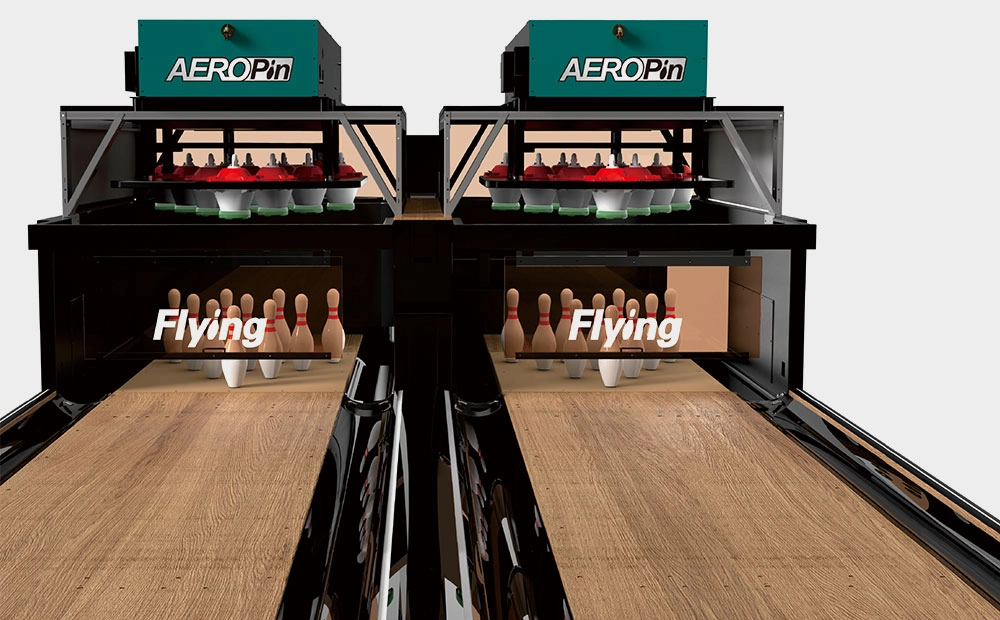
USBC-Certified New-Generation Standard Bowling String Pinsetter System (AEROPIN)
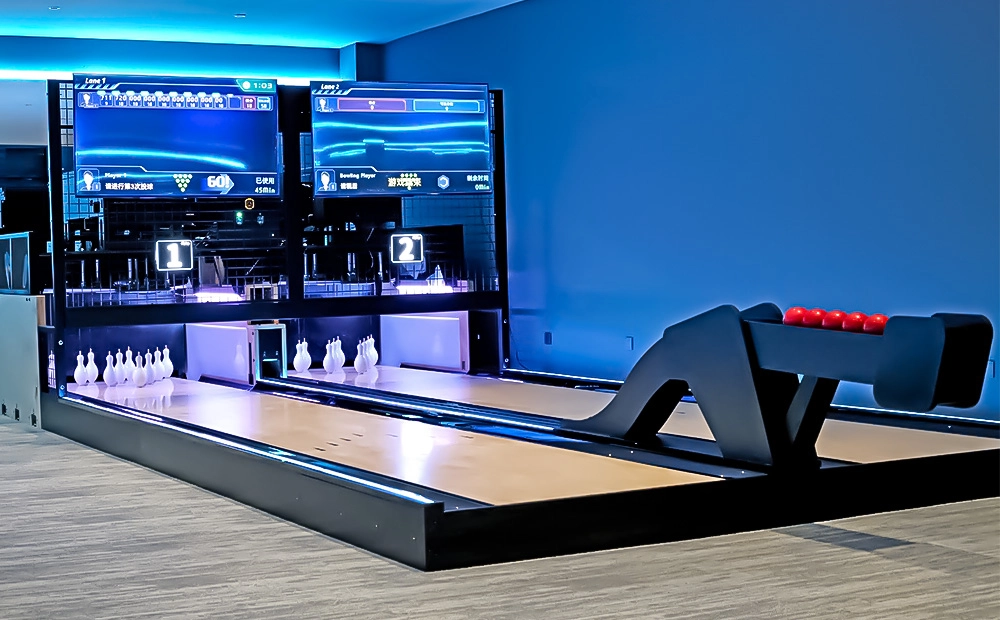
Flying Smart Duckpin Bowling
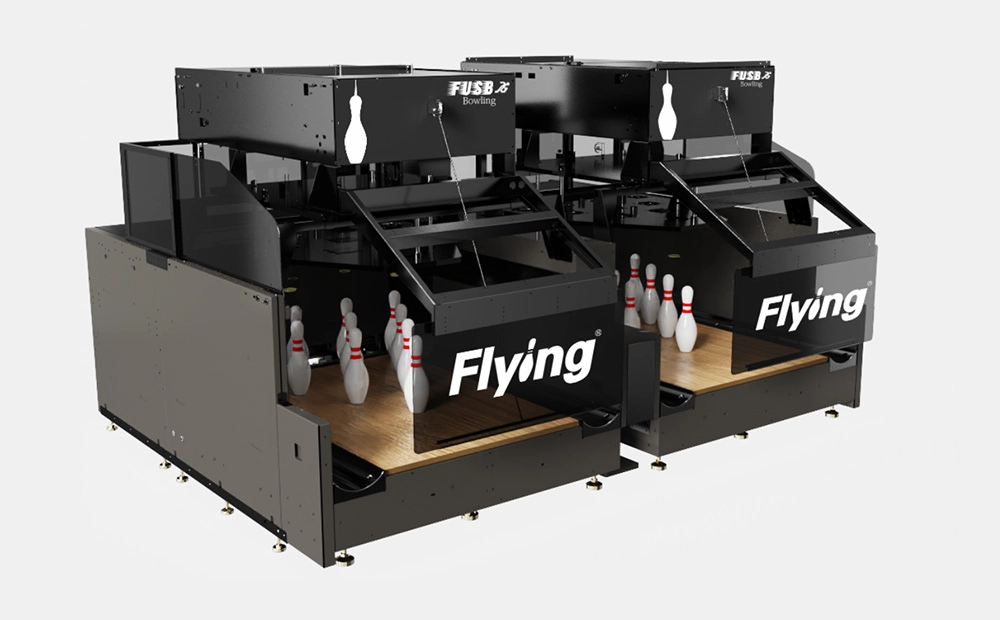
Flying Ultra Standard Bowling String Pinsetter
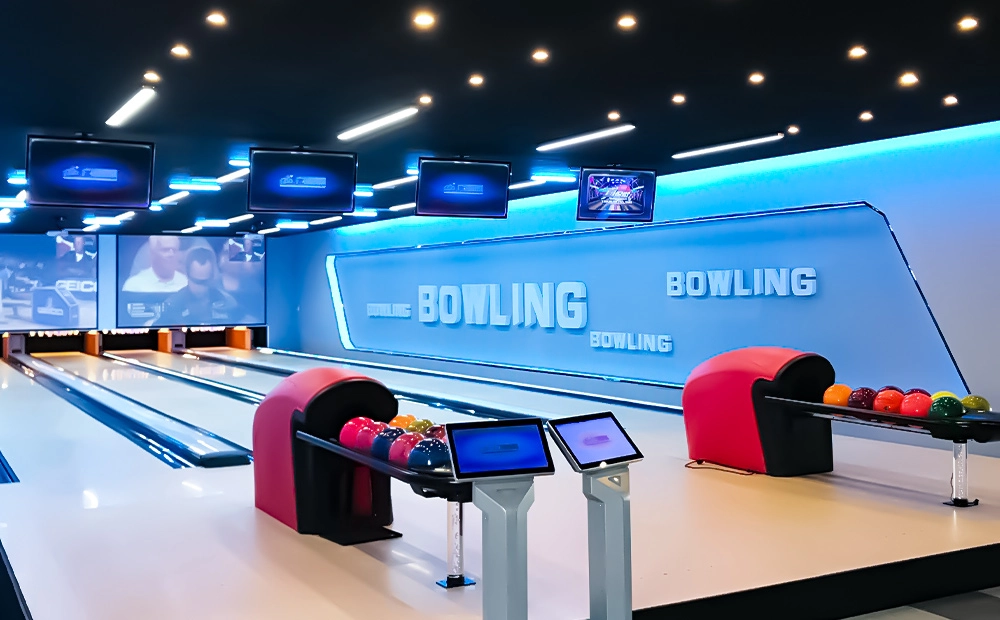
Complete Set Of String Pinsetter Bowling Lane Equipment
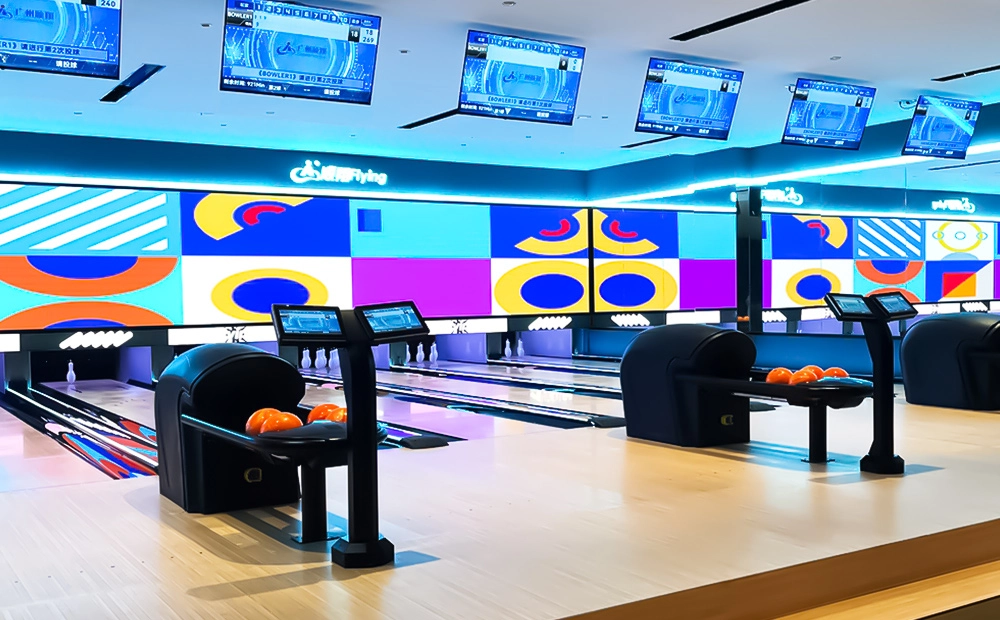
Indoor Medium Duckpin Bowling Lane Equipment For Bowling Alley
Bowling Equipment
How long is a mini bowling lane?
The length of the Mini Bowling Lane is about 13 meters. The fairway board area is about 7.6 meters. And the approach area is about 2.44 meters. The equipment maintenance area behind the lane requires a minimum of 1 meter.
How to build a bowling alley?
If you choose Flying, we will provide you with a one-stop solution, from planning construction to finishing the establishment. You don't need to worry about anything. As long as you can give us the venue size diagram, we can start cooperating.
What basic equipment is needed for bowling?
Bowling needs lots of equipment, but the most important parts are the fairway boards and the string pinsetter equipment.
What are the equipment and parts used in bowling?
It is mainly divided into equipment and fairway board parts. The equipment part mainly includes a ball-return machine, ball-up machine, lane computer, string pinsetter machine, etc. The fairway board part includes the gutter, fairway board, etc. The most important sections are the lane management system and the lane scoring system. Please feel free to contact us for a detailed equipment configuration list.
Price
How much does it cost to put a bowling alley?
The cost of building a bowling alley can vary greatly depending on a number of factors, including:
- Number of lanes: This is obviously a big one. A single lane will cost much less than a whole alley with multiple lanes.
- Location: Building costs are higher in some areas than others. Building in a more populated area will likely be more expensive than a rural area.
- New construction vs. renovation: If you are adding a bowling alley to an existing building, you'll likely save money compared to building a whole new facility.
- Features: Do you want a high-end bowling alley with all the latest technology and amenities? Or are you looking for a more basic setup? The more features you want, the more expensive it will be.
Here's a rough ballpark of what you might expect to pay:
- Home bowling alley: A single lane for your house could cost anywhere from $75,000 to $175,000.
- Small commercial alley: A few lanes in a commercial setting could run from $150,000 to $600,000.
- Large commercial alley: A full-sized bowling alley with many lanes could cost millions of dollars.
If you're serious about opening a bowling alley, it's important to consult with a professional contractor or bowling alley equipment supplier to get a more accurate estimate for your specific project. They can take into account all of the factors mentioned above and give you a more realistic idea of the costs involved.
You may also like
Flying Smart Duckpin Bowling (FSDB) innovative design, standard 9.2-meter short lane, can be shortened in length, compact layout suitable for small spaces. The game rules are simple but challenging, attracting players of different ages to actively participate.
Suitable for social entertainment venues such as bars, billiard halls, and game centers, it not only enhances interactivity but also increases the popularity and consumption frequency of the venue. The fun and competitive nature of FSDB will make it a new focus of social activities.
Flying Classic Standard Bowling (FCSB) is designed according to international competition standards and equipped with an accurate automatic scoring system, providing bowling enthusiasts with a pure professional experience. Whether it is for competitions or leisure entertainment, FCSB can meet high-level needs.
Suitable for family entertainment centers, luxury resorts, private villas, or clubs, it is an ideal choice for customers who pursue high-end quality and professional experience. Its classic design and excellent performance will add lasting appeal to the venue.
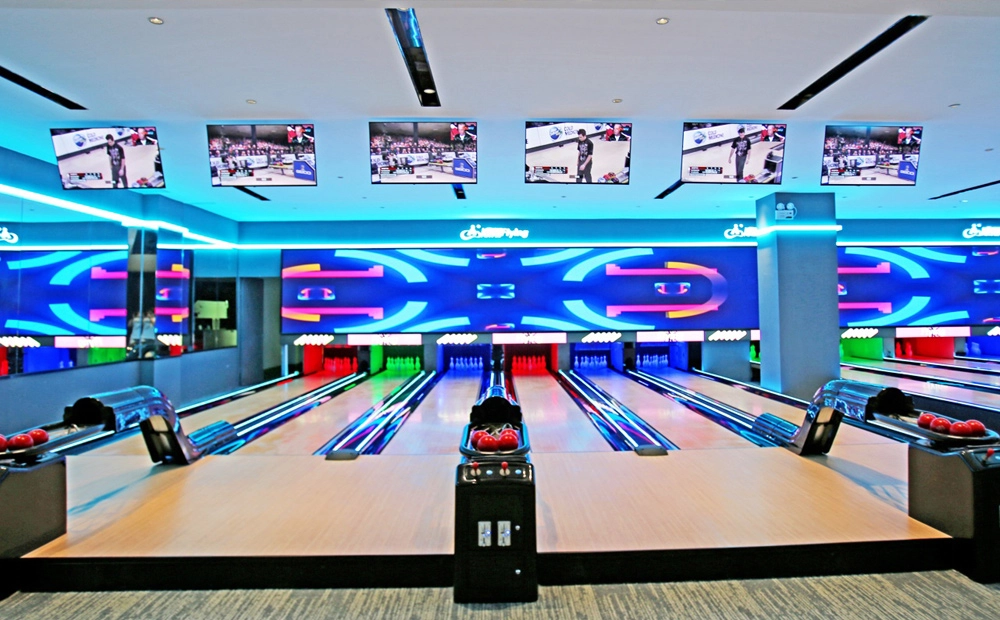
Flying Cute Mini Bowling (FCMB) is a mini bowling experience designed for children and families. The lane length is fixed at 12 meters, equipped with lightweight balls without finger holes (only 1.25kg) and small pins, specially designed for children and family fun.
It can not only help children feel the fun of bowling, but also stimulate their interest and competitive consciousness. Suitable for children's playgrounds, theme parks and parent-child centers, it is the best choice for places focusing on the children's market.
Flying Social Medium Bowling (FSMB) is tailored for small venues, with flexible lane lengths (customizable from 9.6 meters to 18 meters), a small ball design suitable for players of all ages, and light pins that are easier to knock down, increasing participation and fun.
Whether it is a gathering of friends or a casual social, FSMB can easily create a relaxed and pleasant atmosphere. Its efficient space-utilization design is particularly suitable for cafes, bars and community entertainment venues, allowing people to fall in love with bowling in a relaxed interaction.
Contact Flying
Start your bowling alley project
If you contact us now for more details, we can provide you with a custom bowling alley service. Our service team will get back to you within 24 hours normally!
© 2026 Flying BOWLING. Designed by gooeyun.
FOLLOW US:
Flying Bowling
Flying Bowling
Flyingbowling
Flyingbowling